Merzouga is the village at the edge of Erg Chebbi, the best-known dune field in Morocco. This guide explains what the desert is really like, how to get there, how long to stay and how to choose between camel treks, camps and 4x4 trips — written by guides who live here.
Where
South-east Morocco, about 50 km from the Algerian border
The dunes
Erg Chebbi: about 28 km long, up to roughly 150 m high
Getting there
9–10 h by road from Marrakech, 7–8 h from Fes
Best months
October to April
How long
One night minimum, two if you can
Merzouga and Erg Chebbi are not the same thing
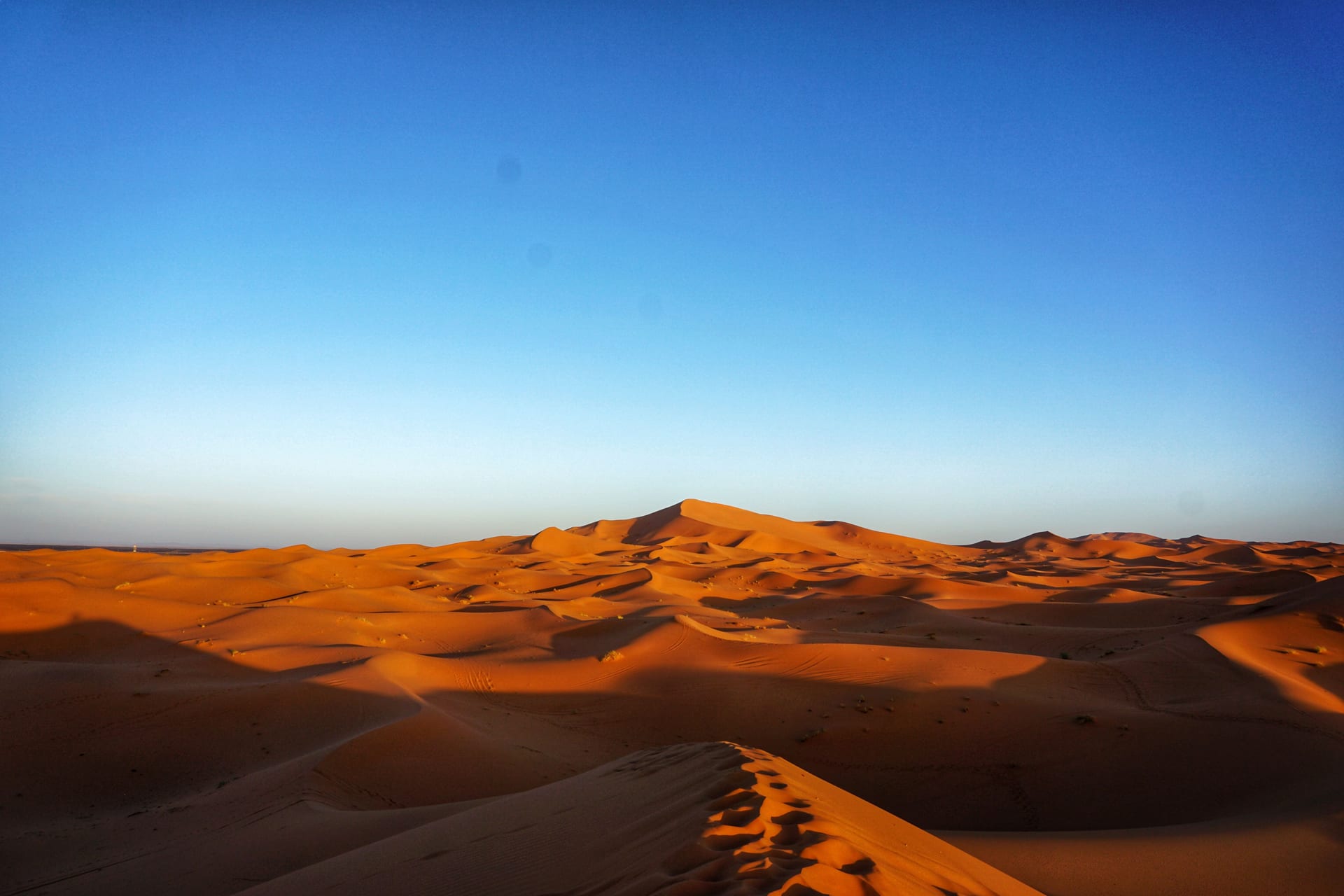
Merzouga is a small working village: one paved road, guesthouses, a few shops and cafés, and palm gardens on its edge. Erg Chebbi is the sand sea that rises straight behind it, a band of dunes about 28 km long that changes colour through the day, from pale gold at noon to deep orange at sunset.
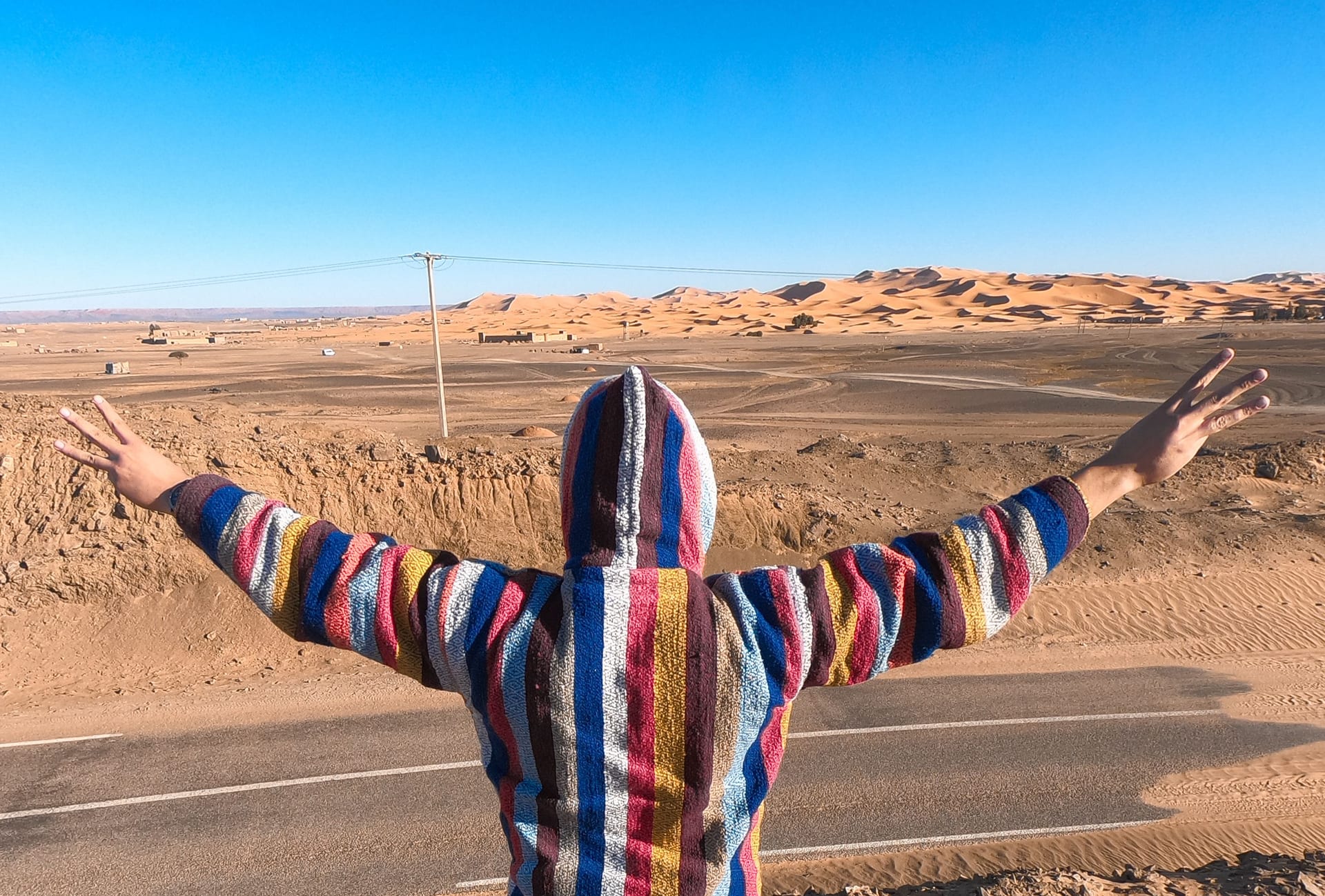
Most desert camps are set inside the dunes, a camel ride or a short 4x4 drive from the village. Around the erg lies the hamada, a flat, stony plain dotted with villages such as Hassilabied and Khamlia. So when people say they “went to Merzouga”, they usually mean they slept in Erg Chebbi.
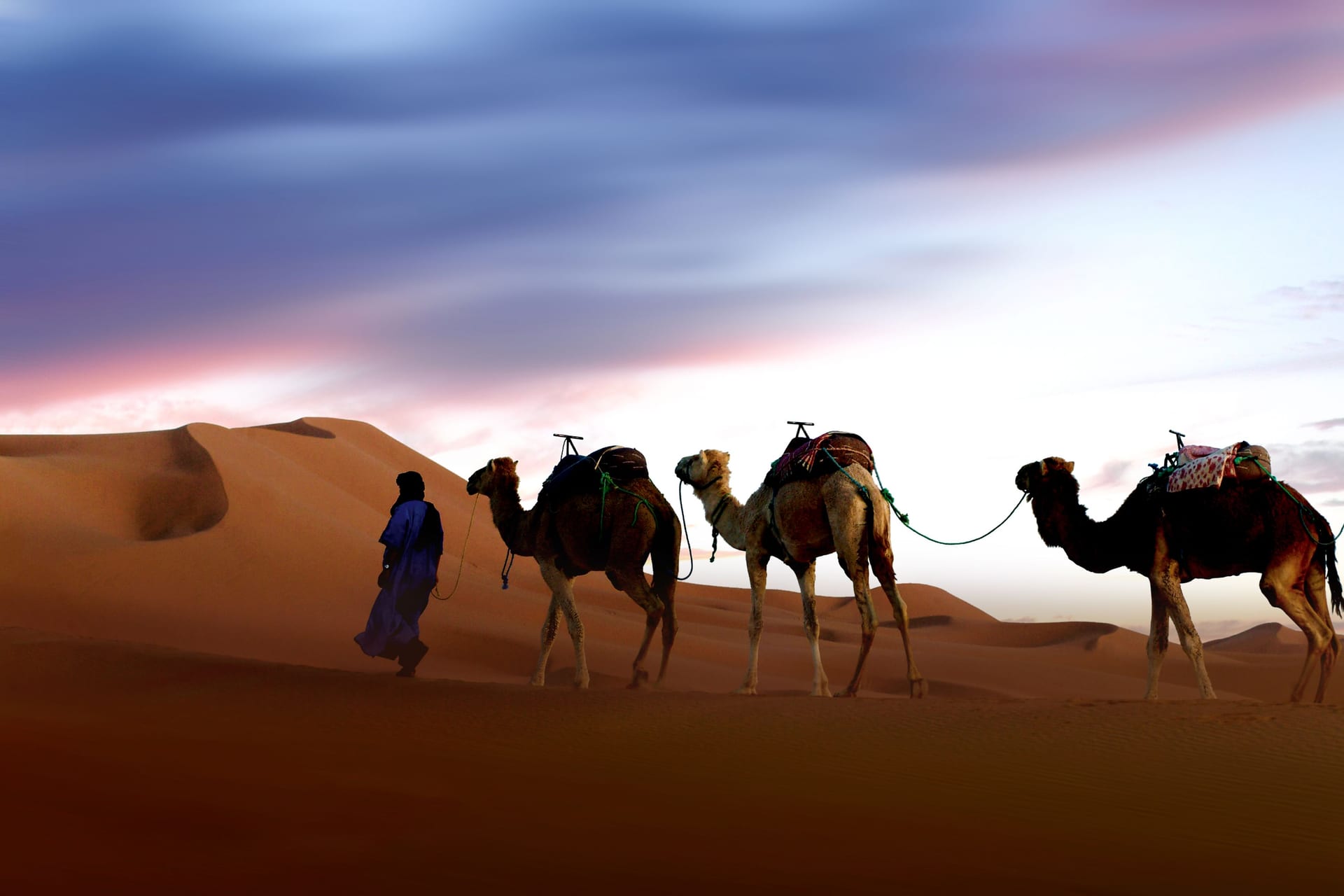
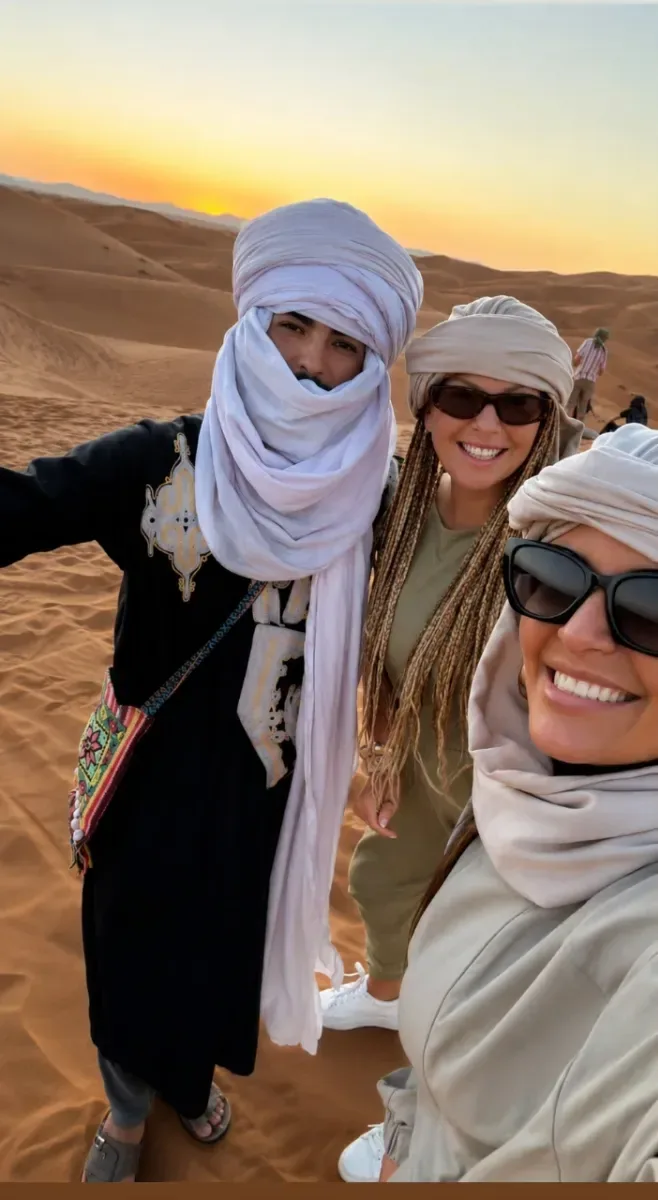
Treks set off about an hour before sunset, once the sand has cooled. A guide walks ahead leading the camels on a rope, and the ride to camp usually takes 50 to 70 minutes at a slow, rocking pace. Most groups stop on a high ridge to watch the light turn orange before carrying on to camp.
It is gentle rather than athletic, but the first steep descent surprises everyone: lean back and hold the handle. Wear long trousers and shoes that stay on your feet, and keep a scarf handy for wind-blown sand. Large bags stay in the vehicle, so bring only a small bag for the night.
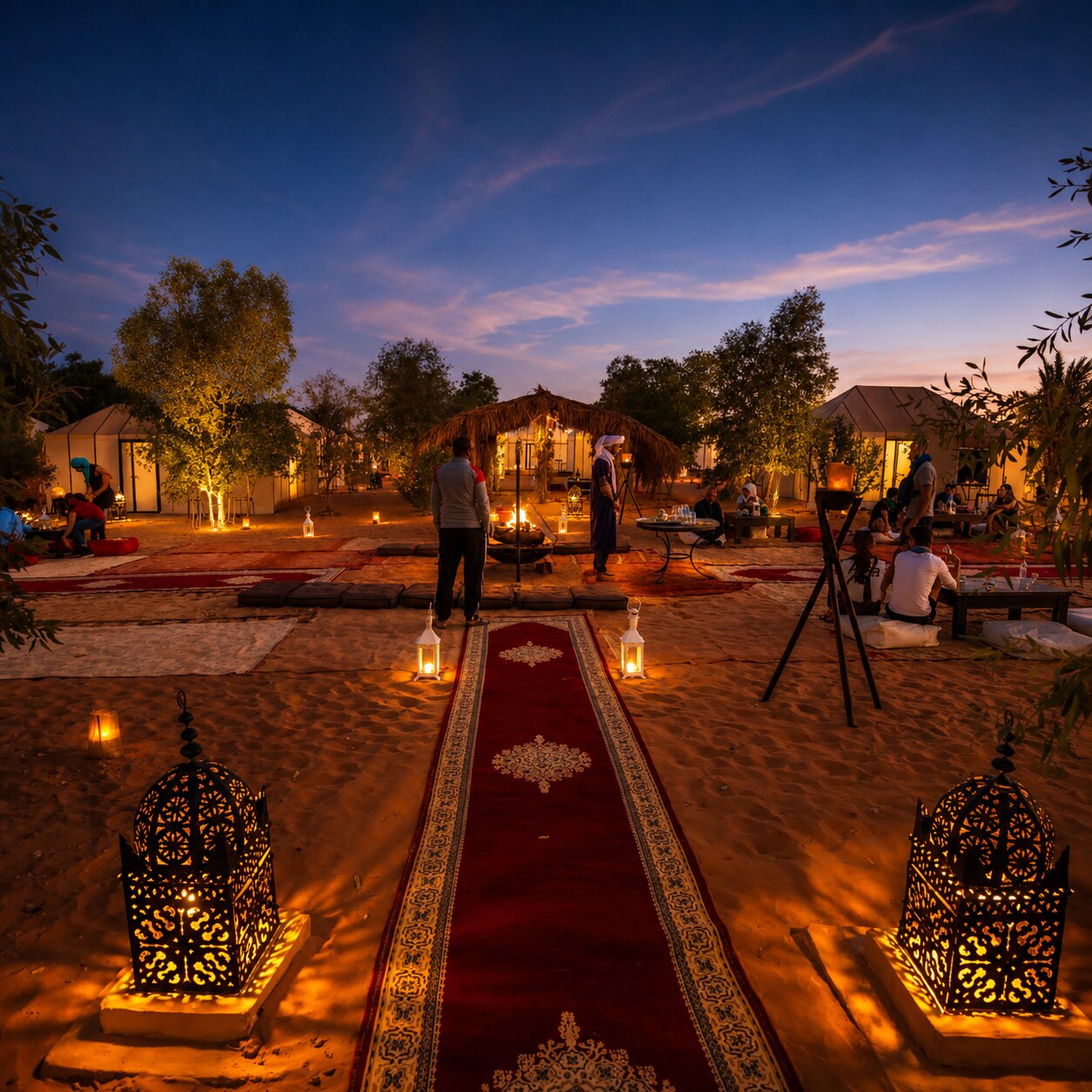
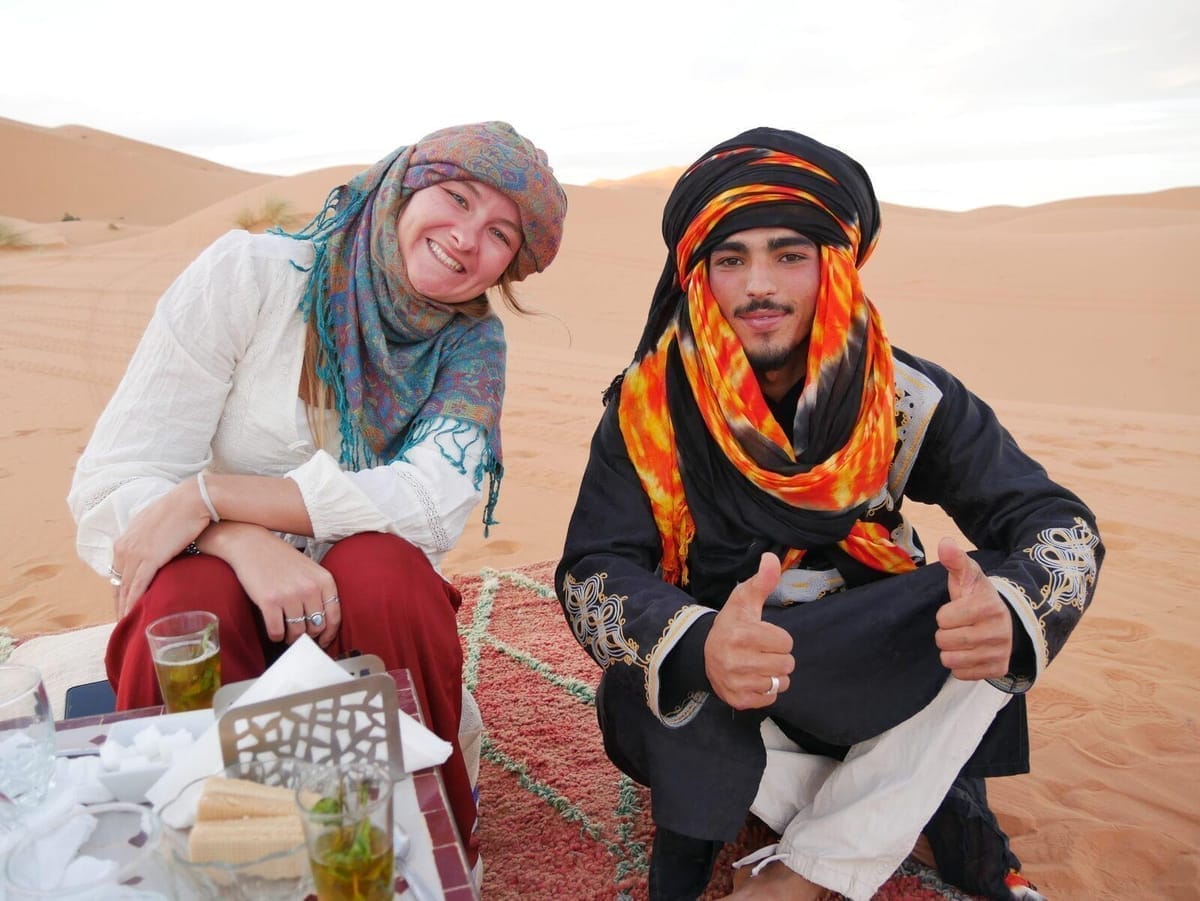
Camps are clusters of tents around a courtyard of rugs, lanterns and low tables. After the trek there is mint tea, then dinner, often a tagine, and on many nights music around a fire. With no town lights nearby, a clear, moonless sky shows more stars than most visitors have ever seen.
Standard camps have simple private tents with shared toilets and showers. Luxury camps, ours included, add proper beds, an en-suite bathroom with a warm shower, and more space. Both include dinner and breakfast. From November to March the nights are cold, so the heavy blankets are there for a reason.
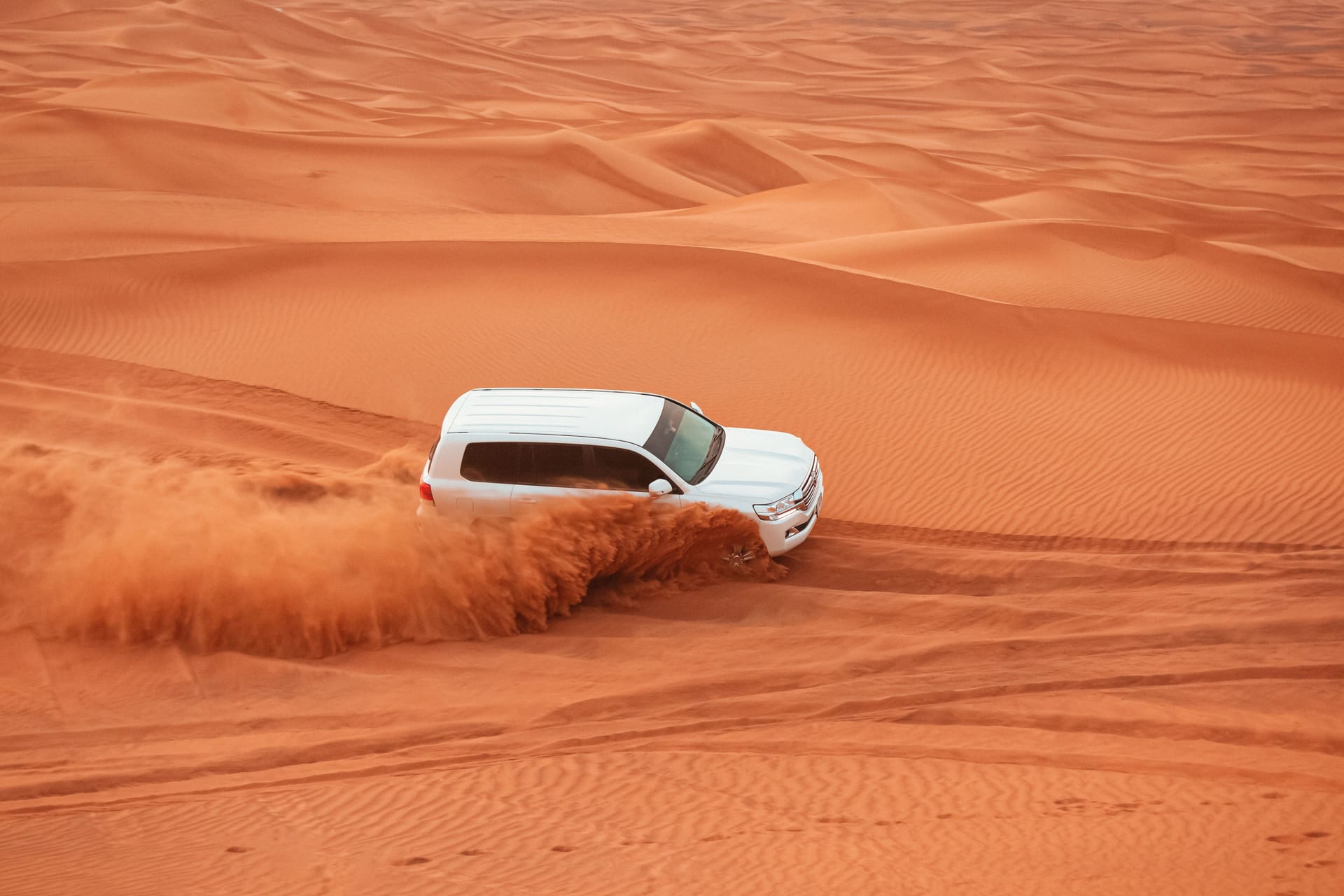
A half-day 4x4 loop is the easiest way to see what surrounds the erg: Khamlia and its Gnawa musicians, nomad families living out on the hamada, old mine workings and, after a wet winter, a seasonal lake that draws birds. Inside the dunes, an experienced driver handles climbs and descents that look impossible from below.
Quads and buggies are rented by the hour at the edge of the dunes. They are great fun but loud, so if you want a quiet sunset, book them for the morning. Choose a provider that gives you a helmet and sends a guide with you.
Merzouga is Amazigh country, and many families here have nomadic roots. Most visits start with a glass of mint tea, and accepting it is part of the welcome. Ask before you photograph anyone, and dress modestly in the village, with shoulders and knees covered.
Khamlia, about 7 km south, is known for Gnawa music, whose roots lie in sub-Saharan Africa. Rissani, around 35 km north, is the historic market town of the Tafilalt and an easy stop on the way in or out. Keep some small change in dirhams for tips, tea and handmade crafts.
October to April is the comfortable season: warm days and cool to cold nights, with December and January nights close to freezing. From June to August the daytime heat often passes 40 °C, so activities move to early morning and evening. Spring can bring strong winds and blowing sand.
One night covers the essentials: a sunset trek, dinner at camp and sunrise. Two nights give you a full day for a 4x4 loop, Khamlia and a slower morning before the long drive out, and that is what we usually recommend.
Merzouga is about 9–10 hours by road from Marrakech and 7–8 hours from Fes, so most travellers break the journey with a night in the Dades or Todra valleys, or give the crossing of the Middle Atlas from Fes a full day. The nearest airport is Errachidia, roughly two hours away by car.
Arriving after dark — Leave early enough to reach the dunes by late afternoon, or you miss the sunset trek.
Packing only for heat — Even in spring, a night in the dunes can be cold.
Doing Marrakech–Merzouga–Marrakech in two days — It is possible, but you will spend most of it in a vehicle.
Bringing a big suitcase to camp — A small bag for the night is all you need.
Relying on cards — Take out enough cash before you reach the desert.
Counting on a strong signal in the dunes — Download maps, tickets and music before you go.
Which desert experience suits you?
Standard camp and camel trek
The classic night: sunset ride, dinner, stars and sunrise, in a simple private tent with shared bathrooms. Right for you if the experience matters more than the comfort.
Short answer: one night between the dunes is the minimum for the classic Sahara experience, and two nights is what we recommend most often. The longer answer depends on where you start, how much driving you accept per day, and what you want the desert to be — a highlight or the point of the trip. Here is the honest breakdown.
A camel ride into the Erg Chebbi dunes is the heart of any Merzouga visit. This is what actually happens, how long it takes and how to prepare so your sunset trek feels relaxed, not rushed.
The desert around Merzouga is open year round, but it is only truly comfortable to visit during the cooler months. Here is when each season feels like, so you can time your Sahara night right.
3 Days / 2 Nights — A three-day private journey from Marrakech to the dunes of Merzouga, built for travelers who want a real Sahara experience without pretending the road is short. Cross the High Atlas, visit Aït Ben Haddou, travel through the Dades Valley and Todra Gorge, reach Merzouga and Erg Chebbi for a sunset camel trek and desert-camp night, then return to Marrakech through the changing landscapes of southern Morocco. Three days is the shortest practical format for this overland route; if you prefer slower travel or more time in the desert, ask us about a longer itinerary.
7 Days / 6 Nights — Experience the very best of Morocco in seven unforgettable days. Cross the spectacular High Atlas Mountains over the Tizi n'Tichka Pass, explore the UNESCO kasbah of Aït Ben Haddou, wind through the Dades Valley and the towering Todra Gorge, then ride camels across the golden dunes of Erg Chebbi to a luxury desert camp beneath the stars. Journey north through the Ziz Valley and cedar forests to the medieval imperial city of Fes, before returning to Marrakech through some of the country's most breathtaking landscapes.
Frequently Asked Questions
How do I get to Merzouga?
Most travelers arrive from Marrakech (about 9-10 hours by road) or Fes (about 7 hours). Your private driver-guide will handle everything, with stops at key sights along the way.
When is the best time to visit Merzouga?
October to April is ideal — warm days and cool, comfortable nights. Summer months (June-August) can be extremely hot during the day.
How many nights should I stay?
We recommend at least 2 nights — one night in the luxury camp and one in a desert hotel. This allows time for the camp experience, a 4x4 tour, and a sunrise over the dunes.
Is Merzouga safe?
Yes — Merzouga is a small, welcoming village where tourism is the main livelihood. Our local team ensures you experience it in complete safety and comfort.