3-Day Luxury Sahara Tour from Marrakech
A three-day private journey from Marrakech to the dunes of Merzouga, built for travelers who want a real Sahara experience without pretending the road is short. Cross the High Atlas, visit Aït Ben Haddou, travel through the Dades Valley and Todra Gorge, reach Merzouga and Erg Chebbi for a sunset camel trek and desert-camp night, then return to Marrakech through the changing landscapes of southern Morocco. Three days is the shortest practical format for this overland route; if you prefer slower travel or more time in the desert, ask us about a longer itinerary.
Duration: 3 Days / 2 Nights
Trip at a Glance
- Duration
- 3 Days / 2 Nights
- Starts
- Marrakech
- Ends
- Marrakech (Round trip)
- Where you stay
- Dades Valley · Desert camp
Why You'll Love This Tour
- Cross the High Atlas from Marrakech
- Aït Ben Haddou — UNESCO World Heritage site
- Dades Valley and Todra Gorge
- Sunset camel trek in Erg Chebbi
- Night in a Sahara desert camp
Why choose this itinerary
- The shortest format we consider genuinely practical for the Marrakech–Merzouga overland route — honest about being a full schedule.
- Hits the corridor's headline stops: the High Atlas crossing, Aït Ben Haddou (UNESCO), the Dades Valley and Todra Gorge.
- A private journey throughout — your own vehicle and driver-guide, with the desert night built around a sunset camel trek into Erg Chebbi.
Itinerary
Day 1: Marrakech → High Atlas → Aït Ben Haddou → Dades Valley
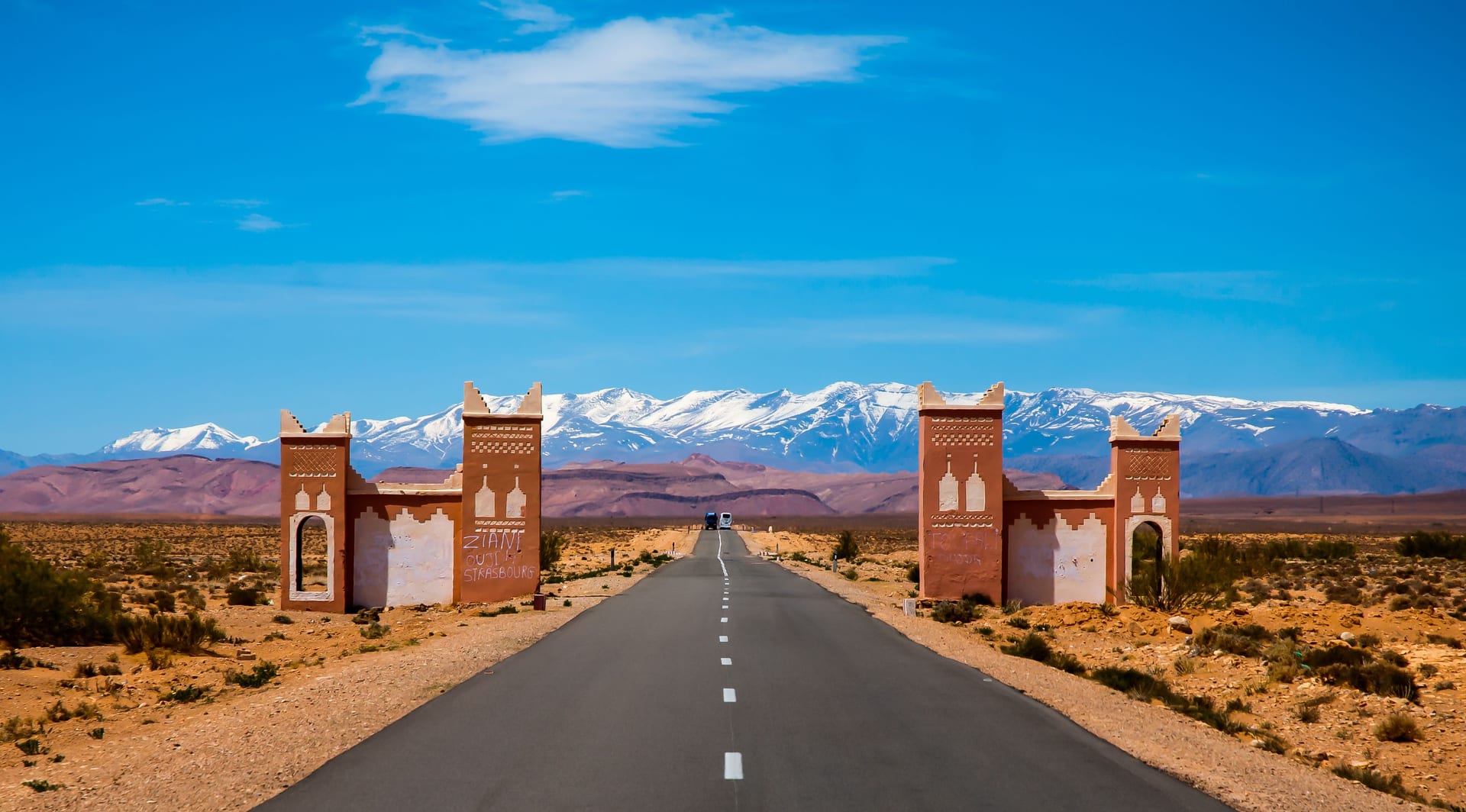
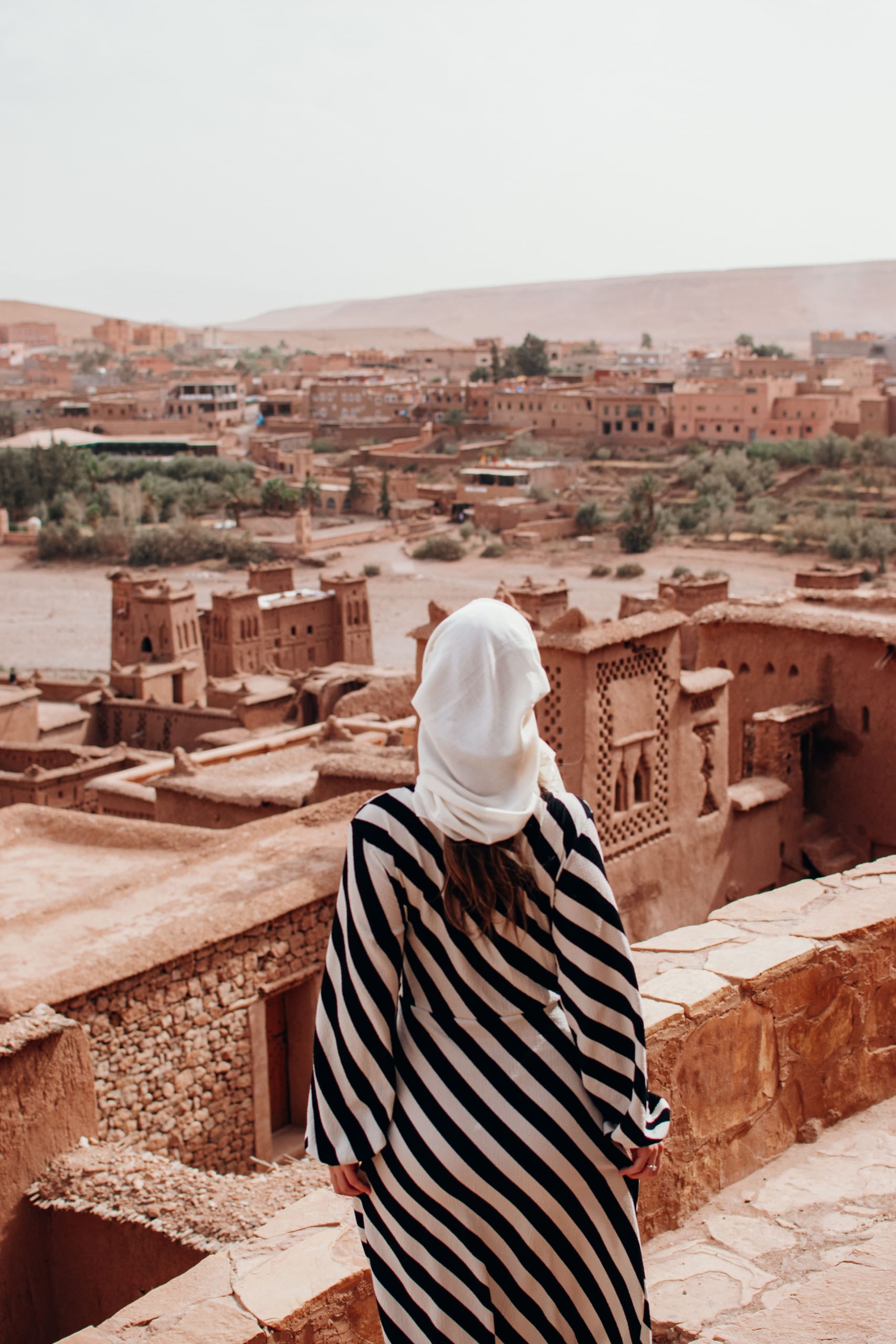
Leave Marrakech in the morning and climb into the High Atlas, crossing the Tizi n'Tichka Pass — at over 2,260 metres, the highest road pass in North Africa and the dividing line between the green north and the pre-Sahara south. The road winds past Berber villages and terraced slopes before dropping toward Aït Ben Haddou, the best-preserved fortified ksar in southern Morocco and a UNESCO World Heritage Site: its stacked mud-brick towers have stood in for Jerusalem, Tibet and ancient Egypt on screen, but the real draw is walking the raised alleys between them and climbing to the hilltop granary for the view over the Ounila valley. From there it's on to Ouarzazate, Morocco's film-industry hub, and into the Dades Valley — the Valley of a Thousand Kasbahs — where the road climbs the famous switchbacks above Boulmane Dades before the first night's stop.
- Morning — Depart Marrakech: Climb into the High Atlas and cross the Tizi n'Tichka Pass — at over 2,260 metres, the highest road pass in North Africa.
- Aït Ben Haddou (UNESCO): Walk the raised alleys of Morocco's best-preserved ksar and climb to the hilltop granary for the view over the Ounila valley.
- Ouarzazate: Pass through Morocco's film-industry hub, barely 30 minutes from Aït Ben Haddou.
- Dades Valley: Arrive via the famous switchbacks above Boulmane Dades, in the Valley of a Thousand Kasbahs, for the first night.
Day 2: Dades Valley → Todra Gorge → Rissani → Merzouga
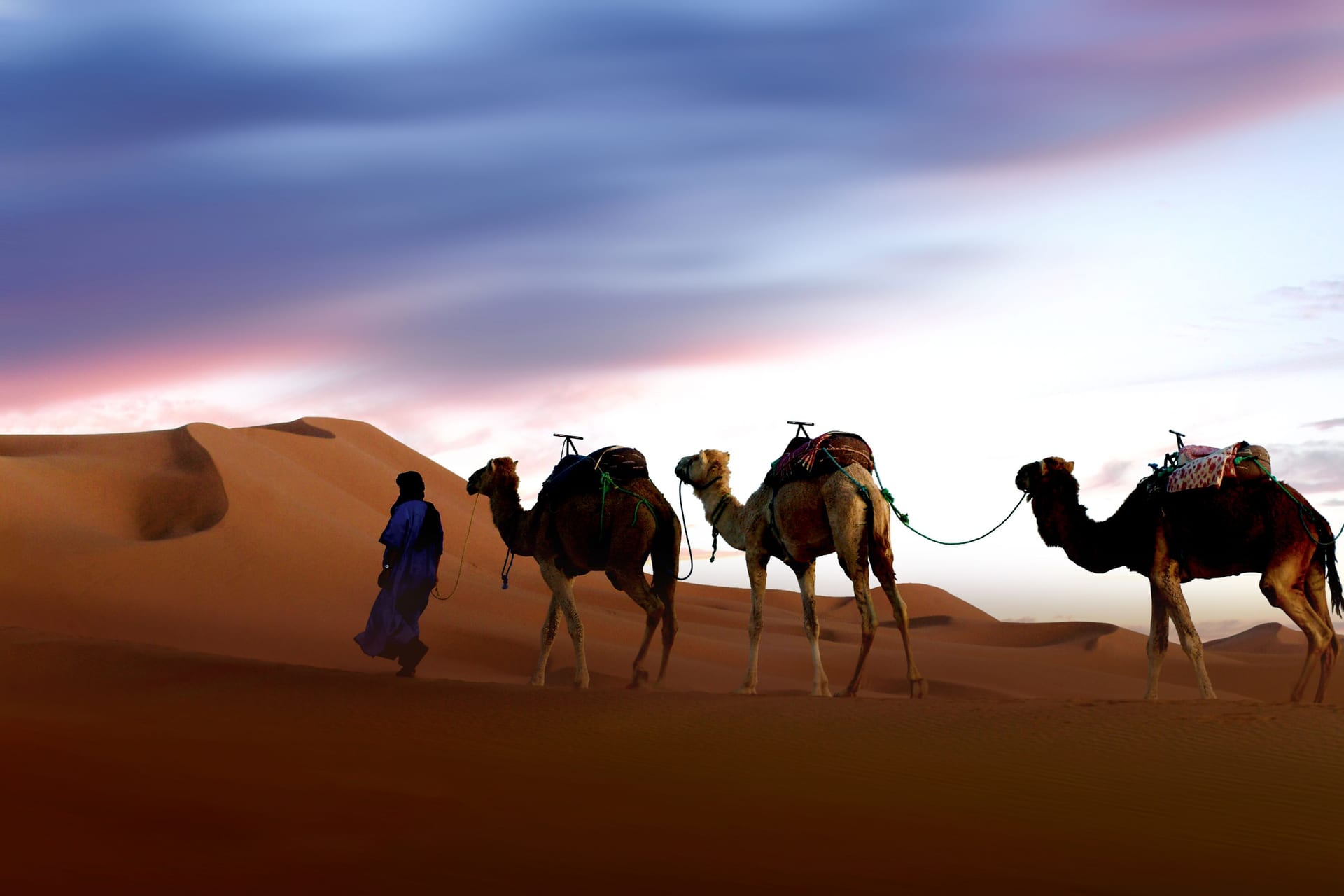
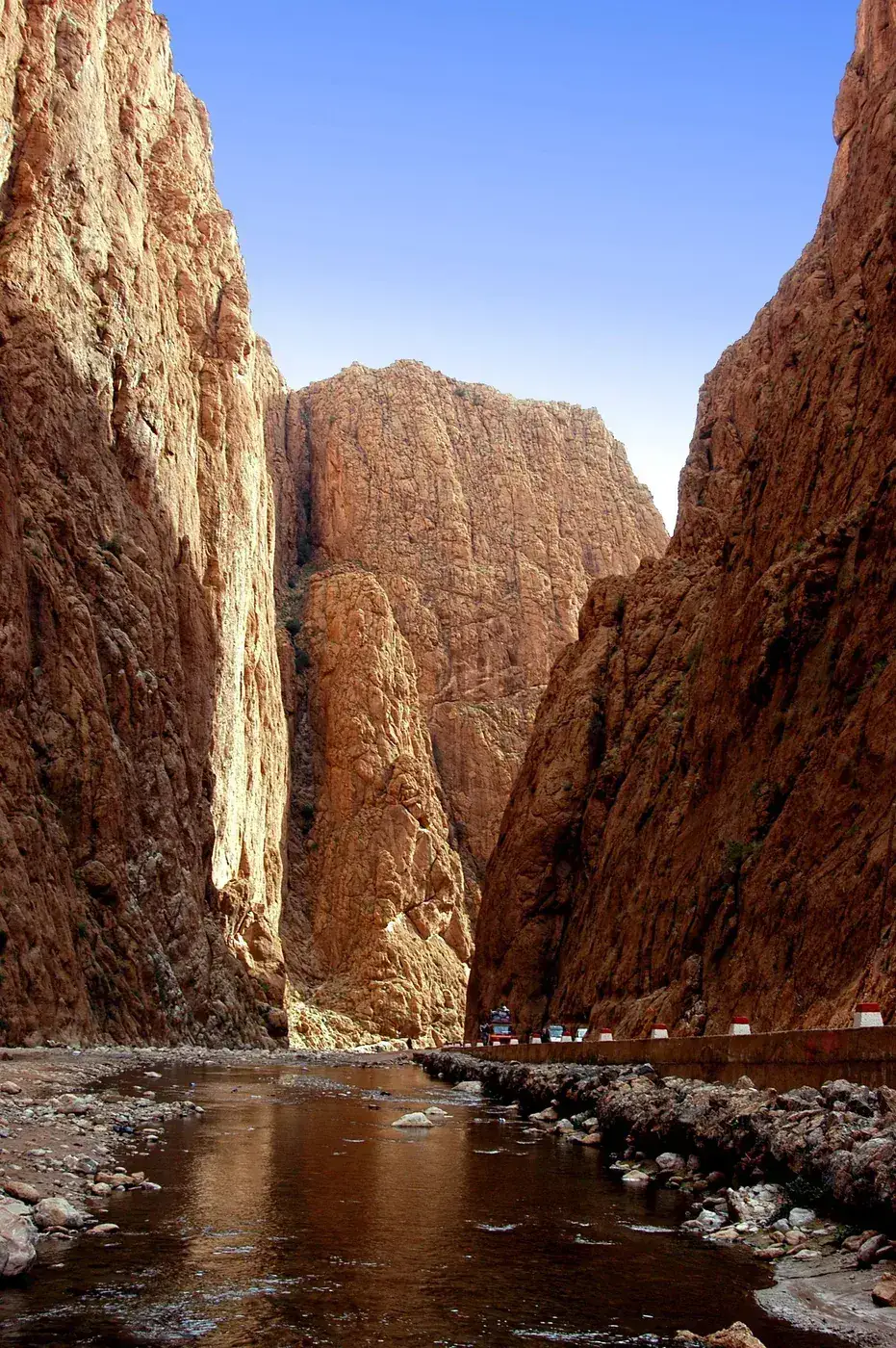
The second day threads deeper into the pre-Sahara. Soon after leaving the Dades Valley, the road enters the Todra Gorge, Morocco's great canyon — 300-metre limestone walls narrowing to a corridor barely 10 metres wide, cut by the Todra river and shaded by palm gardens. After a riverside stop, the route continues east through the Tafilalet palm groves toward Rissani, the historic market town at the edge of the Sahara, before the tarmac finally gives way to the dunes of Merzouga. Erg Chebbi's dunes climb to about 150 metres — the tallest free-standing dunes in Morocco — and this is where the trip's centerpiece begins: a camel caravan led by a Berber guide out across the sand as the light turns from gold to crimson, followed by dinner and a desert-camp night under some of the clearest skies in North Africa.
- Todra Gorge: Walk the floor of Morocco's great canyon — 300-metre limestone walls narrowing to a corridor barely 10 metres wide.
- Rissani area → Merzouga: Continue through the Tafilalet palm groves and the historic market town of Rissani toward Merzouga.
- Late afternoon — Erg Chebbi dunes: Reach dunes that climb to about 150 metres, the tallest free-standing dunes in Morocco.
- Around sunset — Sunset camel trek & desert camp: A Berber-led camel caravan into the dunes as the light turns from gold to crimson, then dinner and a night at the desert camp.
Day 3: Merzouga → Eastern Morocco → Middle Atlas → Marrakech
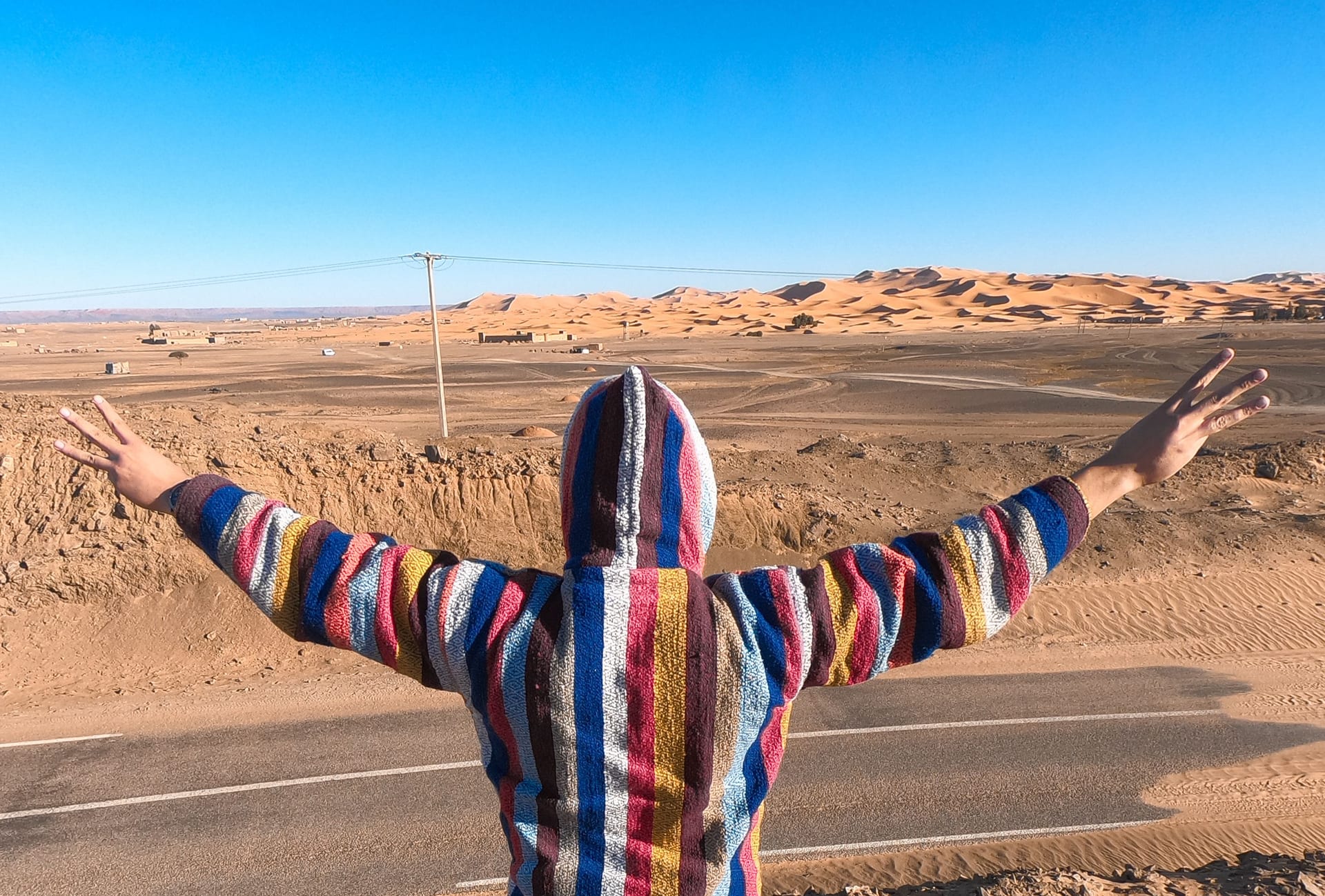
Morning in the dunes comes early — there's time to watch the light change over Erg Chebbi before the camp packs up and the return journey begins. This is the longest road day of the trip, so the itinerary deliberately keeps the focus honest: a long but scenic drive back through the Tafilalet, past the Ziz Valley's palm oases and over the Middle and High Atlas, rather than promising a rushed list of extra stops the schedule can't really support. Travelers who want more time in the dunes, or a slower pace through the valleys crossed on day one, can extend this same route to four days or longer — the dunes, the gorge and the kasbah don't change, only how much time you get with each of them.
- Sunrise over the dunes: Watch the light change over Erg Chebbi before the camp packs up.
- Return journey to Marrakech: The longest road day of the trip, via the Tafilalet, the Ziz Valley's palm oases and the Middle and High Atlas.
Practical Information
- Best travel season: Morocco's National Tourist Office highlights spring and autumn as especially suitable for the southern Sahara; the tour runs year-round, but summer heat and winter desert nights are worth considering when choosing dates.
- This is a long overland route with substantial driving each day rather than a series of short transfers.
What you will experience
Every item below is a stop on this itinerary — not an extra to buy.
- Marrakech — The red city at the foot of the Atlas, and the usual start or finish of the southern routes. Explore Marrakech
- High Atlas crossing — The road climbs over the High Atlas by the Tizi n'Tichka pass, with time to stop where the view opens out.
- Aït Ben Haddou — Walk up through the earthen ksar on the far side of the river — a UNESCO World Heritage site and the most striking stop on the road south. Explore Aït Ben Haddou
- Ouarzazate — The town where the southern routes meet, with the Taourirt Kasbah on its edge and film studios on the outskirts. Explore Ouarzazate
- Dades Valley — Red rock, palm gardens and earthen villages along the river — the classic overnight between the mountains and the desert. Explore Dades Valley
- Todra Gorge — Walk into the canyon where the limestone walls close to a few hundred metres apart and rise straight up. Explore Todra Gorge
- Rissani souk — The market town near Merzouga, and one of the least staged souks on the southern route — busiest on market days.
- Merzouga — The village at the edge of the dunes where the desert part of the trip begins, and where Morocco Grand Adventure is based. Explore Merzouga
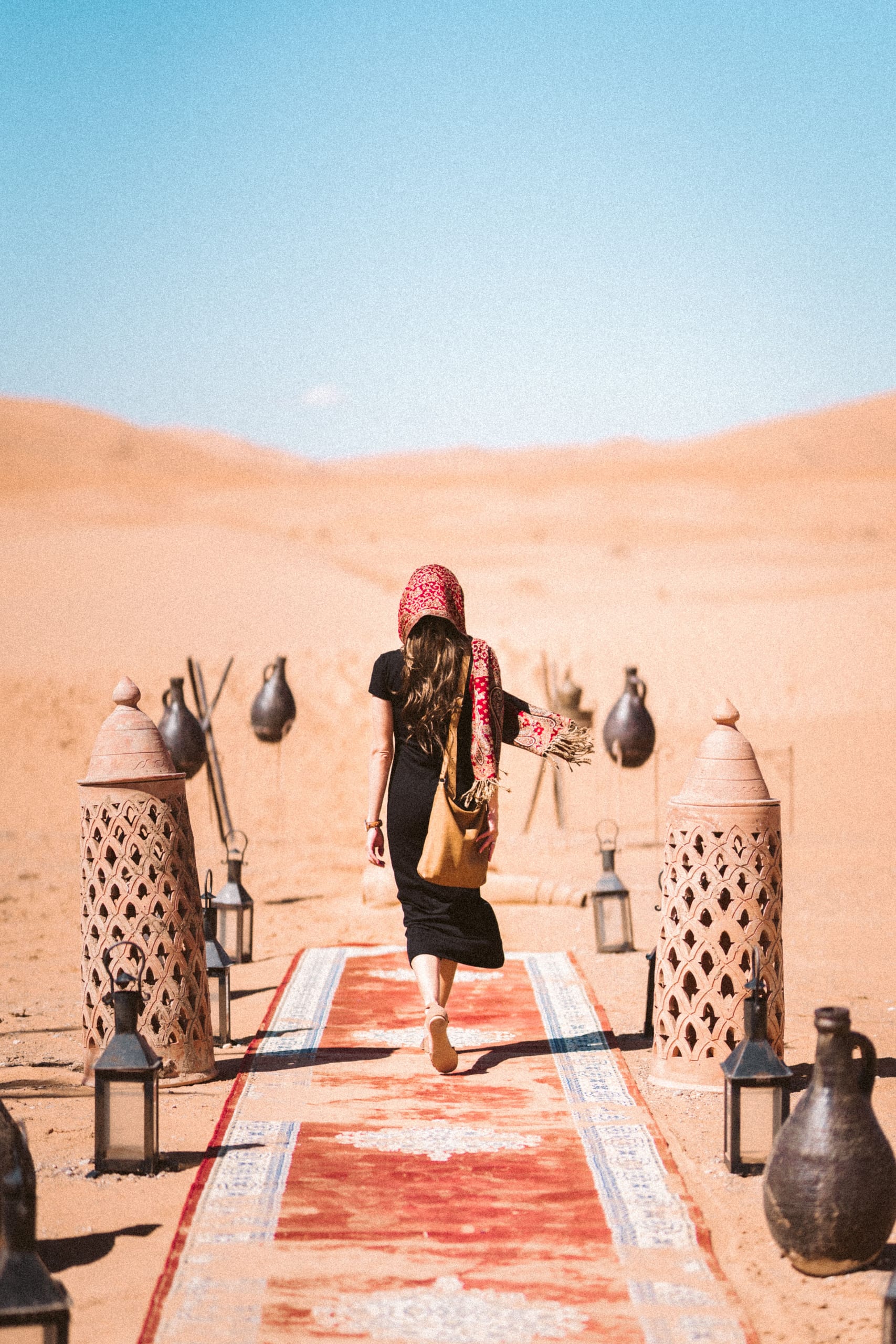
- Erg Chebbi dunes — The tall dune sea outside Merzouga — the Sahara most travellers picture, and the landscape this journey is built around. Explore Erg Chebbi
- Sunset camel trek — Ride into Erg Chebbi as the light drops, led on foot by a guide from the desert, and reach camp with the dunes still glowing.
- Night at a desert camp — Sleep between the dunes in a tented camp rather than driving back to a town for the night.
- Sunrise over the dunes — Wake early for first light on Erg Chebbi, when the sand changes colour and the ridges throw long shadows.
- Ziz Valley — A wide palm valley cut into bare rock on the road south — the viewpoint above it is one of the best stops of the day.
- Middle Atlas crossing — The greener range between Fes and the desert — upland pasture, lakes and stone towns.
What's Included
Everything below comes from this itinerary: what the price covers, and what it does not. Nothing is listed that the itinerary does not state.
Transport
- Private air-conditioned vehicle
- Professional English-speaking driver
- Fuel
Accommodation
- 2 nights' accommodation: 1 night in the Dades Valley area, 1 night at a desert camp near Merzouga
- Hotel pick-up and drop-off in Marrakech
Meals
- Breakfast as shown in the itinerary
- Breakfast at the desert camp
- Dinner at the desert camp
Desert Experiences
- Sunset camel trek into the Erg Chebbi dunes
- Desert sunrise over the dunes
Visits & Landscapes
- Visit Todra Gorge
Meals included
2 breakfasts, as shown in the itinerary
2 dinners: Dinner at Dades Valley, Dinner at Desert camp
Meals, night by night
Breakfast and dinner for every night of this route, exactly as the itinerary states them.
- Night 1: Dades Valley — Breakfast: Included | Dinner: Included
- Night 2: Desert camp — Breakfast: Included | Dinner: Included
Not Included
- International flights
- Lunches
- Drinks
- Monument and museum entrance fees
- Tips and personal expenses
How booking works
- Send your request: Free. No payment, no card details, no obligation.
- We confirm your trip: We check your dates, group size and availability, then send you the itinerary and the final price in writing.
- 20% deposit: Paid only after you have approved the confirmed trip. It secures your booking.
- 80% on arrival: The remaining 80% is paid when you arrive in Morocco.
Cancel more than 7 days before the trip and there is no charge. Within 7 days, 50% is charged.
5.0 ★ based on 6 Google reviews
Traveler Stories
What our guests say
Mohamed was recommended as a guide by a friend and feel lucky for the wonderful experience I’ve had exploring Merzouga and the Sahara. Not only does he speak many languages, he is knowledgeable and happy to share about the culture, customs and the history of the Amazight and gives you the local experience. He goes out of his way to provide a tailor made trip that is just to your wishes. I would definitely encourage everyone to visit the desert at least once in their life because this has been an amazing and unforgettable journey for me!
I will love forever this enchanting land: colours, traditions, history and landscapes; everything is like a treasure that I have to protect in my mind. Or maybe I need to visit Marocco again and for sure Marocco Grand Adventure will be my choise. Thank you so much!
Tour Gallery
FAQ
-
Is three days really enough for Marrakech to Merzouga?
Three days is the shortest practical format for this overland route. It works when you want the key southern stops and one Sahara camp night, but you should expect long travel days. If you want a slower pace or more time in the dunes, four days or more is the better choice.
-
How much driving should I expect?
This is a long road journey rather than a short transfer. The route crosses the High Atlas and southern valleys before reaching Merzouga, then returns to Marrakech. We prefer to explain that honestly so you can choose the right number of days for your travel style.
-
What is the Sahara part of the trip like?
You reach Merzouga and the Erg Chebbi dune area on the second day, then head into the dunes for the sunset camel experience and a night at the desert camp. The exact camp setup and activity details are confirmed with you before booking rather than assumed.
-
When is the best time for this Sahara tour?
Morocco's National Tourist Office highlights spring and autumn as especially suitable seasons for the southern Sahara. The tour can be planned year-round, but summer heat and winter nights are important considerations when choosing dates.
-
Can I book now and pay later?
Yes. Sending a request is free and commits you to nothing. We confirm your dates, itinerary and final price with you first; a 20% deposit then secures the booking, and the remaining 80% is paid on arrival in Morocco.
-
Are flights included?
International flights are not part of this tour price. There is no single month that guarantees the cheapest airfare for every traveler because prices depend on your departure country, airline and dates. Once your tour dates are chosen, we can help you think through the most practical arrival and departure plan.
More tours from Marrakech
Browse all private tours from Marrakech
Who this tour is best for
First-time Sahara visitors from Marrakech who want the classic southern route and one night between the dunes, and who accept two full driving days for it. If you can spare a fourth day, the 4-day version buys you a real Merzouga desert day.
Plan with our guides
- Marrakech to Merzouga — Route, Stops & How Many Days
- Camel Trekking in Merzouga — What to Expect at Erg Chebbi
- Luxury Desert Camps in Merzouga — What You Really Get
- How Many Days Do You Need in the Sahara?
- Best Time to Visit Merzouga — Month-by-Month Guide
- What to Pack for Merzouga — Desert Packing List
- Marrakech vs Fes — Which City for Your Sahara Trip?
- Erg Chebbi Dunes — How Tall They Are & What to Do
- The Atlas Mountains — Morocco's High Atlas Explained
Practical guides written by local Merzouga guides — trip length, seasons, camel trekking and packing.