Erg Chebbi Sunrise & Sunset — Timing the Dunes
The two hours that most people fly across the world for at Erg Chebbi are sunrise and sunset, when the dunes turn gold, orange and deep crimson. Here is what each one feels like, when the light falls through the year and how a Merzouga schedule is built around it.
Why the golden hours matter on the dunes
Sand has no colour of its own — it takes on the colour of the light. At midday the Erg Chebbi dunes sit flat and pale, but in the first and last hour of daylight the long, low sun rakes across the crests and throws deep shadows that give the ridges strong three-dimensional shape. That is why essentially every meaningful desert photograph, and every memorable moment on the sand, happens at sunrise or sunset.
Sunset at Erg Chebbi
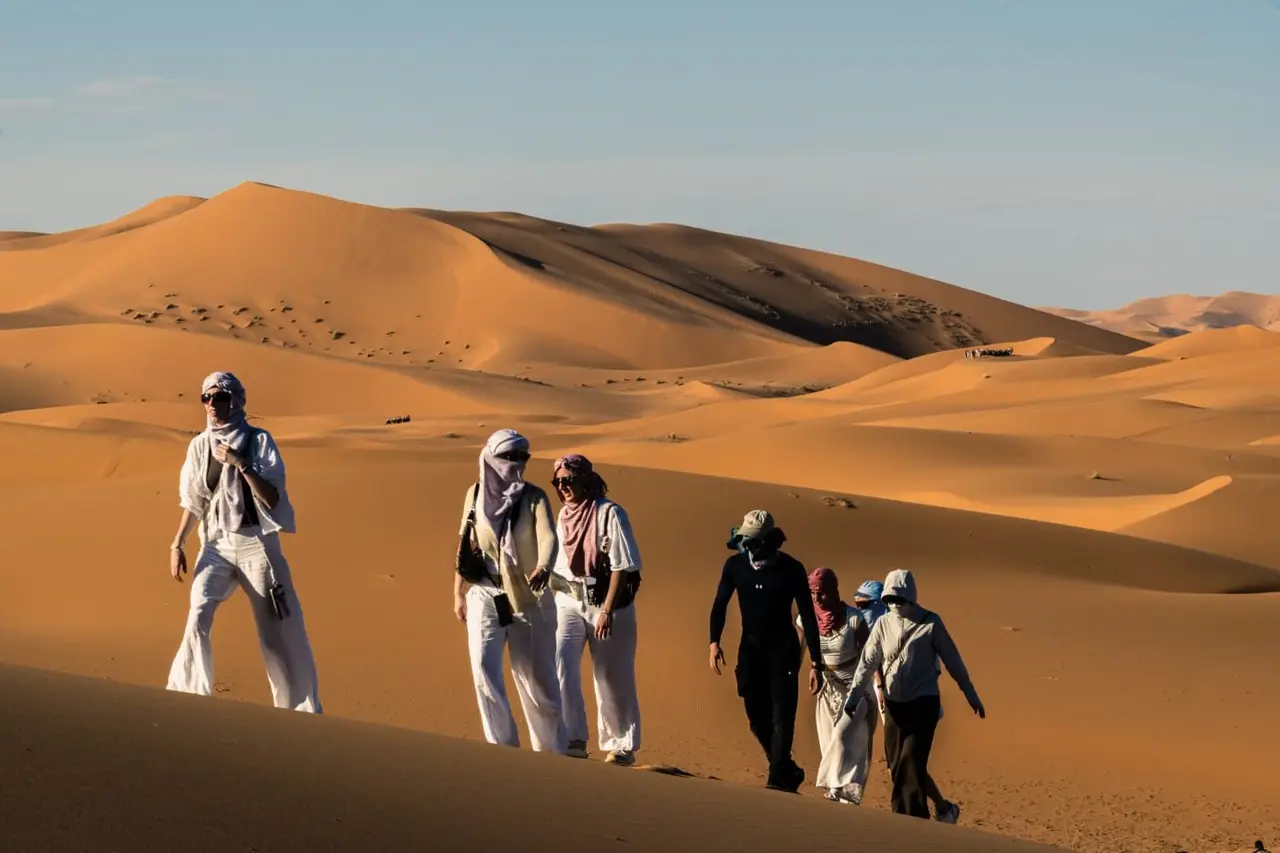
Sunset is the social hour. The western faces of the dunes turn from gold to deep red, camel lines trace the ridge tops below you, and the village-facing edge of the erg fills with trekkers and photographers. You reach it by walking up from Merzouga in under an hour, or by timing a camel trek so you crest the ridge as the light turns.
Because everyone who wants a camp night arrives the same way, sunset at the dune line is lively rather than private. If you want the view more to yourself, rise early instead.
- The classic arrival: camel trek timed to crest the dunes as the sun sets
- The western faces catch the last, reddest light of the day
- Busiest hour of the day on the dunes near the village
Sunrise at Erg Chebbi
Sunrise is the connoisseur’s choice. The sand is cool underfoot, the village is still waking up, and the eastern slopes catch a clear, soft light that builds fast. You have the crests largely to yourself, and the shadows run long and blue before the day flattens the colour out.
If you are sleeping in a camp between the dunes, the classic morning is a short climb to a nearby crest for sunrise, then the camel ride back for breakfast in Merzouga. For photographers, the hour after sunrise usually beats the sunset rush — fewer footprints and softer contrast.
How the timing shifts through the year
Trek and tour operators time departures to the light, so sunrise and sunset treks happen about an hour before the sun touches the horizon or just after it rises. Through the year the exact times swing with the seasons — roughly one hour either side depending on the month — but the golden-hour logic is the same every day of the year.
We never publish a fixed schedule because the precise time depends on the season and the route; on booking we confirm exact departure times for your dates. For planning, know that late-afternoon departures happen in every season and are the most common choice, with sunrise available for early risers in the cooler months.
Photographing the golden hours
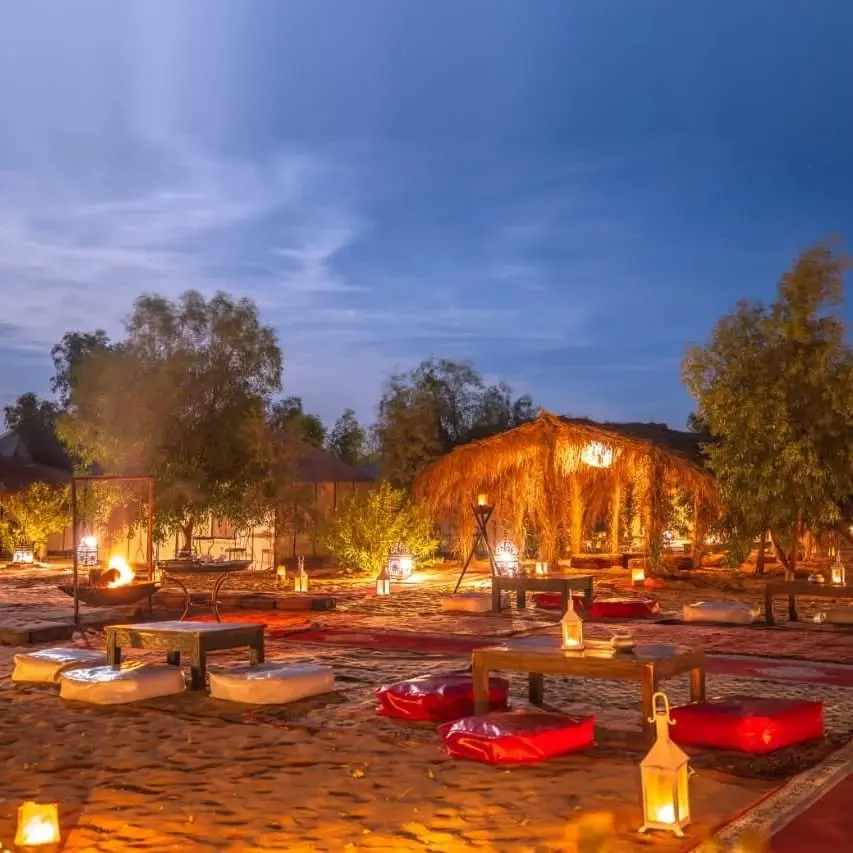
The ingredients for good dune photographs are simple: be on a high crest with the sun low and behind you or raking across the sand. A wide lens and a steady hand (or small tripod) are enough for most people; phones with a raised contrast setting cope fine with the orange tones. If you stay in a camp, the evening light on the tents and lanterns at dusk is often just as photogenic as the dunes themselves.
For a dark-sky shoot, the hour after astronomical twilight is the window for stargazing photography — the Milky Way is frequently visible to the naked eye in the cooler months, away from village lights.
How the light fits a Merzouga day
The traveller’s day is built around these two windows. Late afternoon: an optional quad on the flats or a 4x4 to the tall crests, then the sunset camel trek or drive onto the dune ridge. Dusk: camp dinner, music, and stargazing after the sky fully darkens. Dawn: a sunrise climb, then the ride or drive back for breakfast. Two golden hours, one camp night — that is the whole desert rhythm in a sentence.
Related Tours
3-Day Luxury Sahara Tour from Marrakech
A three-day private journey from Marrakech to the dunes of Merzouga, built for travelers who want a real Sahara experience without pretending the road is short. Cross the High Atlas, visit Aït Ben Haddou, travel through the Dades Valley and Todra Gorge, reach Merzouga and Erg Chebbi for a sunset camel trek and desert-camp night, then return to Marrakech through the changing landscapes of southern Morocco. Three days is the shortest practical format for this overland route; if you prefer slower travel or more time in the desert, ask us about a longer itinerary.
4-Day Marrakech to Merzouga Sahara Desert Tour
A more comfortable alternative to the classic three-day Marrakech–Merzouga loop. The four-day format keeps the main southern highlights but gives the journey more breathing room, with a dedicated day around Merzouga before the return to Marrakech.
2-Day Zagora Desert Tour from Marrakech
A compact private desert journey from Marrakech to Zagora for travellers who want a southern desert experience without committing to the longer Merzouga route. Cross the High Atlas, visit Aït Ben Haddou and Ouarzazate, continue through the Draa Valley to Zagora, and return to Marrakech the following day.
Destinations in this Guide
Merzouga
Gateway to Erg Chebbi — the most dramatic dunes in Morocco.
Erg Chebbi
Morocco's most iconic sand sea — soaring dunes at sunrise.
Keep planning
- Erg Chebbi — Morocco’s Tallest Sand Dunes
- Camel Trekking in Merzouga — A Practical Guide
- Merzouga Desert Camps — A Complete Guide
- Best Time to Visit Merzouga — Month-by-Month Guide
- Sahara Desert Travel Guide — Morocco Desert Trips Explained
Frequently asked questions
-
Is sunrise or sunset better at Erg Chebbi?
Both are spectacular; they are simply different. Sunset is warmer and more social but busier; sunrise is quieter, cooler and often better for photography because the light is softer and the field is less crowded. If you sleep in a camp you can have both in one night.
-
What time is sunset at Erg Chebbi?
It changes with the season, but treks and drives are generally timed to reach the dune crest about an hour before sunset, throughout the year. Exact departure times are confirmed for your dates when you book.
-
Can I see the dunes light up without a tour?
Yes — the dunes are public land and you can walk up from Merzouga in under an hour. Many people also book just the camel trek or a 4x4 ride to the crest without staying in a camp.
-
When is the best night for stargazing?
The cooler, drier months (roughly October to April) are excellent for the night sky, and the hour after final twilight is the prime window. A camp night between the dunes puts you far from village lights.
-
What should I bring for the golden hours?
A warm layer for after sunset, closed shoes for the sand, water, and a charged camera or phone. A headlamp is useful for the walk back to camp in darkness.
Sources & further information
- Visit Morocco — Errachidia–Midelt–Merzouga region — ONMT (Moroccan National Tourist Office)
Ready for the real Sahara?
Talk to a local Merzouga guide and shape the desert night that suits your group, pace and budget. Build my Morocco journey · WhatsApp a local expert.