Camel Trekking in Morocco: What to Expect and How to Prepare
Camel Trekking · June 2026 · 7 min read
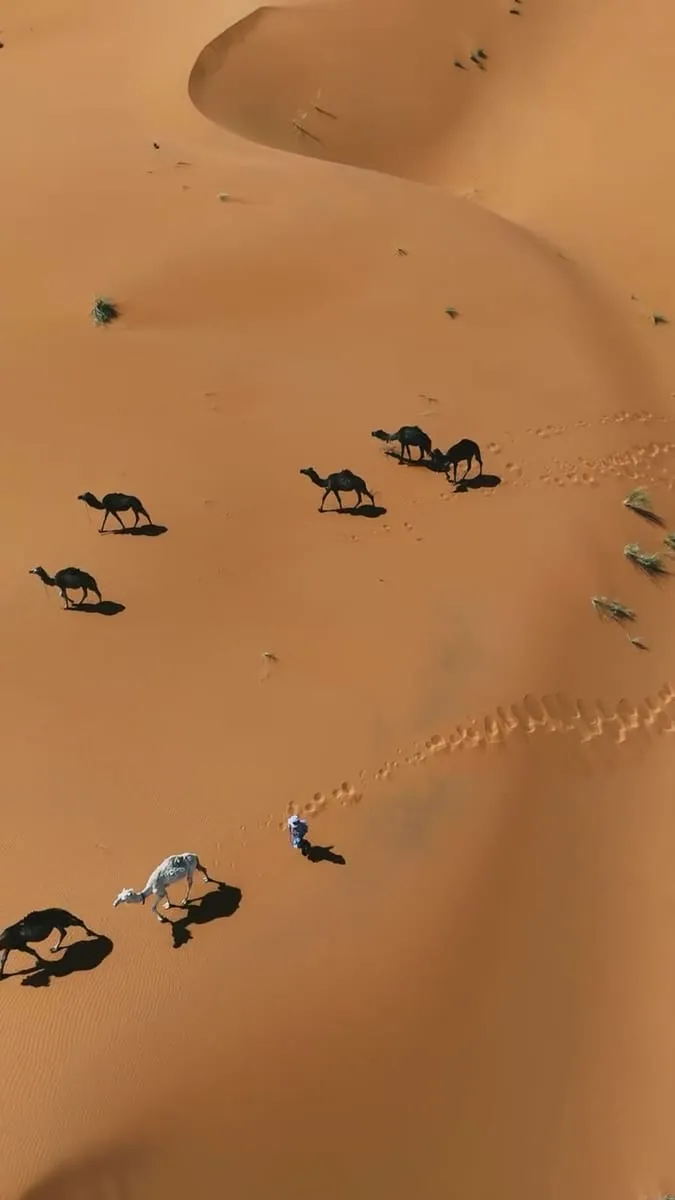
Everything first-time riders need to know — what to wear, how to mount, what to bring, and the traditions behind this age-old Saharan journey.
What Actually Happens on a Camel Trek
Most treks into Erg Chebbi leave about an hour before sunset, crossing open gravel before climbing the first dune ridge as the light turns orange. The ride from the edge of the dunes to a desert camp typically takes 50 to 70 minutes each way, at a slow, steady pace with stops for photos.
You ride a dromedary — a one-humped camel — led on foot by a local Berber cameleer from the Merzouga area, who handles the animal throughout. First-time riders are usually surprised by how unhurried it feels.
Mounting and Riding: What First-Timers Should Know
The camel kneels to let you mount and dismount — lean back as it rises to its back legs first, and forward again as it stands on its front legs, since the motion is more pronounced than getting on a horse. Once moving, hold the front of the saddle rather than gripping tightly with your legs; the gait is a gentle side-to-side sway, not a bounce.
You do not steer — the cameleer leads the animal on a rope, and the camels usually walk in a line, nose to tail. There is nothing to actively do beyond sitting comfortably and enjoying the ride.
Is It Safe for Children or Nervous Riders?
Children typically ride with an adult or on a shorter lead camel, and nervous riders can simply say so — cameleers are used to first-timers and will walk more slowly or stay closer to your animal if asked. Anyone unable or unwilling to ride can usually join the camp by 4x4 instead; ask when you book.
What to Wear for the Ride
Loose, breathable layers work best — the climb to the dune camp is in warm daylight, but the temperature drops fast once the sun sets. Closed shoes are easier to mount in than sandals, and a scarf or headwrap (bought locally in Merzouga is fine) keeps blown sand off your face.
Respecting the Cameleers and the Animals
The cameleers are local Berber guides whose families have worked this stretch of dunes for generations — follow their lead on pacing and photo stops, and ask before feeding or touching an animal that is not your own. A tip for the cameleer at the end of a trek is customary and appreciated, though never required.
Sunset or Sunrise — Which Should You Choose?
The sunset trek is the classic choice: warm light, long shadows across the dunes, and a direct route into the evening camp programme. The sunrise ride out the next morning is quieter and cooler, often the most photogenic part of the whole stay. Most overnight camp stays include both as a matter of course.
Ready to try it yourself? Read our full camel trekking guide or explore the Sahara tours that include a sunset trek and camp night:
Related Tours
- 3-Day Luxury Sahara Tour from Marrakech — 3 Days / 2 Nights
Destinations in this Guide
- Merzouga — Gateway to Erg Chebbi — the most dramatic dunes in Morocco.
- Erg Chebbi — Morocco's most iconic sand sea — soaring dunes at sunrise.