5-Day Imperial Cities & Desert
From the ochre imperial capital of Marrakech to the blue-washed lanes of Chefchaouen, this five-day journey weaves together Morocco's greatest imperial cities and a night under the Sahara stars. Cross the High Atlas to the UNESCO ksar of Aït Ben Haddou, sleep in a luxury desert camp among the dunes of Erg Chebbi, explore the medieval labyrinth of Fes, and wander the Roman ruins of Volubilis.
Duration: 5 Days / 4 Nights
Trip at a Glance
- Duration
- 5 Days / 4 Nights
- Starts
- Marrakech
- Ends
- Chefchaouen
- Where you stay
- Dades Valley · Luxury desert camp · Fes
Why You'll Love This Tour
- Atlas Mountains Crossing
- Aït Ben Haddou (UNESCO)
- Erg Chebbi Sahara & Luxury Camp
- Fes el-Bali Medina
- Chefchaouen Blue City
- Meknès & Volubilis
Why choose this itinerary
- The imperial cities route — Rabat, Meknes, Fes and Marrakech — as one private journey.
- Five days allow unhurried medina time with expert local guidance.
- Private vehicle and driver-guide throughout.
Itinerary
Day 1: Marrakech → High Atlas → Aït Ben Haddou → Dades Valley
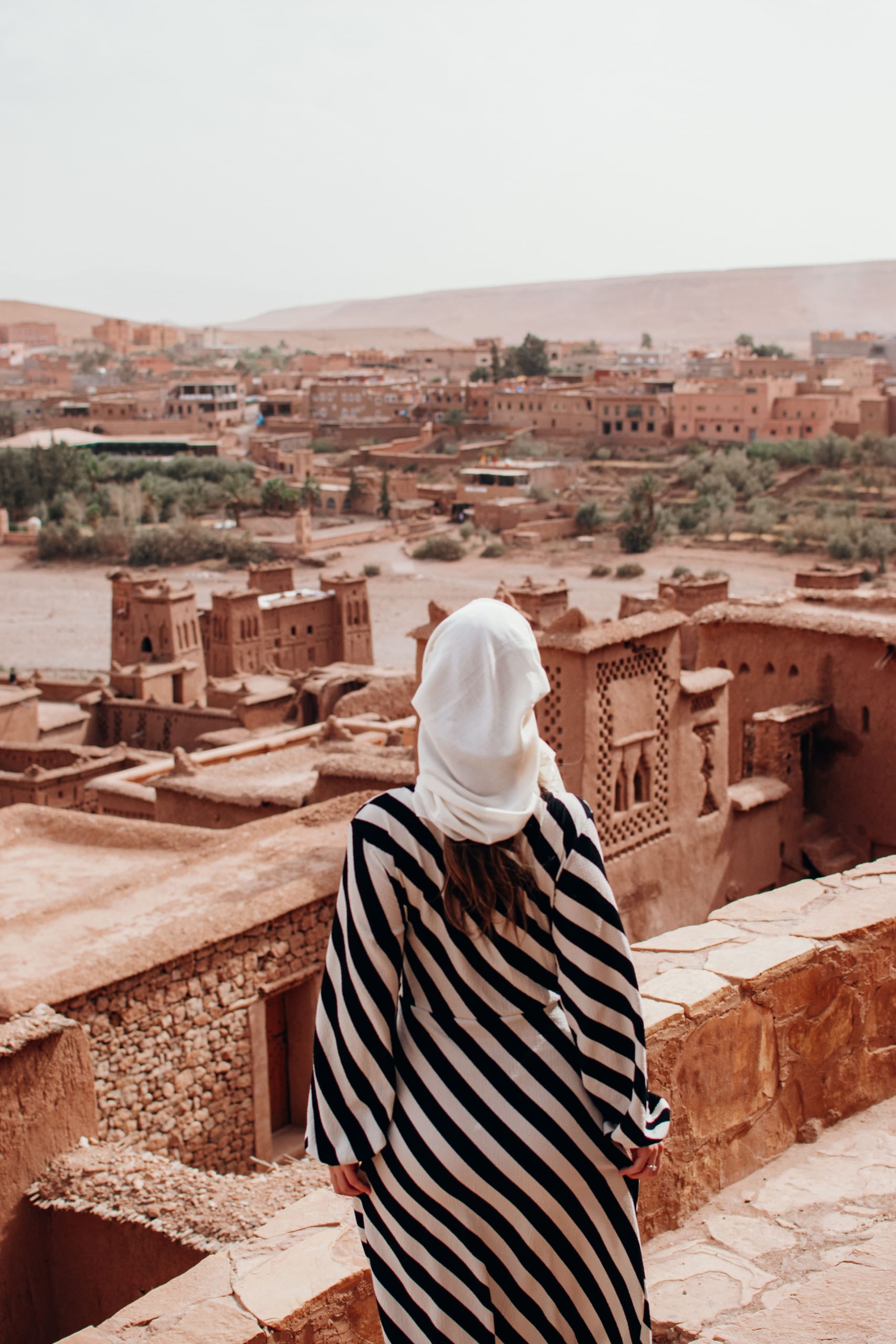
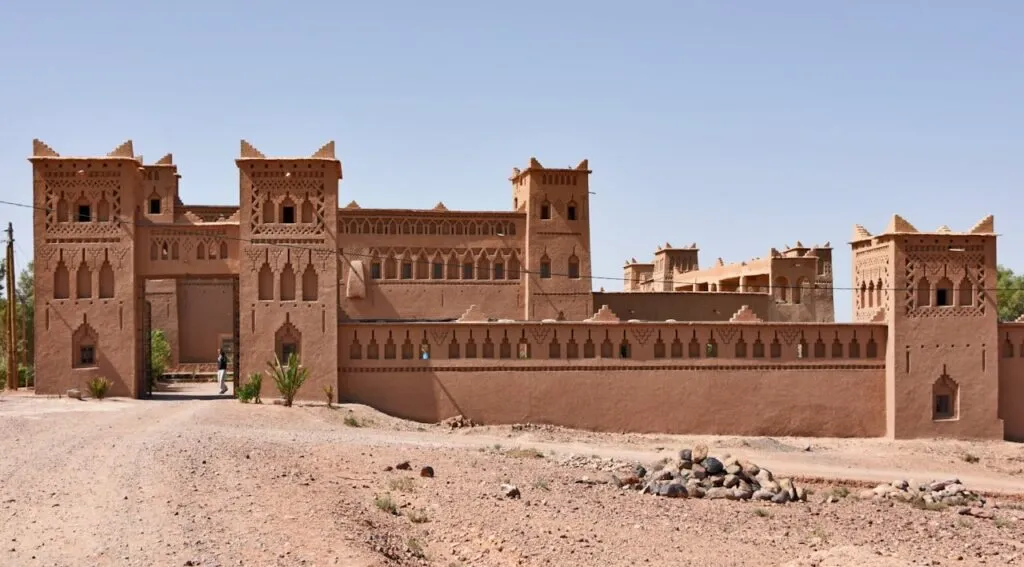
Depart Marrakech in the morning and climb into the High Atlas, crossing the Tizi n'Tichka Pass — at over 2,260 metres, the highest road pass in North Africa. The road drops toward Aït Ben Haddou, the UNESCO-listed fortified ksar whose stacked mud-brick towers have stood in for Jerusalem, Tibet and ancient Egypt on screen; climb to the hilltop granary for the view over the Ounila valley before continuing to Ouarzazate, Morocco's film-industry hub. From there the route threads through Skoura, a 1,000-year-old palm oasis on the Road of a Thousand Kasbahs and home to the beautifully restored Amridil Kasbah, before the final climb into the dramatic Dades Valley — the Valley of a Thousand Kasbahs — for an overnight stay in a kasbah hotel or riad.
- Morning — Depart Marrakech: Climb into the High Atlas and cross the Tizi n'Tichka Pass — at over 2,260 metres, the highest road pass in North Africa.
- Aït Ben Haddou (UNESCO): Climb to the hilltop granary of this UNESCO-listed fortified village for the view over the Ounila valley.
- Ouarzazate & Skoura Oasis: Pass through Morocco's film-industry hub, then the 1,000-year-old palm oasis of Skoura and its restored Amridil Kasbah.
- Overnight: Dades Valley: Arrive via the famous switchbacks above Boulmane Dades, in the Valley of a Thousand Kasbahs, for an overnight stay in a kasbah hotel or riad.
Day 2: Dades Valley → Todra Gorge → Merzouga (Erg Chebbi)
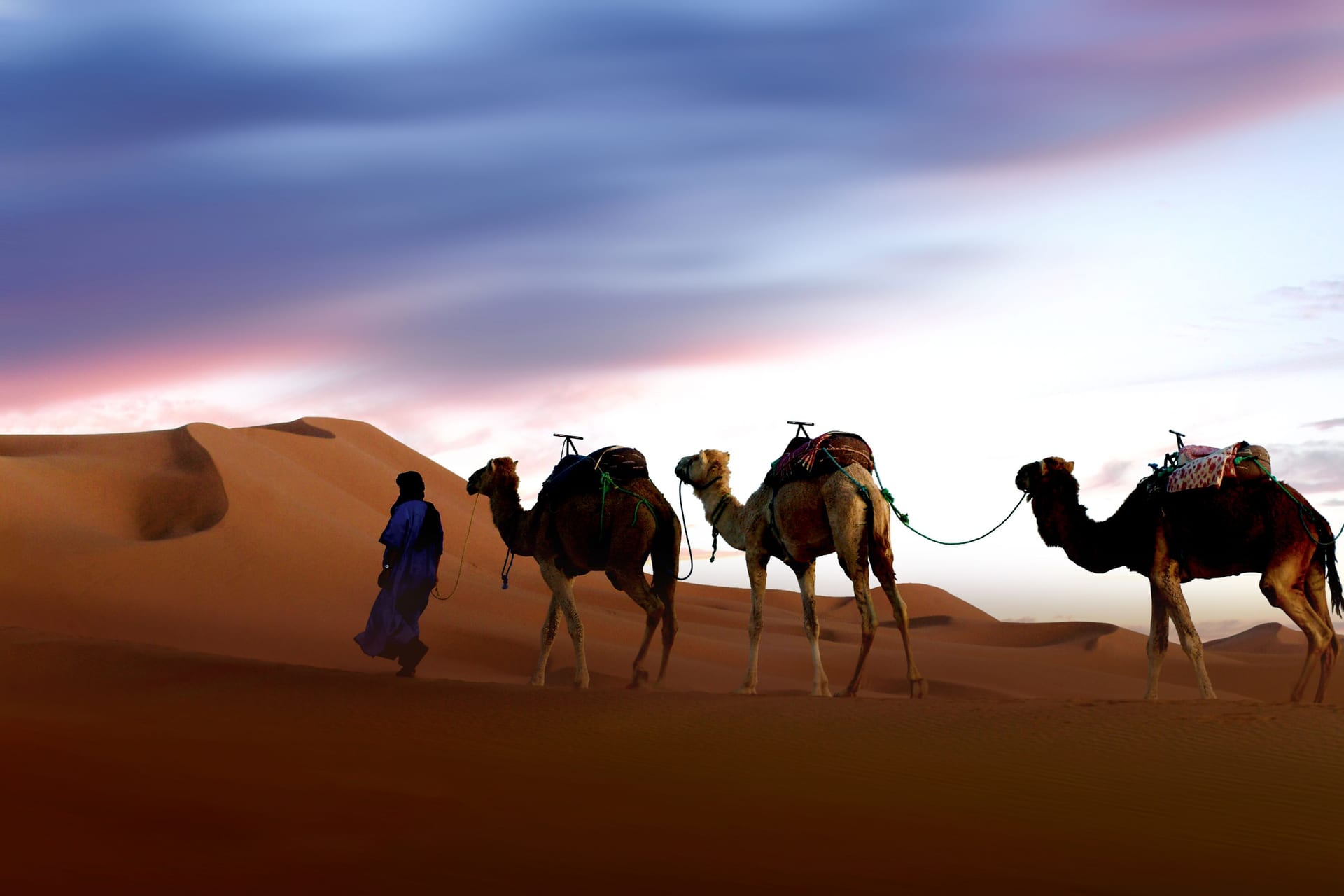
Admire the winding Dades Valley and its famous switchbacks before driving to the Todra Gorge, Morocco's great canyon — 300-metre limestone walls narrowing to a corridor barely 10 metres wide, cut by the Todra river. Continue through Berber villages and the Tafilalet's palm groves to Merzouga at the edge of the Sahara, where Erg Chebbi's dunes climb to about 150 metres, the tallest free-standing dunes in the country. A camel caravan led by a Berber guide carries you out across the sand as the light turns from gold to crimson, to a luxury desert camp — dinner, live Berber music and star-filled skies included.
- Dades Valley: Admire the winding valley and its famous switchbacks above Boulmane Dades.
- Todra Gorge: Drive to Morocco's great canyon — 300-metre limestone walls narrowing to a corridor barely 10 metres wide.
- Rissani (optional) → Merzouga: Continue through Berber villages and the Tafilalet's palm groves to Merzouga at the edge of the Sahara.
- Sunset — Sunset camel trek — Erg Chebbi: A Berber-led camel caravan across dunes that climb to about 150 metres, the tallest free-standing dunes in Morocco.
- Luxury desert camp: Dinner, live Berber music and star-filled skies.
Day 3: Merzouga → Ziz Valley → Midelt → Fes
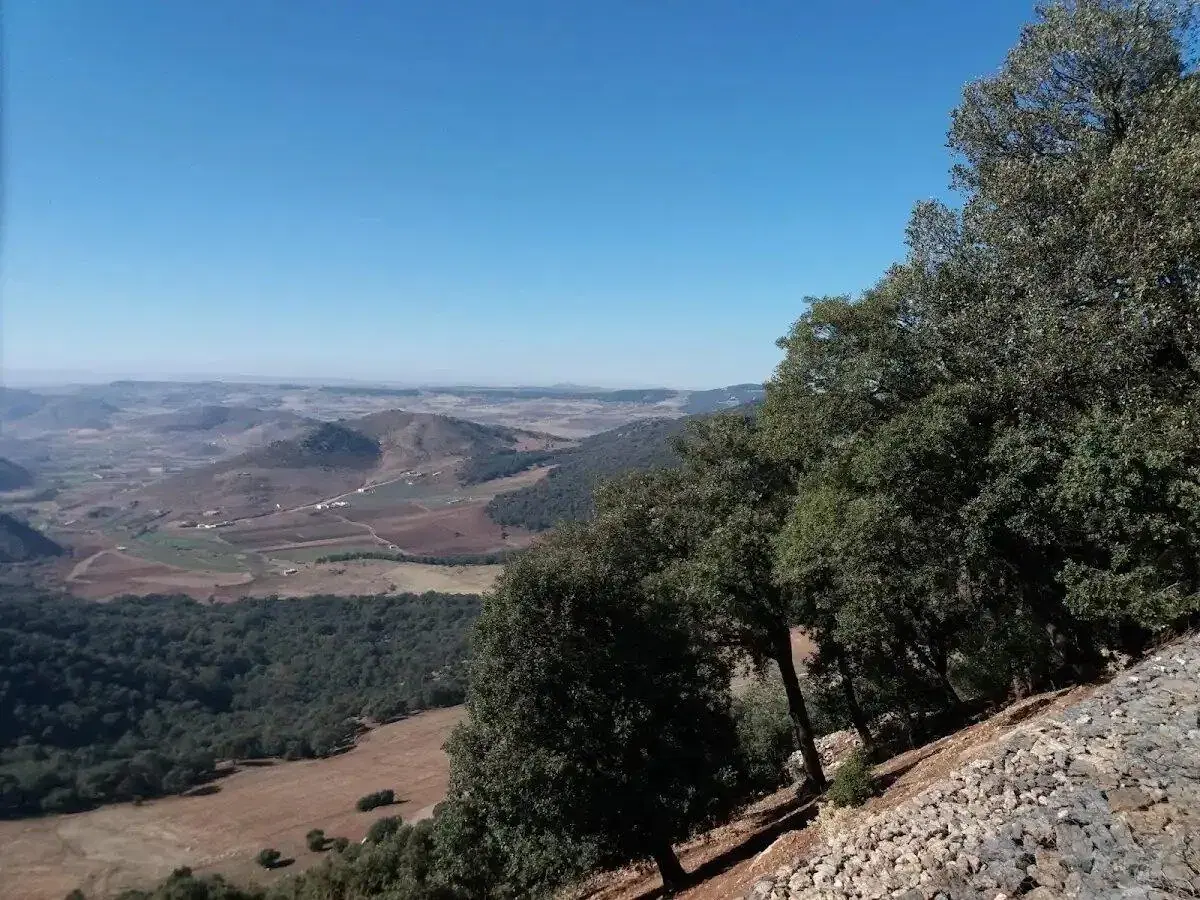
Wake for sunrise over the dunes before breakfast in Merzouga, then head north through the Ziz Valley's endless palm oases, stopping in Midelt for lunch. The road climbs through the cedar forests of the Middle Atlas, home to Barbary macaques, before reaching Ifrane, Morocco's alpine-style mountain town of red-roofed chalets and cool pine-covered hills, then continues on to the imperial city of Fes — Morocco's spiritual and cultural capital, and the most convenient gateway to the desert of any major city.
- Sunrise over Erg Chebbi: Wake for sunrise over the dunes before breakfast in Merzouga.
- Ziz Valley: Head north through the Ziz Valley's endless palm oases.
- Midelt: Stop in Midelt for lunch.
- Cedar forest & Ifrane: Pass the Middle Atlas cedar forests, home to Barbary macaques, and the alpine-style mountain town of Ifrane.
- Overnight: Fes: Arrive at Fes, Morocco's spiritual and cultural capital.
Day 4: Guided Tour of Fes
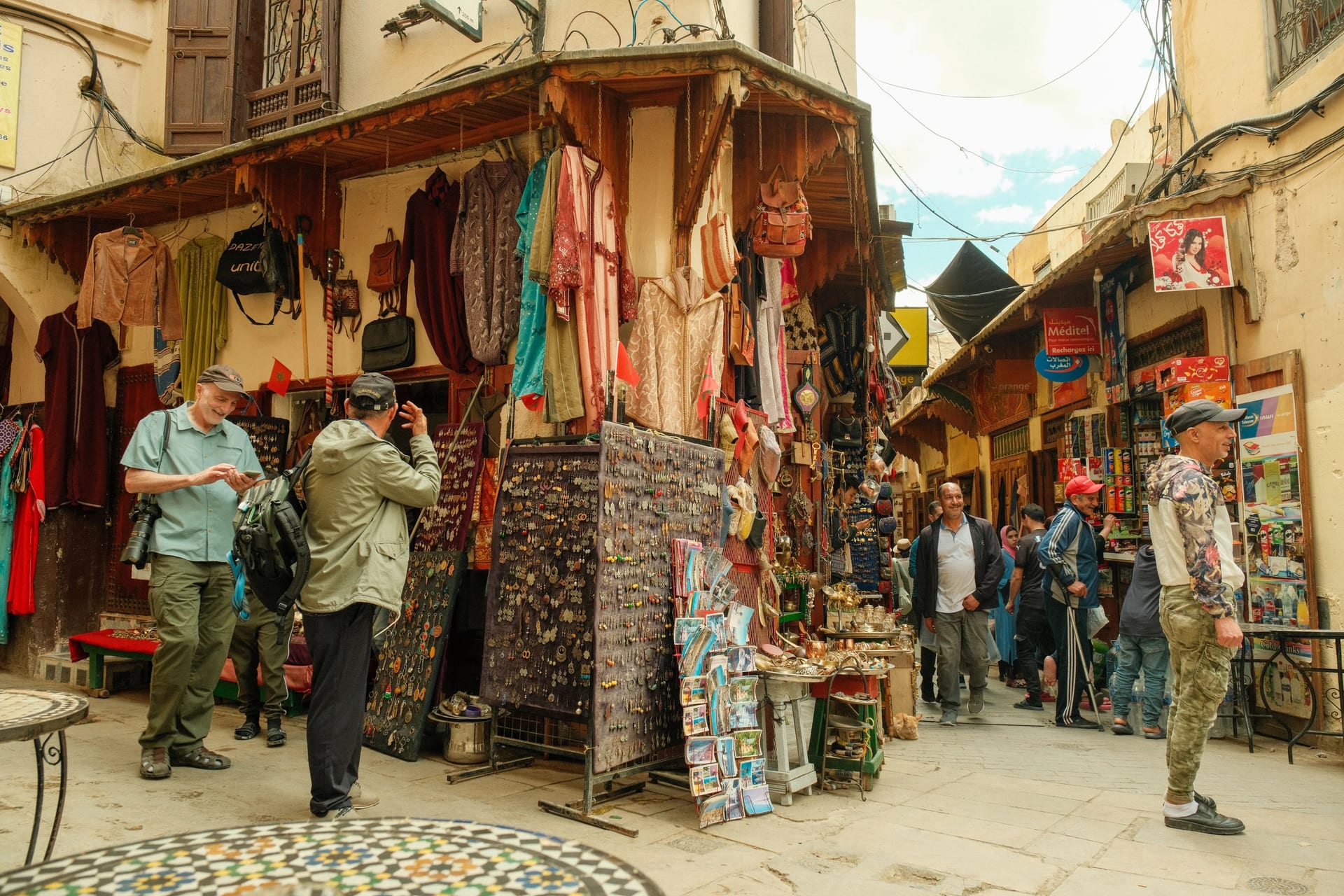
Discover one of the world's oldest living cities with an official local guide. Fes el-Bali's roughly 9,000 alleys form the largest car-free urban area on earth, and a local guide is less a convenience than a necessity here. Explore the Royal Palace gates, then thread through the medina to Al-Qarawiyyin, the world's oldest continuously operating university, the carved cedar of the Bou Inania medersa, and the open-air dye pits of the Chouara Tannery, still worked by hand as they have been for centuries. Bustling souks and artisan workshops fill the hours between, and your evening is free to savour Fes at your own pace.
- Royal Palace gates: Explore the Royal Palace gates with an official local guide.
- Fes el-Bali medina: Wander roughly 9,000 alleys — the largest car-free urban area on earth — past Al-Qarawiyyin, the world's oldest continuously operating university, and the Bou Inania medersa's carved cedar.
- Chouara Tannery: See the open-air dye pits, still worked by hand as they have been for centuries.
- Evening free — Souks & pottery workshops: Browse the bustling souks and artisan workshops. Your evening is free to savour Fes at your own pace.
Day 5: Fes → Meknès → Volubilis → Chefchaouen
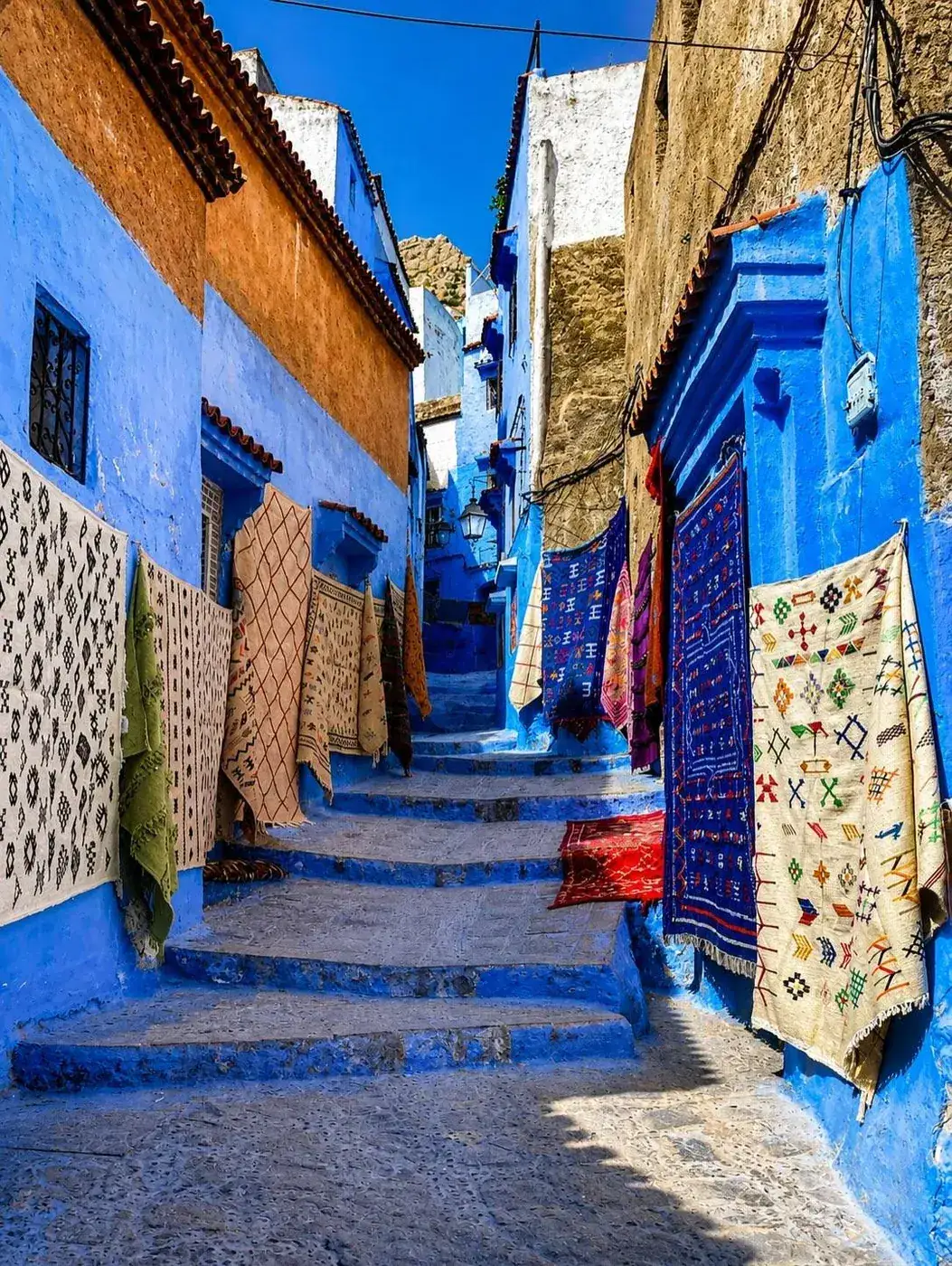
Travel to Meknès, the quietest of Morocco's four imperial cities, where Sultan Moulay Ismail built a 17th-century capital on a monumental scale — the Bab Mansour gate, the vast Heri es-Souani granaries and his own mausoleum. From there it's a short drive to Volubilis, a remarkably preserved Roman city set among olive groves, before the road continues north to Chefchaouen — a whole medina washed in shades of blue, from powder to indigo, wedged into the Rif Mountains. The afternoon and evening are free to walk the blue lanes and climb to the Spanish Mosque viewpoint for sunset over the town.
- Meknès — Bab Mansour Gate & Mausoleum of Moulay Ismail: See the monumental Bab Mansour gate, the vast Heri es-Souani granaries and the Mausoleum of Moulay Ismail, built by the sultan who made Meknès his 17th-century capital.
- Volubilis (UNESCO): Wander the remarkably preserved Roman ruins, set among olive groves.
- Afternoon & evening free — Overnight: Chefchaouen: Walk the blue-washed lanes and climb to the Spanish Mosque viewpoint for sunset over the town.
What you will experience
Every item below is a stop on this itinerary — not an extra to buy.
- High Atlas crossing — The road climbs over the High Atlas by the Tizi n'Tichka pass, with time to stop where the view opens out.
- Aït Ben Haddou — Walk up through the earthen ksar on the far side of the river — a UNESCO World Heritage site and the most striking stop on the road south. Explore Aït Ben Haddou
- Ouarzazate — The town where the southern routes meet, with the Taourirt Kasbah on its edge and film studios on the outskirts. Explore Ouarzazate
- Skoura oasis — A working palm oasis of kasbahs and gardens rather than a viewpoint you look at from the road. Explore Skoura Oasis
- Dades Valley — Red rock, palm gardens and earthen villages along the river — the classic overnight between the mountains and the desert. Explore Dades Valley
- Todra Gorge — Walk into the canyon where the limestone walls close to a few hundred metres apart and rise straight up. Explore Todra Gorge
- Erg Chebbi dunes — The tall dune sea outside Merzouga — the Sahara most travellers picture, and the landscape this journey is built around. Explore Erg Chebbi
- Sunset camel trek — Ride into Erg Chebbi as the light drops, led on foot by a guide from the desert, and reach camp with the dunes still glowing.
- Luxury desert camp — A camp with proper beds, private bathrooms and dinner served under the open sky, set among the dunes.
- Sunrise over the dunes — Wake early for first light on Erg Chebbi, when the sand changes colour and the ridges throw long shadows.
- Ziz Valley — A wide palm valley cut into bare rock on the road south — the viewpoint above it is one of the best stops of the day.
- Midelt — The high plateau town between the two Atlas ranges, and the usual break on the long Fes–Merzouga road.
- Cedar forest — The cedar woodland of the Middle Atlas, where Barbary macaques live wild beside the road.
- Ifrane — The Middle Atlas town of pitched roofs and gardens, built in the 1930s and unlike anywhere else on the route. Explore Ifrane & Cedar Forest
- Fes — The oldest of the imperial cities, and the start of the northern route to the desert. Explore Fes
- The Royal Palace gates — The brass gates of Dar el-Makhzen in Fes — the palace itself is closed to visitors, but the gates are among the finest metalwork in Morocco.
- Fes el-Bali medina — The walled old city, a UNESCO World Heritage site, where the lanes are too narrow for cars.
- Al Quaraouiyine — Founded in Fes in 859 and generally described as the oldest continuously operating university in the world.
- Chouara Tannery — The stone dye pits of the Fes tanneries, worked by hand much as they have been for centuries.
- Souks and craft workshops — Workshops where the pottery, metal and leather sold in the souks is actually made.
- Meknès — The imperial city of Moulay Ismail — the Bab Mansour gate, the mausoleum and the walls around the old granaries. Explore Meknès
- Volubilis — The Roman town near Meknès, a UNESCO World Heritage site, with mosaic floors still in place where the houses stood.
- Chefchaouen — The blue-washed town in the Rif, small enough to walk end to end and best seen early. Explore Chefchaouen
Optional, at extra cost
These are not part of the quote. We can arrange them on request, and they are paid separately.
- Rissani souk — The market town near Merzouga, and one of the least staged souks on the southern route — busiest on market days.
What's Included
Everything below comes from this itinerary: what the price covers, and what it does not. Nothing is listed that the itinerary does not state.
Transport
- Private air-conditioned vehicle
- Professional English-speaking driver
- Fuel
Accommodation
- Riad/kasbah hotel nights as per itinerary (Dades Valley, Fes, Chefchaouen)
- 1 night luxury desert camp
- Hotel pick-up & drop-off
Meals
- Breakfast at the desert camp
- Dinner at the desert camp
Desert Experiences
- Camel trek in Erg Chebbi
- Desert sunrise over the dunes
Visits & Landscapes
- Visit Todra Gorge
Guide & Services
- Official local guide in Fes
Meals included
4 breakfasts, as shown in the itinerary
2 dinners: Dinner at Dades Valley, Dinner at Luxury desert camp
Meals, night by night
Breakfast and dinner for every night of this route, exactly as the itinerary states them.
- Night 1: Dades Valley — Breakfast: Included | Dinner: Included
- Night 2: Luxury desert camp — Breakfast: Included | Dinner: Included
- Night 3: Fes — Breakfast: Included | Dinner: Not included
- Night 4: Fes — Breakfast: Included | Dinner: Not included
Not Included
- International flights
- Lunches
- Drinks
- Monument & museum entrance fees
- Tips & gratuities
- Personal expenses
- Dinner in Fes
How booking works
- Send your request: Free. No payment, no card details, no obligation.
- We confirm your trip: We check your dates, group size and availability, then send you the itinerary and the final price in writing.
- 20% deposit: Paid only after you have approved the confirmed trip. It secures your booking.
- 80% on arrival: The remaining 80% is paid when you arrive in Morocco.
Cancel more than 7 days before the trip and there is no charge. Within 7 days, 50% is charged.
5.0 ★ based on 6 Google reviews
Traveler Stories
What our guests say
Mohamed was recommended as a guide by a friend and feel lucky for the wonderful experience I’ve had exploring Merzouga and the Sahara. Not only does he speak many languages, he is knowledgeable and happy to share about the culture, customs and the history of the Amazight and gives you the local experience. He goes out of his way to provide a tailor made trip that is just to your wishes. I would definitely encourage everyone to visit the desert at least once in their life because this has been an amazing and unforgettable journey for me!
I will love forever this enchanting land: colours, traditions, history and landscapes; everything is like a treasure that I have to protect in my mind. Or maybe I need to visit Marocco again and for sure Marocco Grand Adventure will be my choise. Thank you so much!
Tour Gallery
FAQ
-
Is this a private tour?
Yes — every departure is fully private for your party alone. You travel with your own dedicated English-speaking driver and set the pace together, with no strangers joining your group.
-
What is the accommodation like?
Handpicked riads, kasbah hotels and city hotels with private rooms throughout — in the Dades Valley, Fes and Chefchaouen — plus one night in a luxury tented camp on the dunes of Erg Chebbi reached by camel, with dinner and live Berber music.
-
Where does this tour end?
The tour ends in Chefchaouen, the Blue City, on day 5 after exploring Meknès and Volubilis. We can arrange transport onward — for example to Fes or back to Marrakech — when you book.
-
How do I confirm my booking?
Message us on WhatsApp or through the contact form to lock in your dates and we'll tailor the details to you. Sending the request is free. Once we have confirmed your dates, itinerary and final price, a 20% deposit secures the booking and the remaining 80% is paid on arrival in Morocco.
More tours from Marrakech
Browse all private tours from Marrakech
Who this tour is best for
Culture-first travellers. Adding the Sahara? Ask us about the 7-day Imperial Cities & Sahara Escape, which extends this route to the dunes.
Plan with our guides
- How Many Days Do You Need in the Sahara?
- Camel Trekking in Merzouga — What to Expect at Erg Chebbi
- Best Time to Visit Merzouga — Month-by-Month Guide
- What to Pack for Merzouga — Desert Packing List
- Erg Chebbi Dunes — How Tall They Are & What to Do
- The Atlas Mountains — Morocco's High Atlas Explained
- Luxury Desert Camps in Merzouga — What You Really Get
Practical guides written by local Merzouga guides — trip length, seasons, camel trekking and packing.