15 Days The Ultimate Morocco Grand Adventure
Our longest and most complete private route: fifteen days from Tangier in the north to Essaouira on the Atlantic coast, taking in two entirely different Sahara desert regions along the way. Where our 14-day Grand Morocco tour covers one desert region and the Atlantic coast near Agadir, this route visits both Erg Chebbi at Merzouga and the wilder, more remote dunes of Erg Chigaga near M'Hamid — a genuine double-desert itinerary most Morocco trips never attempt — plus the north, the imperial cities, Aït Ben Haddou, Marrakech and a full, unhurried day in Essaouira.
Duration: 15 Days / 14 Nights
Trip at a Glance
- Duration
- 15 Days / 14 Nights
- Starts
- Tangier
- Ends
- Marrakech
- Where you stay
- Tangier · Chefchaouen · Fes · Erg Chebbi desert camp · Zagora / Draa Valley · Erg Chigaga desert camp · Ouarzazate · Marrakech · Essaouira
Why You'll Love This Tour
- Tangier, where Africa meets Europe
- Two full days in Chefchaouen, the blue city
- Fes el-Bali with an official local guide
- Two desert regions: Erg Chebbi at Merzouga and Erg Chigaga near M'Hamid
- The pre-Saharan corridor through Rissani, Alnif and Tazzarine
- Aït Ben Haddou (UNESCO) and the Tizi n'Tichka Pass
- A full day on the Atlantic coast at Essaouira
Why choose this itinerary
- The only one of our routes that visits two separate Sahara desert regions — Erg Chebbi at Merzouga and Erg Chigaga near M’Hamid.
- A clear distinction throughout between paved-road driving and the one genuine 4x4 desert transfer, from M’Hamid to the Erg Chigaga camp.
- Covers the north, the imperial cities, two deserts and the Atlantic coast at Essaouira without compressing any of them into a single rushed day.
Itinerary
Day 1: Arrival in Tangier
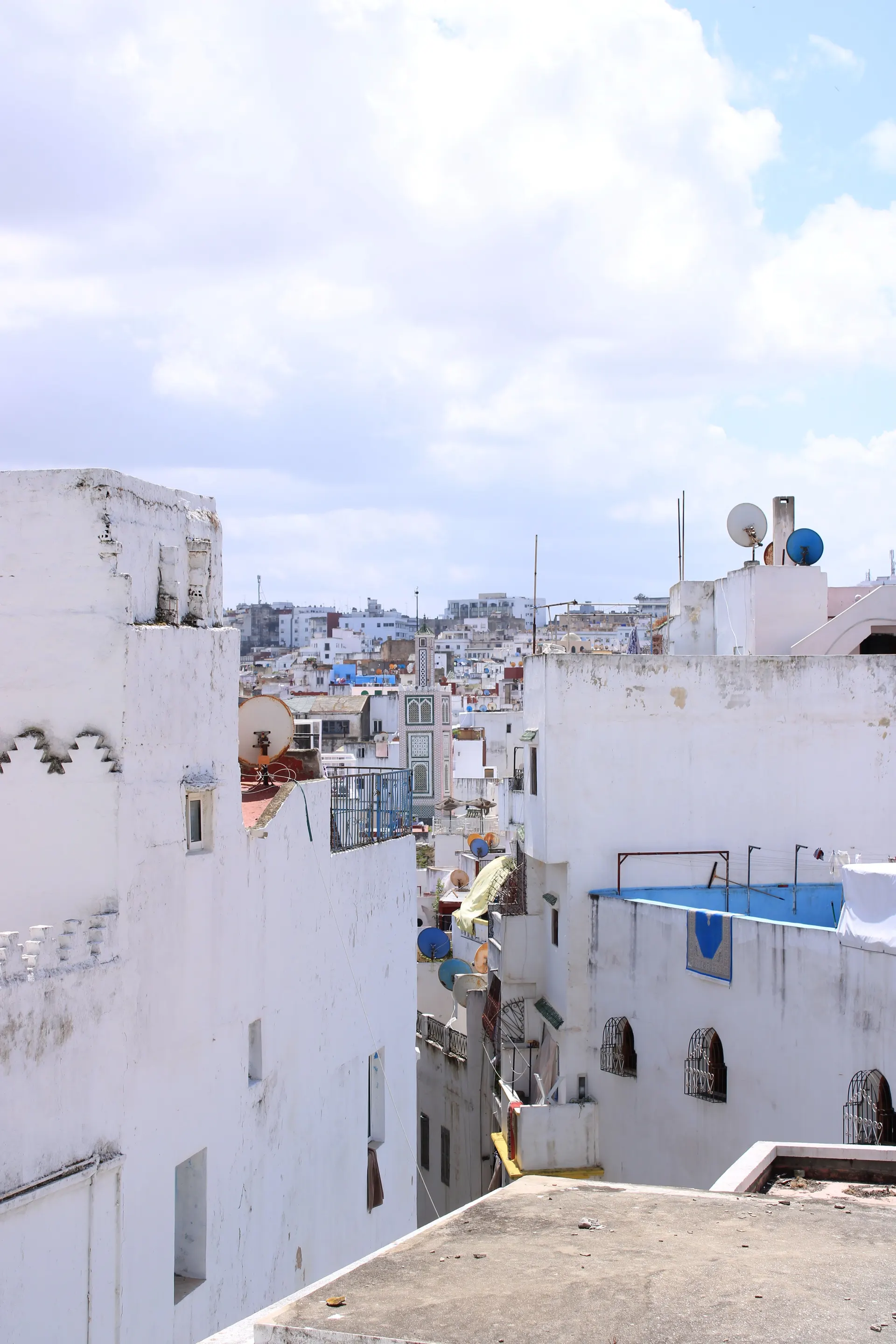
Your private driver meets you at Tangier airport or the ferry port. See where Africa meets Europe across the Strait of Gibraltar — the Kasbah, the old medina, and a viewpoint over the strait — before settling in for the night.
- Airport/port pick-up
- Tangier Kasbah
- Strait of Gibraltar viewpoint
- Overnight: Tangier (Breakfast)
Day 2: Tangier → Chefchaouen
South into the Rif Mountains. Chefchaouen's blue-washed medina appears by early afternoon, leaving the rest of the day free to explore.
- Rif Mountains
- Chefchaouen medina (afternoon)
- Overnight: Chefchaouen (Breakfast)
Day 3: A full day in Chefchaouen
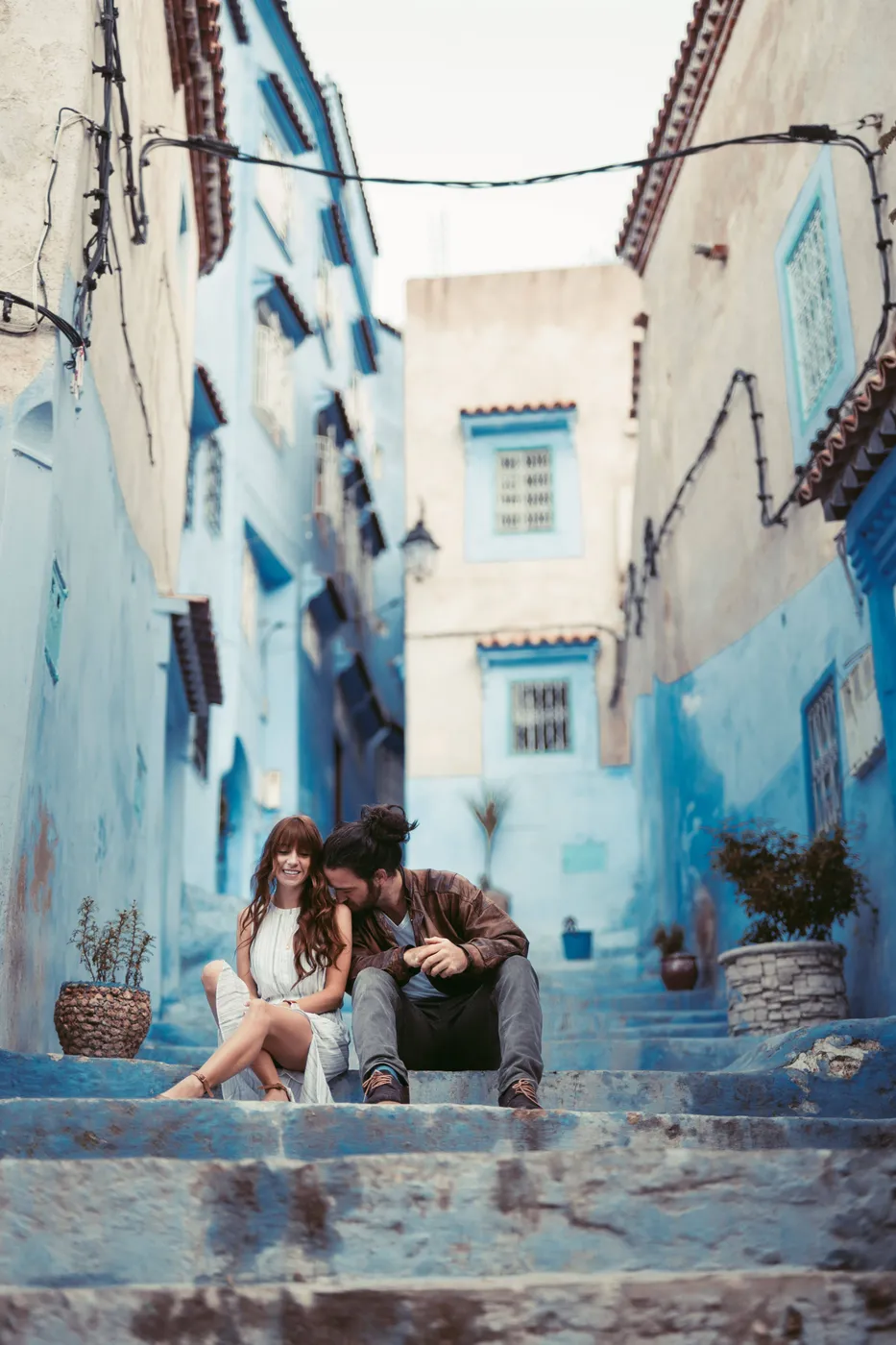
A full day at an easy pace — the medina's blue stairways, Plaza Uta el-Hammam, the kasbah museum, and the hillside viewpoint above town.
- Chefchaouen medina
- Plaza Uta el-Hammam
- Hillside viewpoint
- Overnight: Chefchaouen (Breakfast)
Day 4: Chefchaouen → Fes
South through the Rif foothills to the Roman ruins of Volubilis, then Meknès, before arriving in Fes by evening.
- Volubilis Roman ruins
- Meknès
- Overnight: Fes (Breakfast)
Day 5: Guided day in Fes
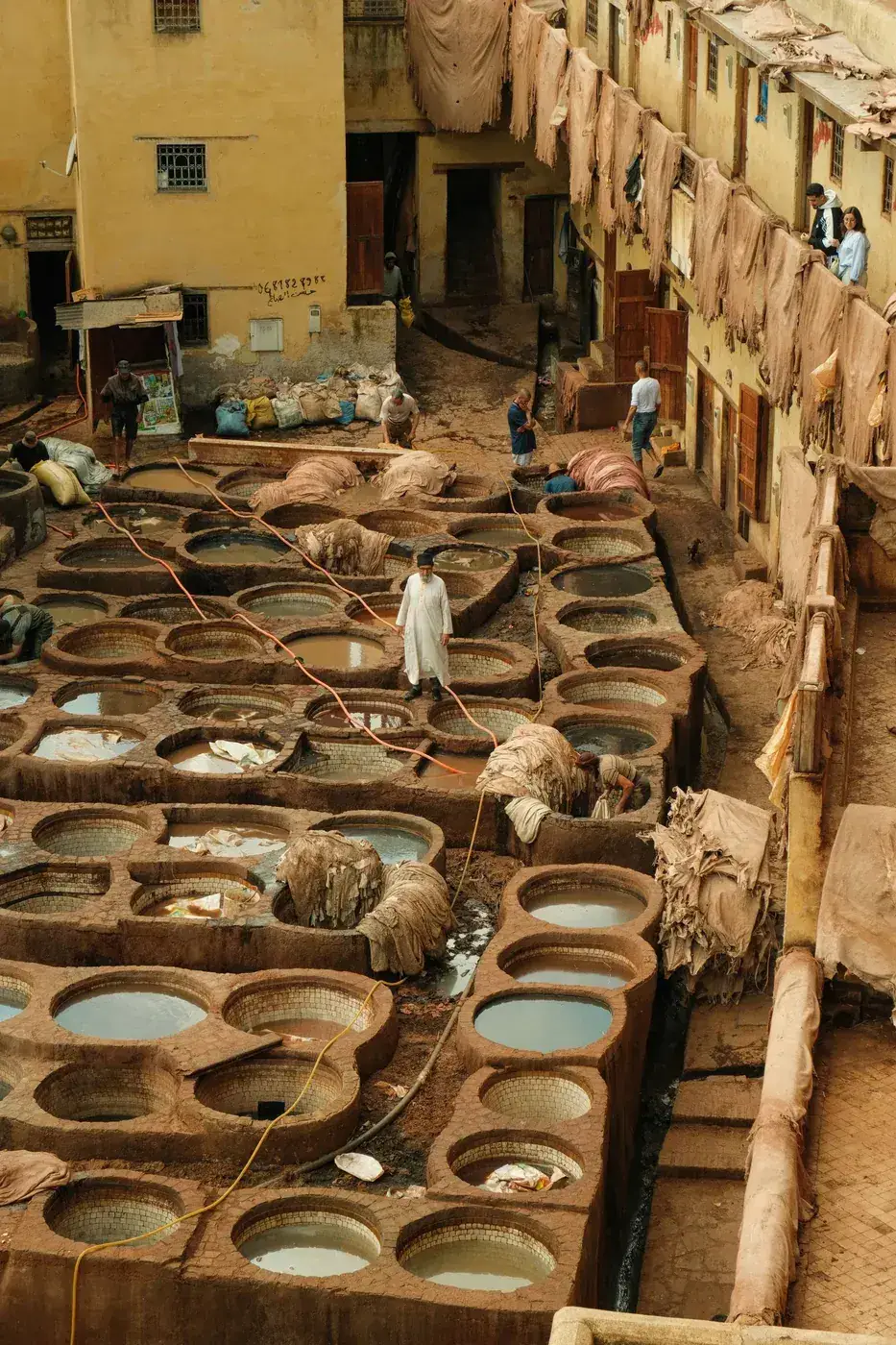
An official local guide leads a full day through Fes el-Bali — the Royal Palace gates, the Chouara Tannery, Al Quaraouiyine, and the souks.
- Fes el-Bali medina
- Chouara Tannery
- Overnight: Fes (Breakfast)
Day 6: Fes → Merzouga — sunset camel trek
South through the cedar forests of Ifrane and the Middle Atlas, down through Midelt and the Ziz Valley's palm oases to Merzouga. Transfer by 4x4 to your luxury desert camp for a sunset camel trek into the dunes of Erg Chebbi.
- Ifrane & the Middle Atlas
- Ziz Valley
- Sunset camel trek
- Overnight: Erg Chebbi desert camp (Dinner & Breakfast)
Day 7: A full day at Erg Chebbi
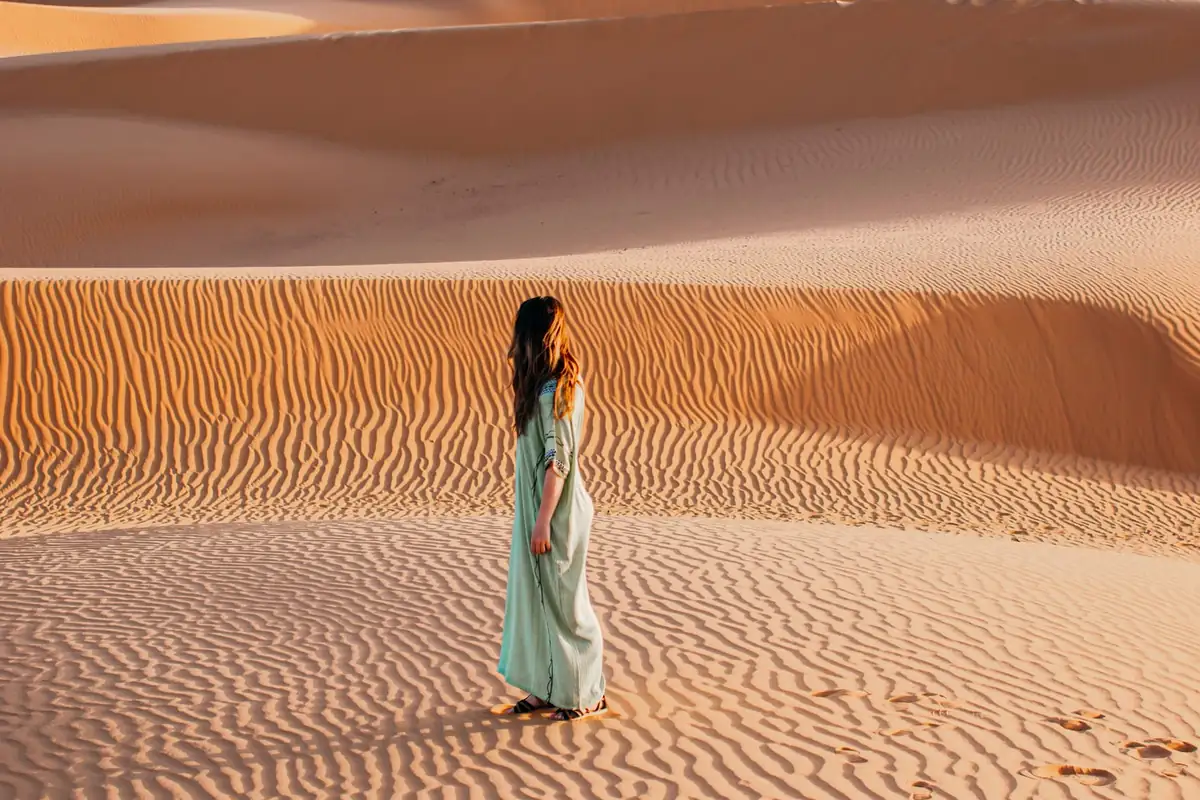
Sunrise over the dunes, then a full day around Merzouga — a 4x4 excursion across the wider desert, time with the camp's Berber hosts, and the dunes again in the cooler late afternoon before a second night under the stars.
- Sunrise over the dunes
- 4x4 desert excursion
- Overnight: Erg Chebbi desert camp (Dinner & Breakfast)
Day 8: Merzouga → Zagora — the pre-Saharan corridor
A long but rewarding paved-road crossing well south of the Atlas: through Rissani, where roadside workshops cut and polish the region's fossils, and the small desert towns of Alnif and Tazzarine, before reaching Zagora and the palm-lined Draa Valley by evening. This is the one long transfer day of the whole trip — the reward is a second, quieter desert region most Morocco itineraries never reach.
- Rissani fossil workshops: Roadside workshops where craftsmen cut and polish fossils and minerals from the surrounding desert.
- Alnif & Tazzarine: Small desert towns along the pre-Saharan corridor, well south of the Atlas Mountains — the whole drive is on a paved road.
- Overnight: Zagora / Draa Valley: Arrive in Zagora and the palm-lined Draa Valley by evening.
Day 9: Zagora → M'Hamid → Erg Chigaga
A paved road south to M'Hamid, the last village before the open desert — then a 4x4 transfer across the sand track into Erg Chigaga, a wilder and more remote dune field than Erg Chebbi, with some of the tallest dunes in Morocco. A second sunset camel trek, and a night at a private luxury desert camp.
- M'Hamid: The last village before the open desert — the paved road ends here.
- 4x4 transfer into the dunes: A 4x4 transfer across the sand track into Erg Chigaga, a wilder and more remote dune field than Erg Chebbi.
- Sunset — Sunset camel trek — Erg Chigaga: A second sunset camel trek, among some of the tallest dunes in Morocco.
Day 10: Erg Chigaga → Ouarzazate
Wake for sunrise over the Erg Chigaga dunes — quieter and further from any town than the sunrise at Erg Chebbi — before the 4x4 transfer back to M'Hamid and the paved drive north through Zagora and the Draa Valley to Ouarzazate.
- Sunrise over the dunes — Erg Chigaga
- 4x4 transfer to M'Hamid
- Draa Valley
- Overnight: Ouarzazate (Breakfast)
Day 11: Ouarzazate → Aït Ben Haddou → Marrakech
A visit to the UNESCO-listed ksar of Aït Ben Haddou — its fortified earthen towers have featured in more film and television productions than almost any other location in Morocco — then the crossing of the High Atlas over the Tizi n'Tichka Pass, the highest road pass in North Africa, into Marrakech.
- Aït Ben Haddou (UNESCO)
- Tizi n'Tichka Pass
- Overnight: Marrakech (Breakfast)
Day 12: A full day in Marrakech
A full day in the Red City — the cobalt-blue Majorelle Garden, the carved stucco of Bahia Palace, and the medina's souks around Jemaa el-Fna.
- Majorelle Garden
- Bahia Palace
- Medina & souks
- Overnight: Marrakech (Breakfast)
Day 13: Marrakech → Essaouira
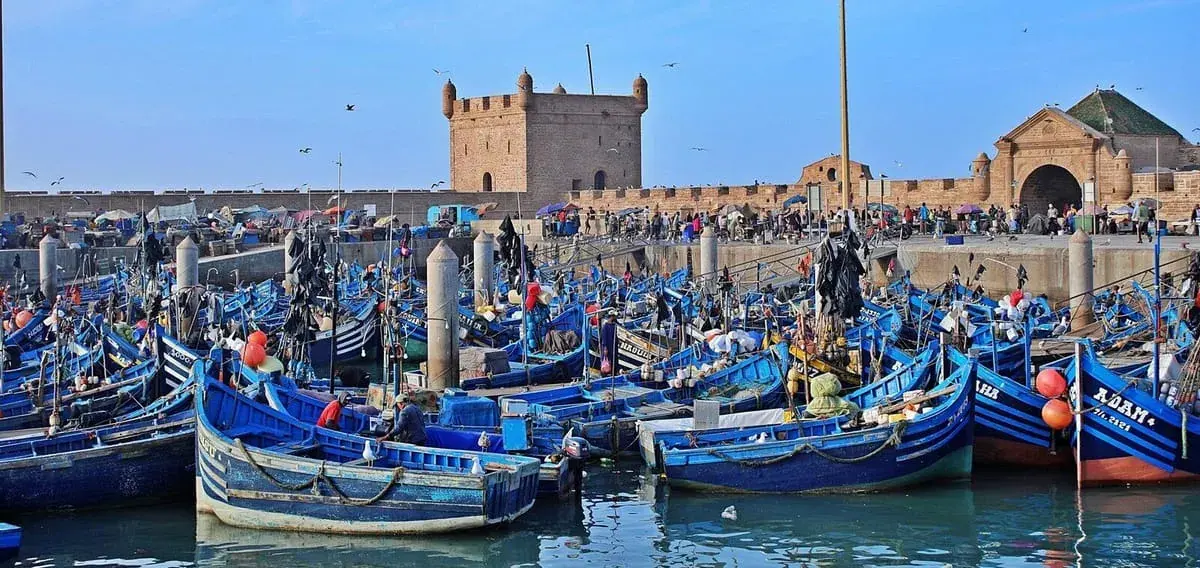
A change of pace for the final stretch: west to the Atlantic coast. The afternoon is free for Essaouira's UNESCO-listed medina, the Sqala du Port ramparts, and the fishing harbour.
- Essaouira medina
- Sqala du Port
- Overnight: Essaouira (Breakfast)
Day 14: A full day in Essaouira
A full, unhurried day on the coast after thirteen days on the road — the medina's art galleries and spice shops, the long sweep of beach, or a visit to a women's argan oil cooperative just outside town.
- Essaouira medina & beach
- Argan oil cooperative (optional)
- Overnight: Essaouira (Breakfast)
Day 15: Essaouira → Marrakech, departure
The drive back to Marrakech for your onward flight, or transfer as agreed in your confirmed itinerary.
- End: Marrakech
Practical Information
- Best travel season: spring (March–May) and autumn (September–November) are ideal, with warm days and comfortable desert nights.
- The drive from Merzouga to Zagora (via Rissani, Alnif and Tazzarine) is around six to seven hours on a paved road — the longest single drive in this itinerary. The final approach to the Erg Chigaga camp from M'Hamid is by 4x4 across sand, not a paved road.
What you will experience
Every item below is a stop on this itinerary — not an extra to buy.
- Rif Mountains — The green northern range that Chefchaouen sits in.
- Chefchaouen — The blue-washed town in the Rif, small enough to walk end to end and best seen early. Explore Chefchaouen
- Volubilis — The Roman town near Meknès, a UNESCO World Heritage site, with mosaic floors still in place where the houses stood.
- Meknès — The imperial city of Moulay Ismail — the Bab Mansour gate, the mausoleum and the walls around the old granaries. Explore Meknès
- Fes — The oldest of the imperial cities, and the start of the northern route to the desert. Explore Fes
- Fes el-Bali medina — The walled old city, a UNESCO World Heritage site, where the lanes are too narrow for cars.
- Chouara Tannery — The stone dye pits of the Fes tanneries, worked by hand much as they have been for centuries.
- Ziz Valley — A wide palm valley cut into bare rock on the road south — the viewpoint above it is one of the best stops of the day.
- Sunset camel trek — Ride into Erg Chebbi as the light drops, led on foot by a guide from the desert, and reach camp with the dunes still glowing.
- Night at a desert camp — Sleep between the dunes in a tented camp rather than driving back to a town for the night.
- Sunrise over the dunes — Wake early for first light on Erg Chebbi, when the sand changes colour and the ridges throw long shadows.
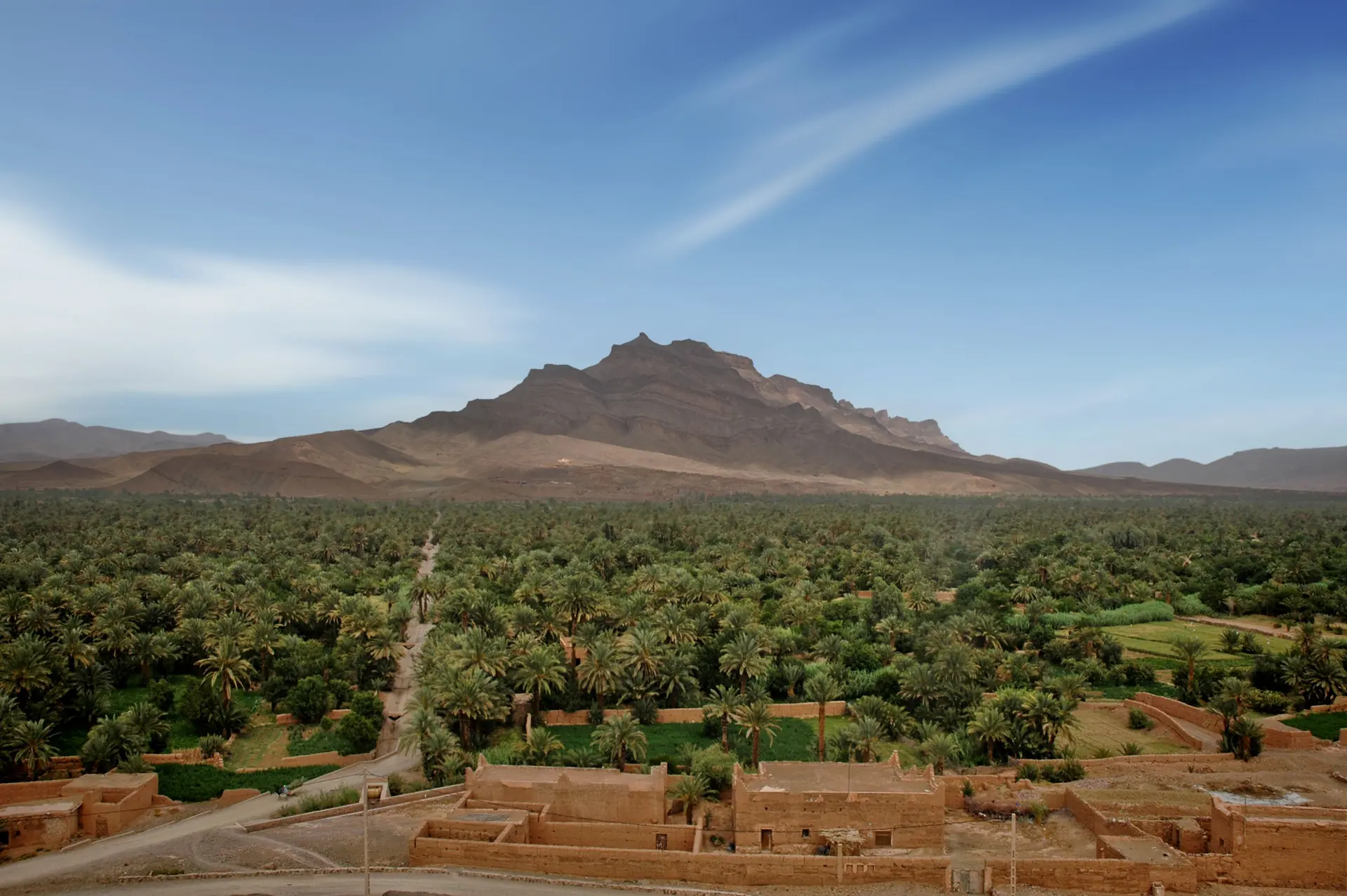
- Draa Valley — The long palm oasis that follows the river south, with kasbahs standing above the groves. Explore Draa Valley
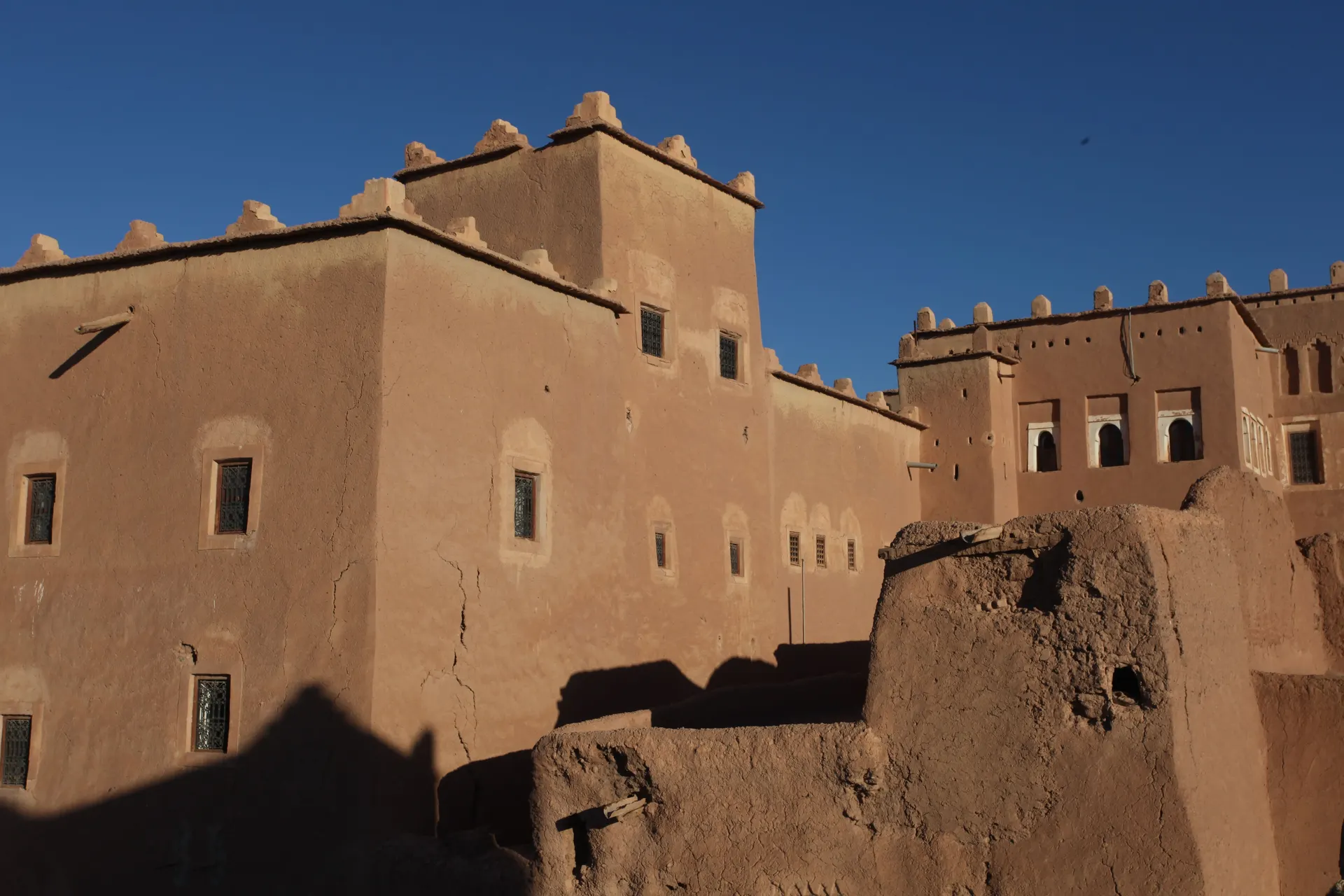
- Ouarzazate — The town where the southern routes meet, with the Taourirt Kasbah on its edge and film studios on the outskirts. Explore Ouarzazate
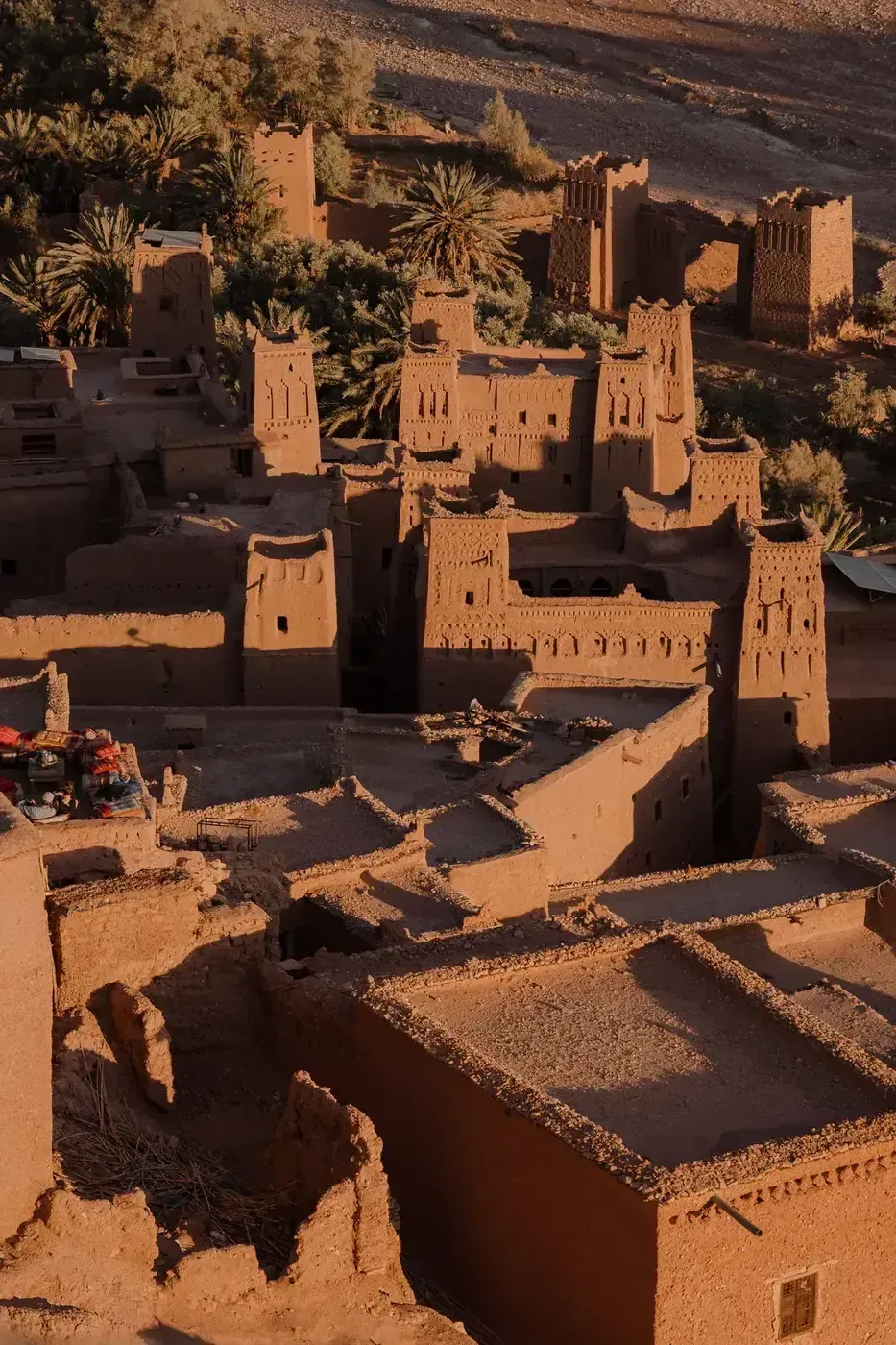
- Aït Ben Haddou — Walk up through the earthen ksar on the far side of the river — a UNESCO World Heritage site and the most striking stop on the road south. Explore Aït Ben Haddou
- High Atlas crossing — The road climbs over the High Atlas by the Tizi n'Tichka pass, with time to stop where the view opens out.
- Marrakech — The red city at the foot of the Atlas, and the usual start or finish of the southern routes. Explore Marrakech
- Majorelle Garden — The cobalt-blue garden villa in Marrakech, planted with cactus and bamboo.
- Bahia Palace — A nineteenth-century palace of painted cedar ceilings, courtyards and tiled rooms in the Marrakech medina.
- Souks and craft workshops — Workshops where the pottery, metal and leather sold in the souks is actually made.
- Essaouira — The walled Atlantic port — ramparts, a working fishing harbour and wind almost every day. Explore Essaouira
Optional, at extra cost
These are not part of the quote. We can arrange them on request, and they are paid separately.
- Argan oil cooperative — A women's cooperative pressing argan oil by hand, on the road where the trees actually grow.
What's Included
Everything below comes from this itinerary: what the price covers, and what it does not. Nothing is listed that the itinerary does not state.
Points marked “Confirmed in your quote” are the details this itinerary leaves to your written quote — we agree them with you before any payment.
Transport
- Private air-conditioned vehicle and driver-guide for the full route
Accommodation
- Accommodation for 14 nights, including two nights at a desert camp near Merzouga (Erg Chebbi) and one night at a desert camp at Erg Chigaga
- Hotel and airport pick-up and drop-off
Meals
- Breakfast as shown in the itinerary (Confirmed in your quote)
- Breakfast at the desert camp (Confirmed in your quote)
- Dinner at the desert camp (Confirmed in your quote)
Desert Experiences
- 4x4 transfer between M'Hamid and the Erg Chigaga dunes
- The desert experience at both Erg Chebbi and Erg Chigaga — sunset camel trek at each — when included in the confirmed itinerary (Confirmed in your quote)
- Desert sunrise over the dunes (Confirmed in your quote)
Guide & Services
- Official local guide for the Fes medina day
Meals included
14 breakfasts, as shown in the itinerary
10 dinners: Dinner at Tangier, Dinner at Chefchaouen, Dinner at Chefchaouen, Dinner at Erg Chebbi desert camp, Dinner at Erg Chebbi desert camp, Dinner at Zagora / Draa Valley, Dinner at Erg Chigaga desert camp, Dinner at Ouarzazate, Dinner at Essaouira, Dinner at Essaouira
Meals, night by night
Breakfast and dinner for every night of this route, exactly as the itinerary states them.
- Night 1: Tangier — Breakfast: Included | Dinner: Included
- Night 2: Chefchaouen — Breakfast: Included | Dinner: Included
- Night 3: Chefchaouen — Breakfast: Included | Dinner: Included
- Night 4: Fes — Breakfast: Included | Dinner: Not included
- Night 5: Fes — Breakfast: Included | Dinner: Not included
- Night 6: Erg Chebbi desert camp — Breakfast: Included | Dinner: Included
- Night 7: Erg Chebbi desert camp — Breakfast: Included | Dinner: Included
- Night 8: Zagora / Draa Valley — Breakfast: Included | Dinner: Included
- Night 9: Erg Chigaga desert camp — Breakfast: Included | Dinner: Included
- Night 10: Ouarzazate — Breakfast: Included | Dinner: Included
- Night 11: Marrakech — Breakfast: Included | Dinner: Not included
- Night 12: Marrakech — Breakfast: Included | Dinner: Not included
- Night 13: Essaouira — Breakfast: Included | Dinner: Included
- Night 14: Essaouira — Breakfast: Included | Dinner: Included
Not Included
- International flights
- Lunches and drinks
- Monument and museum entrance fees
- Optional activities such as 4x4 excursions, quad biking or a hot air balloon flight
- Tips and personal expenses
- Anything not written into your confirmed quote
- Dinner in Fes
- Dinner in Marrakech
How booking works
- Send your request: Free. No payment, no card details, no obligation.
- We confirm your trip: We check your dates, group size and availability, then send you the itinerary and the final price in writing.
- 20% deposit: Paid only after you have approved the confirmed trip. It secures your booking.
- 80% on arrival: The remaining 80% is paid when you arrive in Morocco.
Cancel more than 7 days before the trip and there is no charge. Within 7 days, 50% is charged.
5.0 ★ based on 6 Google reviews
Traveler Stories
What our guests say
Mohamed was recommended as a guide by a friend and feel lucky for the wonderful experience I’ve had exploring Merzouga and the Sahara. Not only does he speak many languages, he is knowledgeable and happy to share about the culture, customs and the history of the Amazight and gives you the local experience. He goes out of his way to provide a tailor made trip that is just to your wishes. I would definitely encourage everyone to visit the desert at least once in their life because this has been an amazing and unforgettable journey for me!
I will love forever this enchanting land: colours, traditions, history and landscapes; everything is like a treasure that I have to protect in my mind. Or maybe I need to visit Marocco again and for sure Marocco Grand Adventure will be my choise. Thank you so much!
Tour Gallery
FAQ
-
Why visit two different desert regions?
Erg Chebbi at Merzouga and Erg Chigaga near M'Hamid are genuinely different experiences — Erg Chebbi is more easily reached and has the area's best-developed camp infrastructure, while Erg Chigaga is wilder, quieter and further from any town, with some of the tallest dunes in the south. Most Morocco itineraries only visit one; this is the one that visits both.
-
Is the drive from Merzouga to Zagora very long?
Yes — at roughly six to seven hours on a paved road, it's the one genuinely long transfer day of the trip. It follows the pre-Saharan corridor through Rissani, Alnif and Tazzarine, with real stops along the way, rather than a non-stop drive. If you'd rather avoid it, ask us about a version of this route that visits only one desert region.
-
What's the difference between the paved roads and the desert transfers?
Every leg between cities and towns — including the long Merzouga-to-Zagora crossing — is on a paved road in your private vehicle. Only the final stretch from M'Hamid into the Erg Chigaga dunes is a genuine 4x4 transfer across sand, not a paved road.
-
How is this different from the 14-day Grand Morocco tour?
The 14-day tour starts in Marrakech, visits one desert region, and finishes along the Atlantic coast near Agadir before ending in Casablanca. This route starts in Tangier, visits two desert regions — Erg Chebbi and Erg Chigaga — and finishes with a full day in Essaouira rather than a longer coastal stretch.
-
Can the route be shortened or reordered?
Yes. This itinerary is a starting point — cities and regions can be added, dropped or reordered once we know what matters most to you and how many days you actually have.
-
Can I book now and pay later?
Yes. Sending a request is free and commits you to nothing. We confirm your dates, itinerary and final price with you first; a 20% deposit then secures the booking, and the remaining 80% is paid on arrival in Morocco.
More tours from Tangier
Browse all private tours from Tangier
Who this tour is best for
Travellers with real time who want to go further than our 14-day Grand Morocco tour — a second, wilder desert region instead of a longer coastal stretch.
Plan with our guides
- Marrakech to Merzouga — Route, Stops & How Many Days
- Camel Trekking in Merzouga — What to Expect at Erg Chebbi
- Luxury Desert Camps in Merzouga — What You Really Get
- How Many Days Do You Need in the Sahara?
- Best Time to Visit Merzouga — Month-by-Month Guide
Practical guides written by local Merzouga guides — trip length, seasons, camel trekking and packing.