De Marrakech a Merzouga: O Itinerário Definitivo de Viagem pelo Saara
Viagens por Estrada · maio de 2026 · 10 min de leitura
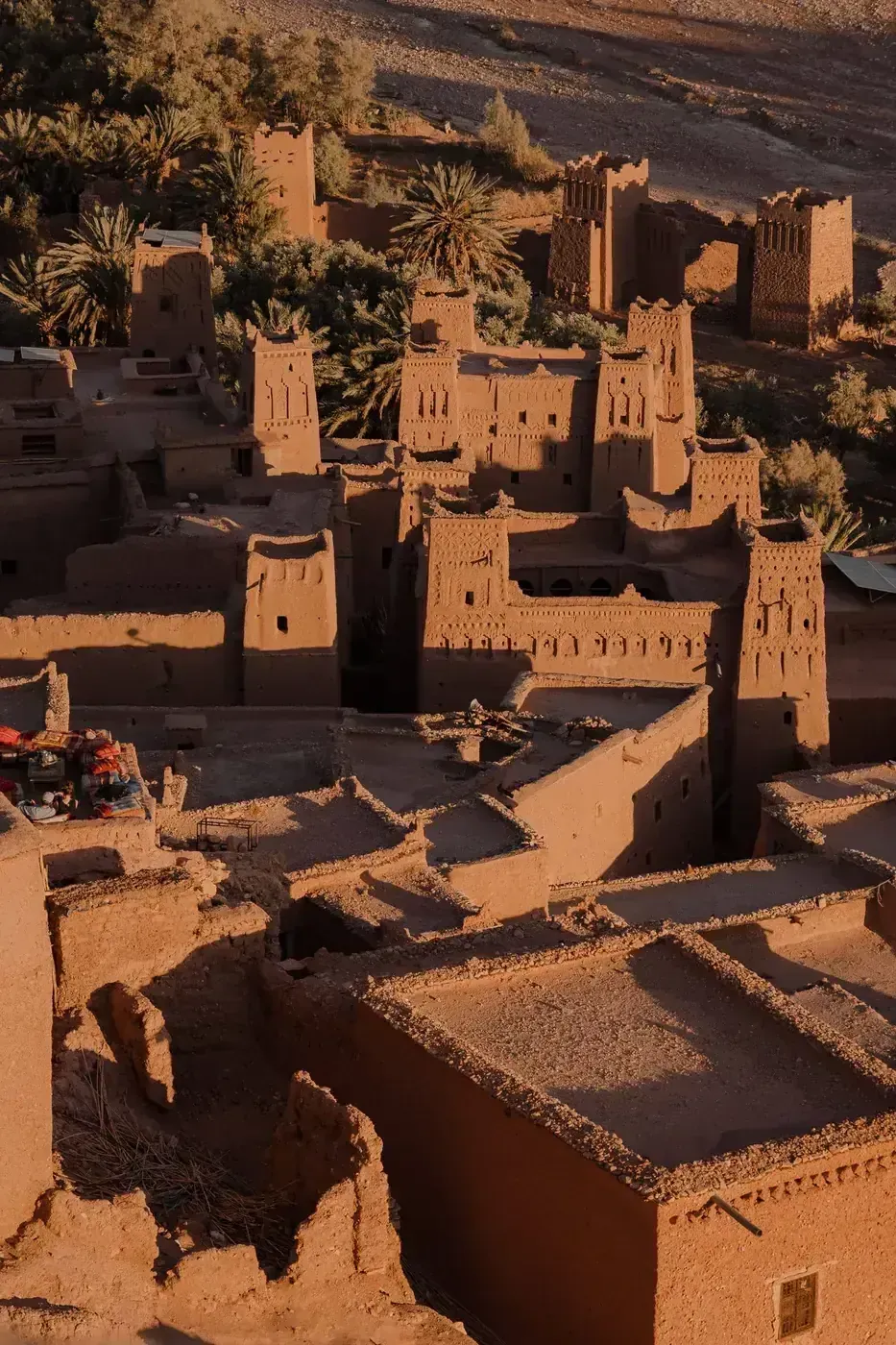
Atravesse o Alto Atlas, explore Aït Ben Haddou, percorra o Vale do Dades e chegue às dunas douradas de Erg Chebbi — o guia completo da rota.
The Route in One Paragraph
Marrakech and Merzouga are connected by a single practical corridor: south over the High Atlas on the Tizi n'Tichka pass road, down to Aït Ben Haddou and Ouarzazate, east through the Dades Valley, past the Todra Gorge and the Rissani/Tafilalet area, and on to Merzouga at the foot of the Erg Chebbi dunes. It is a genuine overland journey — the road is part of the experience, not just a transfer between two points.
Crossing the High Atlas
Leaving Marrakech, the road climbs quickly into the High Atlas on the Tizi n'Tichka pass, with Berber villages terraced into the slopes and viewpoints worth a stop. This is the first sign that the landscape — and the climate — is about to change completely.
Aït Ben Haddou: the Journey's First Landmark
On the far side of the pass sits Aït Ben Haddou, a UNESCO World Heritage earthen ksar and one of southern Morocco's most striking sights — the moment the route turns unmistakably pre-Saharan. Ouarzazate, just beyond it, is Morocco's film-studio capital and usually a lunch stop rather than an overnight.
Dades Valley and Todra Gorge
The road continues through the Dades Valley — kasbahs, rose-growing villages and switchback mountain roads — a natural place to break the journey with an overnight. The Todra Gorge, with its towering rock walls and walkable canyon floor, follows the next day on the way toward Merzouga.
Arriving in Merzouga: the Desert Day
The final stretch runs through Rissani and the Tafilalet, the historic heart of Morocco's desert trade routes, before reaching Merzouga itself. From here the day follows a classic pattern: meet the camel team at the dune line in the afternoon, trek into Erg Chebbi for sunset, and spend the night at a desert camp between the dunes before a sunrise return the next morning.
3 Days or 4? Choosing Your Pace
Three days is the shortest format we consider genuinely practical: day one over the Atlas to the Dades area, day two through Todra Gorge to the dunes for the sunset trek and camp night, day three the return to Marrakech. It works, but it is an honestly full schedule.
Four days changes the character of the trip — the return stops being a marathon, and there is room for a proper half-day around Merzouga itself before heading back. If your dates allow it, this is the version most travellers end up preferring.
Explore the full route guide, or choose the itinerary that fits your dates:
Circuitos relacionados
- Tour de Luxo de 3 Dias pelo Saara, a partir de Marrakech — 3 Dias / 2 Noites
- Aventura de 8 Dias em Marrakech, Essaouira, Agadir e no Deserto do Saara — 8 Dias / 7 Noites
Destinos neste guia
- Marrakech — A Cidade Vermelha — medinas vibrantes, a praça Jemaa el-Fnaa, riads de luxo.
- Aït Ben Haddou — Aldeia fortificada inscrita na UNESCO — a kasbah mais fotografada de Marrocos.
- Vale do Dades — Desfiladeiros espectaculares, kasbahs ancestrais e oásis perfumados a rosas.
- Merzouga — Porta de entrada para Erg Chebbi — as dunas mais impressionantes de Marrocos.