5-Day Morocco Student Tour
A five-day student route from Marrakech over the High Atlas to Aït Ben Haddou and two nights in the Erg Chebbi desert at Merzouga. For university and student groups.
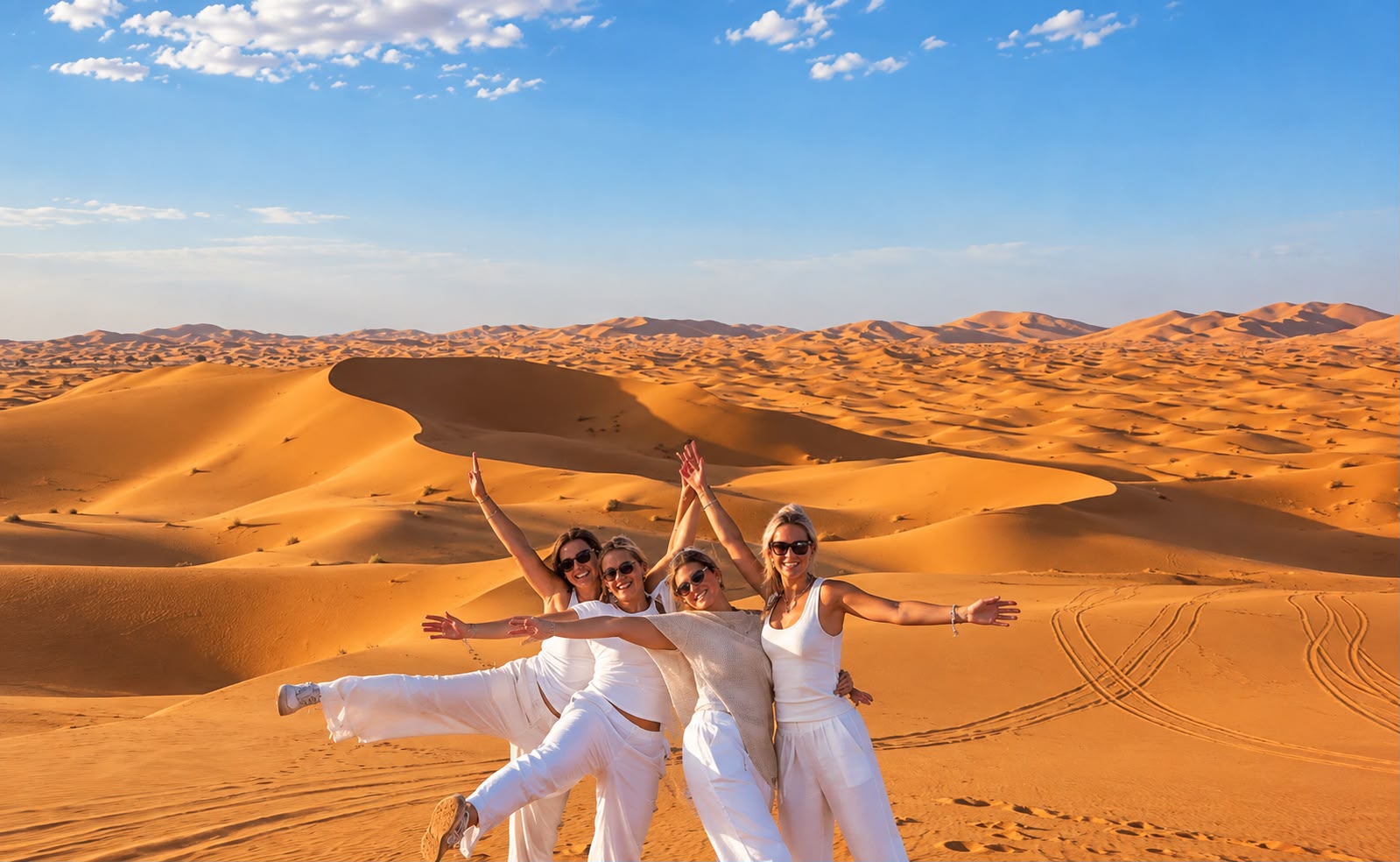
A day in Marrakech before the road south changes what the desert means when the group finally reaches it — the contrast between the packed medina and the open erg is the point, not an accident of scheduling.
Tour overview
- Duration: 5 Days
- Starts: Marrakech
- Ends: Marrakech
- Main regions: Marrakech · High Atlas · Ounila Valley · Dades & Todra · Erg Chebbi / Merzouga
- Travel style: A city day followed by an overland route with two nights in the desert
- Organized for student and university groups — tell us your numbers so we can plan vehicles, accommodation and desert camp capacity around them.
Why this works for students
Both the 3-Day and 4-Day programs leave Marrakech on the first morning, which means the group never actually spends time in the city they landed in. This program fixes that: a full day in the medina first, so the crossing into the Atlas and the desert beyond it reads as a real change of country rather than just another stop.
The desert side of the route is unchanged from the 4-Day program — the same two nights at Erg Chebbi, including the full day with no driving — because that structure already works. The extra day goes to Marrakech, not to stretching the parts that were already right.
It suits a group that wants the complete southern-loop experience — city, mountains, valleys, dunes — without extending as far north as the 10-Day itinerary does.
Itinerary
Day 1 — Landing in the Red City
The group arrives and settles into Marrakech, and the day is built around the city rather than around getting out of it. The medina is the main event — a dense, walled, working city where the street pattern itself is the lesson, with souks organized by trade and workshops where things are still made rather than only sold.
There is time at the city's historic monuments and gardens, which give the group somewhere quiet to talk about what they just walked through before the pace changes tomorrow.
In the evening, Jemaa el-Fna — loud, crowded and genuinely unlike anything most students have experienced. It is worth going in with a plan for where to meet.
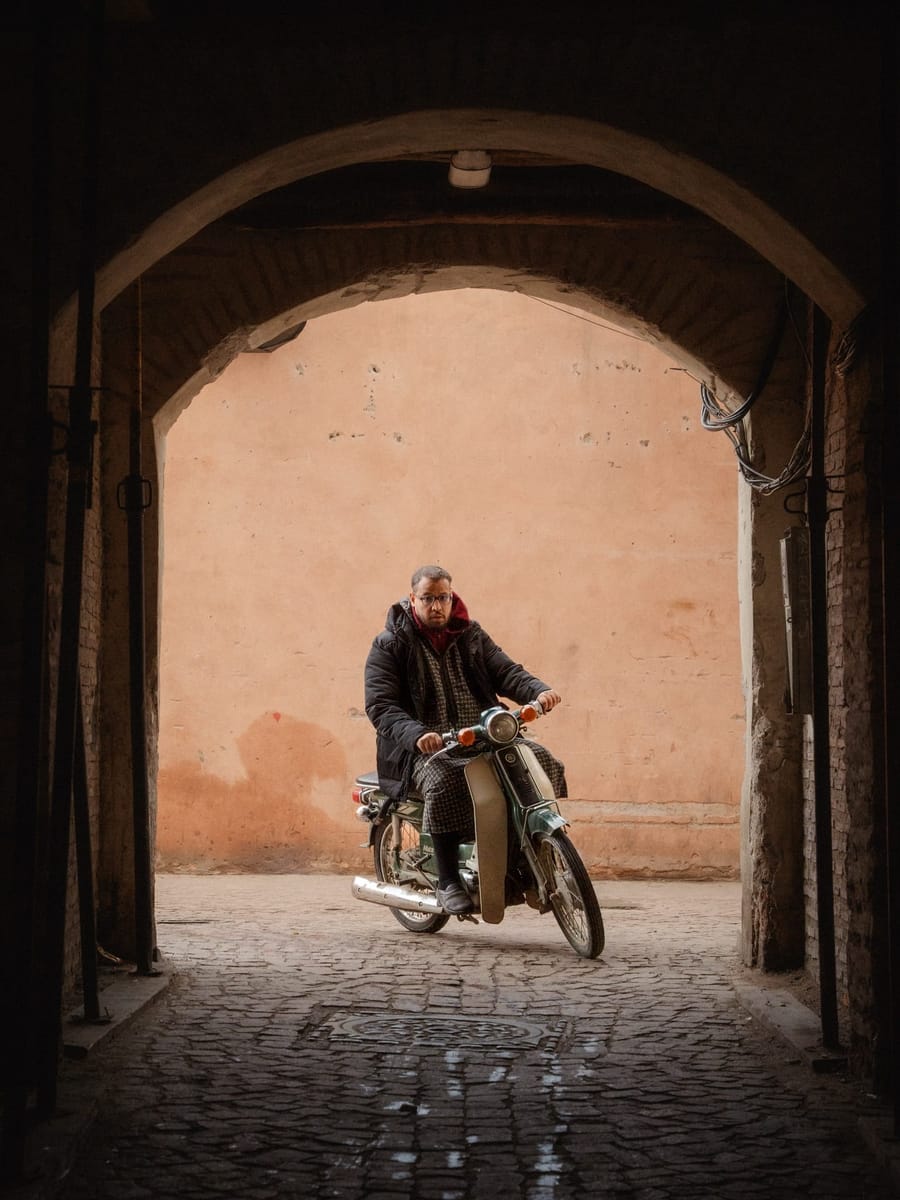
- Arrival in Marrakech
- Medina and souks by trade
- Jemaa el-Fna in the evening
Day 2 — Out of Marrakech, over the pass
After a day inside the walls, the change on the road out is sharper. The route climbs into the High Atlas over the Tizi n'Tichka pass, with stops to get out and look back at where the road came from. On the far side the landscape turns red and dry, and the architecture changes with it: flat roofs, rammed earth, walls the same color as the ground they stand on.
By afternoon the group reaches Aït Ben Haddou, a ksar — a fortified village of earthen buildings stacked up a hillside above a river. Walking up through it is the fastest way to understand why it was built the way it was; from the top, the valley reads as a defensive position rather than a view.
The group continues toward the Dades Valley for the first night outside Marrakech.
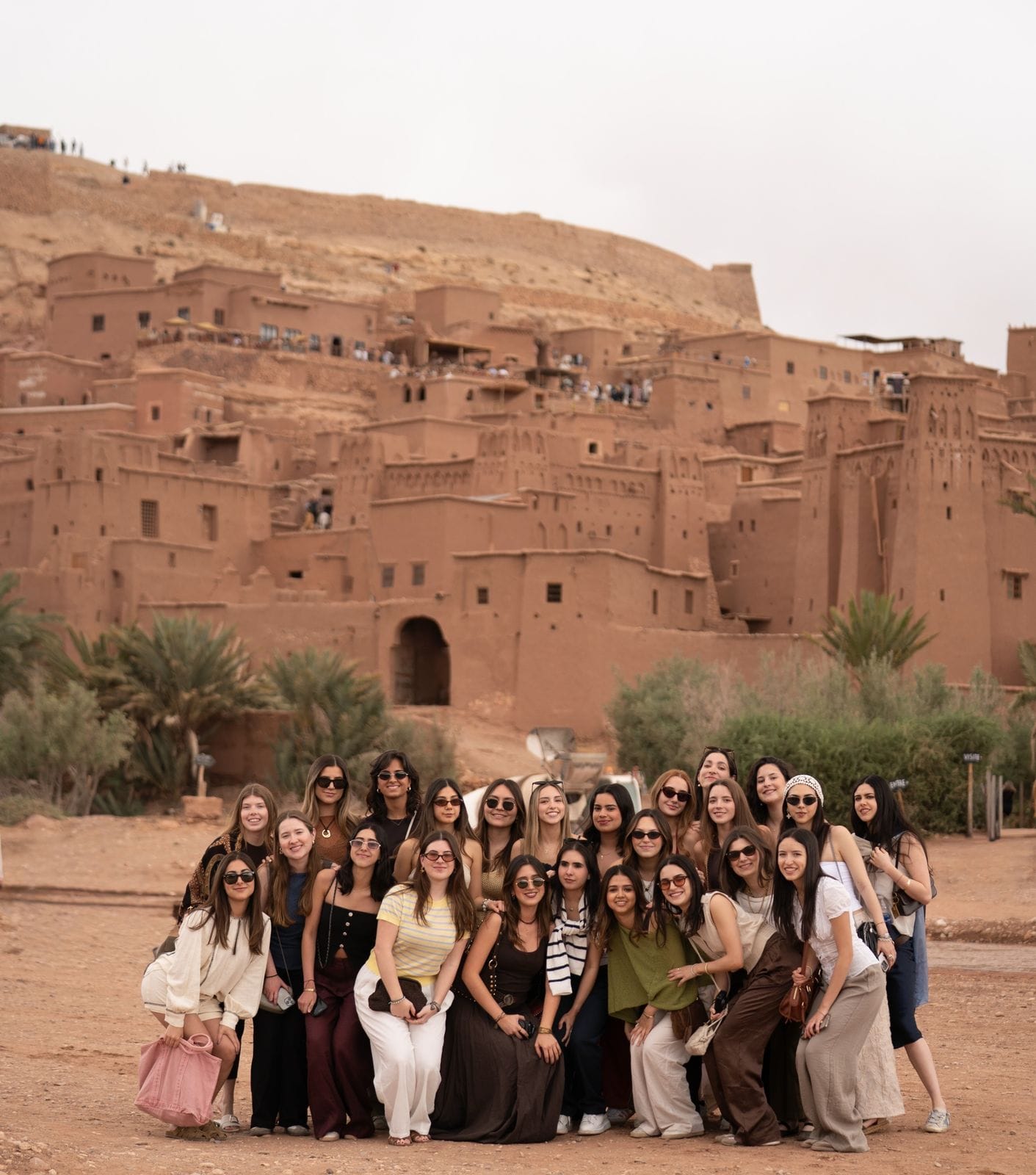
- Tizi n'Tichka pass
- Aït Ben Haddou ksar
- Overnight in the Dades Valley area
Day 3 — Where the green line runs out
The road follows valleys where a thin green line of palms runs along the water and everything outside that line is stone — a contrast that explains settlement patterns better than any diagram. The group moves through the Dades and Todra areas, where the rock closes in and the road narrows between cliff walls, with time to walk and hear how sound behaves between the rock faces.
Then the mountains simply stop. The ground flattens out, the color goes pale, and somewhere ahead there is a low orange line that most people assume is cloud until it does not move. That is Erg Chebbi.
The group gets out onto the sand before the light goes, rides camels into the dunes at sunset, and sleeps at a camp among them — the first of two nights in the desert.
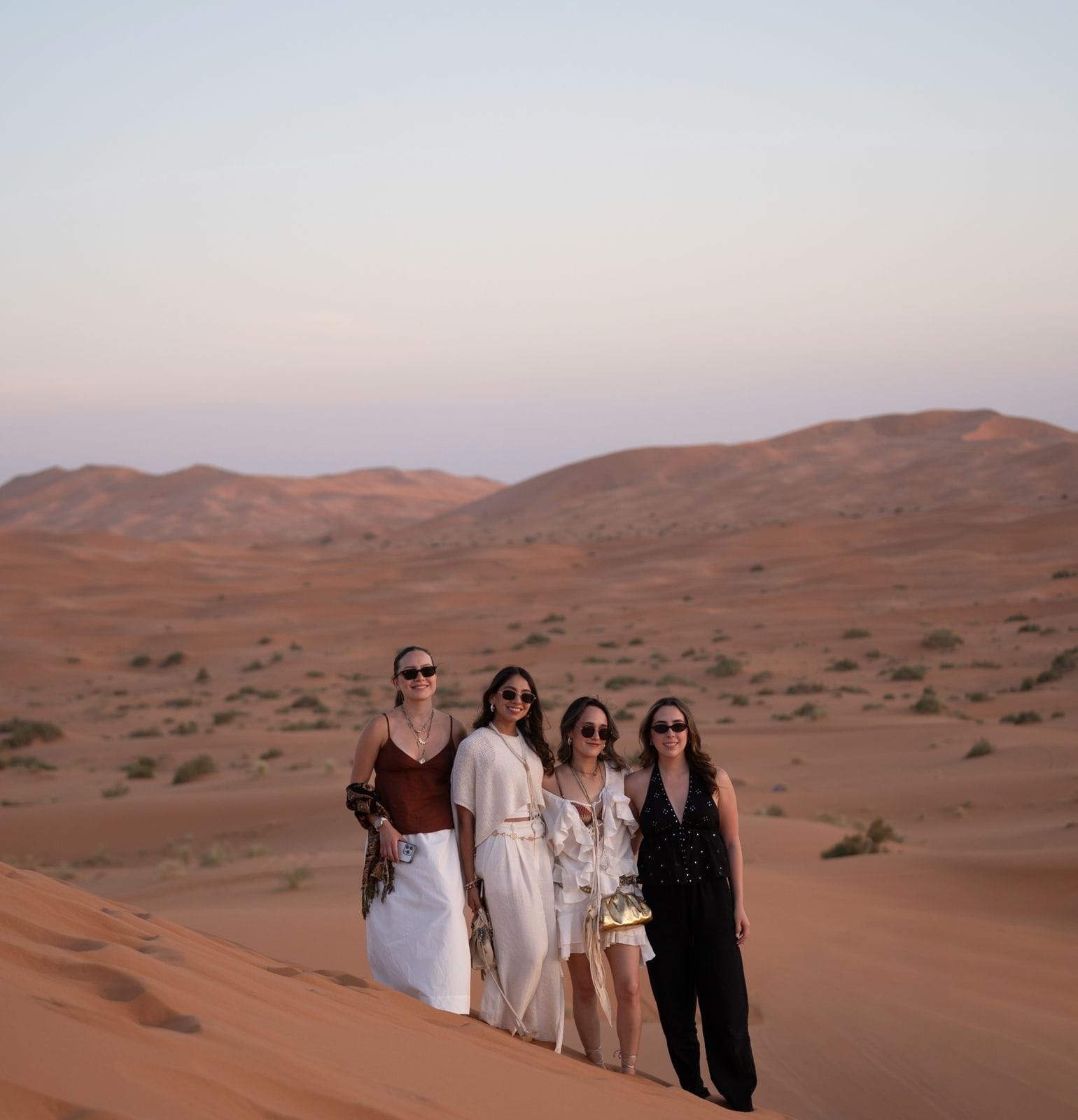
- Dades and Todra gorge country
- Sunset camel trek at Erg Chebbi
- First night at a desert camp
Day 4 — A day that stays in one place
The group wakes for sunrise over the dunes and then has the whole day around Erg Chebbi instead of getting back in a vehicle. How it is used depends on the group: it can include time with people who live in the desert rather than visiting it, and a look at how a nomad camp is actually set up and moved. Where the group wants more activity, the dunes also allow 4x4 and buggy time on the sand.
Late afternoon is for the dunes again, when the light is better and the heat has gone. The second night is at the camp, and because nobody is driving in the morning, the evening runs as long as the group wants it to.
- Sunrise over the dunes
- Time with desert communities
- Optional 4x4 or buggy on the sand
- Second night at camp
Day 5 — The road back
The group leaves Merzouga after breakfast and heads back toward Marrakech, running the route in reverse. Students spot the transitions they missed on the way out — the pass, the ksar, the palm valleys — and the mountains arrive as a surprise rather than a departure point.
There are stops along the way, and the group reaches Marrakech in the evening, five days after a city that by now feels like it belongs to a different trip.
- Return crossing of the Atlas
- Arrival Marrakech
What students will experience
- A real day in Marrakech — The medina, souks organized by trade, and Jemaa el-Fna in the evening — not just a drive-through on the way to somewhere else.
- Crossing the High Atlas — A mountain road with real elevation change, taken slowly enough to stop and look at it.
- Aït Ben Haddou — An earthen ksar walked from the river up to the granary at the top, with the valley opening out behind.
- Gorge and oasis country — Palm groves, irrigation channels and cliff-walled gorges through the Dades and Todra areas.
- Two nights in the Sahara — A sunset camel trek into Erg Chebbi followed by a full day with no driving, so the desert stops being a photo stop and starts being a place.
- Meeting desert communities — Time with people who live in the desert, on their ground and on their terms.
Learning through experience
- Urban life and trade — A working medina economy seen at street level — trades grouped by guild, workshops where goods are still made, and a street pattern that predates any planning department.
- Geography — The route south is a single continuous transect: irrigated plain, mountain pass, arid plateau, gorge, erg. Students see the sequence rather than reading it.
- Architecture — Earthen construction is easiest to understand standing inside it — wall thickness, small openings, shaded courtyards, and why the material matches the ground.
- Water and settlement — Oasis agriculture makes the relationship between water access and where people live unusually legible.
- Amazigh culture — The valleys and the desert the route passes through are Amazigh, and language, craft and daily life differ from what the group saw in Marrakech.
What is included
- Private transport for the group for the full route, with a driver
- Accommodation for four nights, including two nights at a desert camp
- Breakfasts, and dinners on the nights the group is with us
- A local guide accompanying the group
- Camel experience at Erg Chebbi
- Time with desert communities as agreed in the final program
Not included
- International and domestic flights
- Travel insurance
- Lunches and drinks unless agreed in the final program
- 4x4 or buggy sessions unless included in the confirmed itinerary
- Personal spending, tips and optional activities
- Entrance fees to sites not listed in the confirmed itinerary
Practical information
Accommodation
Four nights: one in Marrakech, one in the valley country on the way out, and two at a desert camp near Merzouga. Sharing arrangements are set with the group leader before travel.
Transport
Private vehicles sized to the group. Two of the five days are substantial driving days; the desert day in the middle has almost none, which is the point of the format.
Meals and dietary needs
Vegetarian, vegan, gluten-free and halal requirements can be arranged when the group tells us in advance. Send the list with numbers and we will confirm what is workable on each part of the route.
What to bring
Layers for cold desert nights, comfortable shoes for the medina and for walking on sand and rock, sun protection, a head covering, and a power bank.
Weather
Spring and autumn are the most comfortable for this route. Summer is hot in Marrakech and the pre-Sahara, and winter nights in the desert are cold — both are workable with the right preparation and a slightly adjusted daily rhythm.
Group support and logistics
- A Morocco Grand Adventure guide travels with the group for the full route, and the same team plans and runs the trip.
- Group leaders have a direct contact for the duration of the program rather than a call center.
- Our team is based in Merzouga, so the desert portion is run by people who live where the group is sleeping.
- Pace, stops and free time can be adjusted during the trip if the group needs it — tell the guide and we will work with it.
Questions from group leaders
What does the extra day add compared to the 4-Day program?
A full day in Marrakech before the group leaves the city, instead of departing on the first morning. The desert side of the route — two nights at Erg Chebbi including the full free day — is the same as the 4-Day program.
Is five days enough to see Marrakech properly?
It is enough for a real first impression — the medina, the souks and Jemaa el-Fna — rather than a rushed transit. Groups who want more time in the city and less driving overall should ask about extending the program.
Can the itinerary be adapted for our university group?
Yes. Tell us the academic focus, the group size and your dates, and we will adjust stops, timing and the balance between travel and time on site.
What group sizes do you work with?
Tell us how many are travelling and we will plan around it. Vehicles, accommodation and desert camp capacity are arranged in advance, so larger groups simply need more lead time.
Can dietary requirements be arranged?
Yes, with advance notice. Vegetarian, vegan, gluten-free and halal are all workable; send the list with numbers when you confirm the group.
How does a professor or group leader start planning?
Message us with your group size, home institution country, approximate dates and what you want students to get out of the trip. We will come back with a route and the practical detail behind it.