Marrakech to Ouarzazate and Merzouga: Exploring the Great South
Sahara Desert · September 2026 · 4 min read
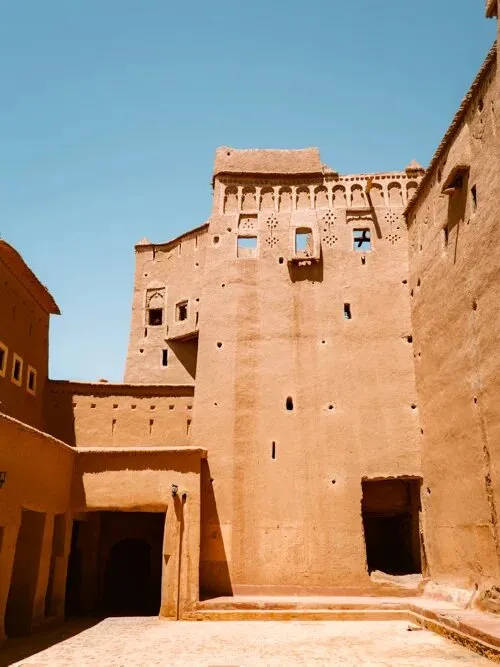
Ouarzazate, the Dades and Todra valleys, a slower Sahara day at Merzouga, then a quiet return through the Draa Valley and Nkob — the fuller version of Morocco's Sahara route.
What 'The Great South' Actually Means
Morocco Grand Adventure borrowed the name for this itinerary from the region itself — the string of valleys, kasbah towns and desert country that run south and east of the High Atlas, beyond what most 3-day Sahara tours have time to cover. It follows the same corridor used by the quicker desert routes, but the 5-day format builds in more time there instead of pushing straight through to Merzouga and back.
If you've already read about the classic 3-day Marrakech-to-Merzouga route, think of this as its slower, more complete cousin: the same opening days, then a genuinely different return. It tends to suit travelers who have already spent a few days in Marrakech itself and are looking for the fuller southern Morocco trip rather than the fastest way to see a dune.
Ouarzazate and the Kasbah Road
The route follows the same opening as the shorter Sahara tours — the Tizi n'Tichka Pass, then Aït Ben Haddou — before reaching Ouarzazate, known locally and internationally as Morocco's film capital. Lawrence of Arabia, Gladiator and Game of Thrones have all used its studios and surrounding desert light, and the Taourirt Kasbah in town is worth a stop in its own right. On a 5-day itinerary, Ouarzazate gets treated as what it actually is — a waypoint with its own things worth seeing — rather than a lunch stop on the way to somewhere else.
The Atlas Film Studios sit just outside town and, light schedules allowing, make an easy add-on to the kasbah visit — a reminder of why this stretch of desert light drew filmmakers here in the first place, long before it became a tour route.
Dades and Todra, at a Slower Pace
The route continues through the Dades Valley and Todra Gorge much as the 3-day version does — the kasbah country, the switchback road, the canyon walls — but with an overnight built around the Dades Valley rather than a brief pass-through. The difference here is pacing rather than destination; travelers who want the fuller description of this stretch will find it in our guide to the 3-day Marrakech–Merzouga tour.
That extra time matters most at Todra, where a short walk into the canyon floor — rather than a photo stop from the roadside — is the difference between seeing the gorge and actually feeling the scale of its rock walls.
Merzouga and a Slower Sahara Day
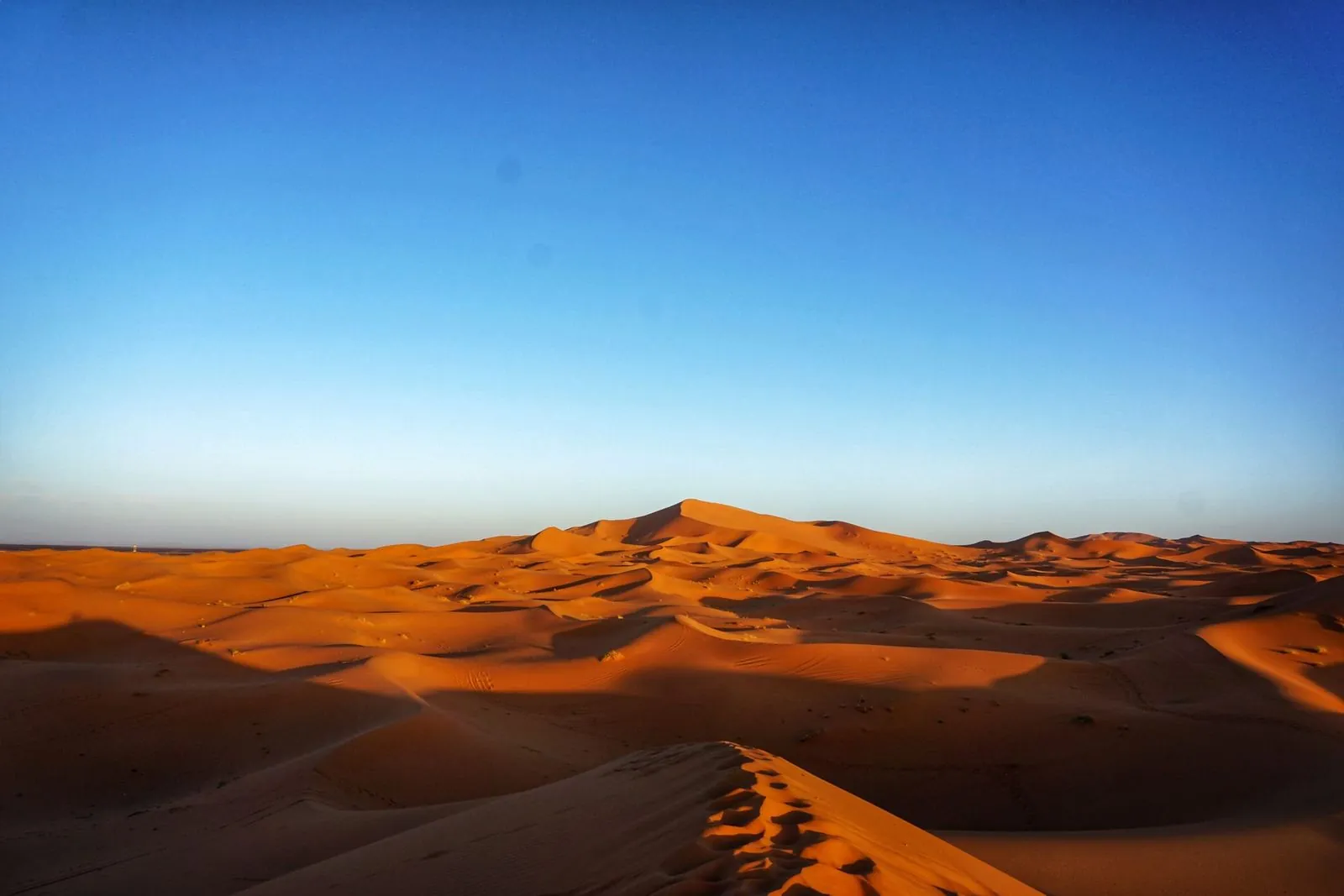
Where the 3-day tour reaches Merzouga for a single overnight, the 5-day route holds a full day around Erg Chebbi — room for dune viewpoints beyond the standard camel-trek corridor, a visit to Rissani and its historic market, and time around the small communities that live at the edge of the erg. Khamlia, a small village south of Merzouga known for its Gnawa music evenings, is sometimes included on this slower day when timing allows — a cultural stop that a 3-day schedule rarely has room for. It's still the same desert experience at its core, a sunset camel trek and a night at camp, but without the next morning's long drive hanging over it.
The Return Less Traveled: Draa Valley and Nkob
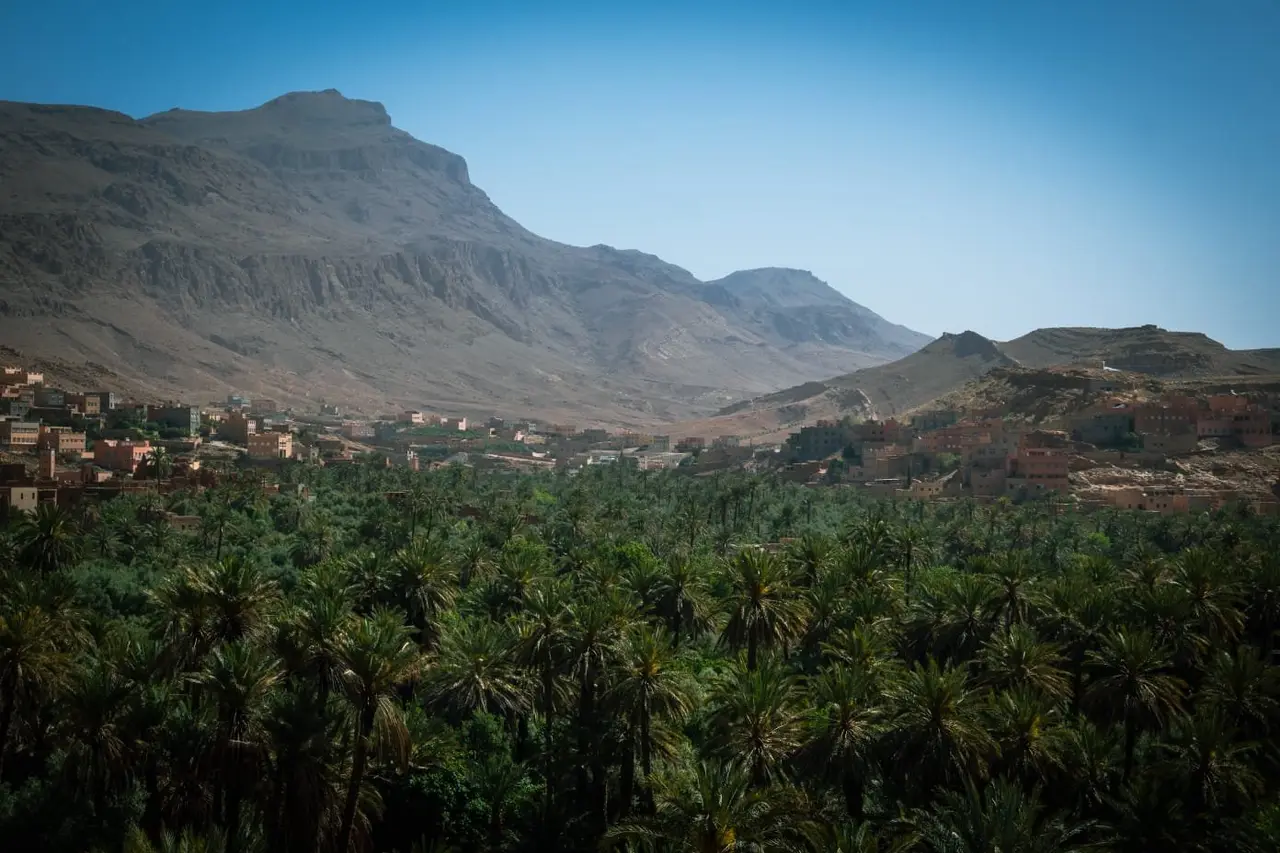
This is where the Great South route genuinely diverges from a standard Sahara tour. Instead of retracing the Dades road back to Marrakech, the route heads west from Merzouga through Alnif and Nkob — a remote village known locally as the village of kasbahs, tucked into the foothills of the Jbel Saghro — before joining the Draa Valley, Morocco's longest river valley and its greatest stretch of continuous palm oasis.
The Draa road runs past ancient ksour and working palm groves for well over a hundred kilometres before rejoining the route toward Ouarzazate and back over the Atlas to Marrakech. Few 3-day itineraries touch this stretch at all — it's a quieter, more agricultural landscape than the dune country, and for travelers who want to see rural, working southern Morocco rather than only its landmark stops, it's the most distinctive part of the trip.
Why Five Days Instead of Three
The honest comparison: the 3-day tour covers the essential Sahara route efficiently and suits a tight schedule. The 5-day Great South adds a slower Sahara day, a genuinely different return corridor through the Draa Valley and Nkob, and noticeably less time spent purely in transit each day. If your main goal is simply to reach the dunes and back within a short window, three days does the job. If you have the extra two days and want southern Morocco to feel like a region you explored rather than a road you drove, this is the version worth choosing — and as a private itinerary, the exact balance between kasbah time, desert time and valley time can still be adjusted around what your group actually wants to see.
Planning this route? Explore the private 5-day Great South Morocco tour and request a personalized quote, or compare it with the shorter 3-day Marrakech to Merzouga route:
Circuitos relacionados
- Tour do Grande Sul de Marrocos em 5 Dias — 5 Dias / 4 Noites
- Tour de Luxo de 3 Dias pelo Saara, a partir de Marrakech — 3 Dias / 2 Noites
Destinos neste guia
- Aït Ben Haddou — Aldeia fortificada inscrita na UNESCO — a kasbah mais fotografada de Marrocos.
- Vale do Drâa — O vale fluvial mais longo de Marrocos — palmeiras-datilheiras, kasbahs e antigas rotas comerciais.
- Nkob — A aldeia das 45 kasbahs — remota, intocada e de uma beleza verdadeiramente espectacular.
- Merzouga — Porta de entrada para Erg Chebbi — as dunas mais impressionantes de Marrocos.
Artigos relacionados
- O Guia Definitivo dos Acampamentos de Luxo no Deserto de Merzouga
- Marrakech to Merzouga: What the 3-Day Sahara Tour Is Actually Like
- Fes to Merzouga: The Sahara Tour Through the Middle Atlas
- Melhor Altura para Visitar o Deserto do Saara: Guia Completo Mês a Mês
- Passeios de Camelo em Marrocos: O Que Esperar e Como Se Preparar