Marrakech to Merzouga: What the 3-Day Sahara Tour Is Actually Like
Sahara Desert · September 2026 · 5 min read
The High Atlas, Aït Ben Haddou, the Dades and Todra valleys, then a night in the Erg Chebbi dunes — what three days on Morocco's classic Sahara route really involves, and who it suits.
Why This Is Morocco's Classic Sahara Route
Ask any Morocco guide which route defines a Sahara trip and most will name the same one: Marrakech to Merzouga. It isn't the only way into the desert, but it's the most complete — one road that climbs a mountain range, drops into kasbah country, runs the length of two valleys, and ends at the base of Morocco's tallest dunes. The 3-day version is the shortest format that still covers all of it, which is also why it's the most frequently booked Sahara tour from Marrakech.
What makes the route work isn't any single landmark — it's the sequence. Each day changes the scenery completely, so the desert at the end doesn't feel like an add-on; it feels like the payoff the whole drive was building toward. It suits first-time visitors to Morocco especially well, since in three days you see mountains, kasbah country and the Sahara without needing a second trip to cover the basics.
Day One: Leaving the Red City Behind
The tour leaves Marrakech in the morning and climbs straight into the High Atlas on the Tizi n'Tichka Pass, the highest road pass in North Africa. Villages here are built into the slopes rather than beside them, and the switchback views back toward Marrakech are worth the first photo stop of the trip.
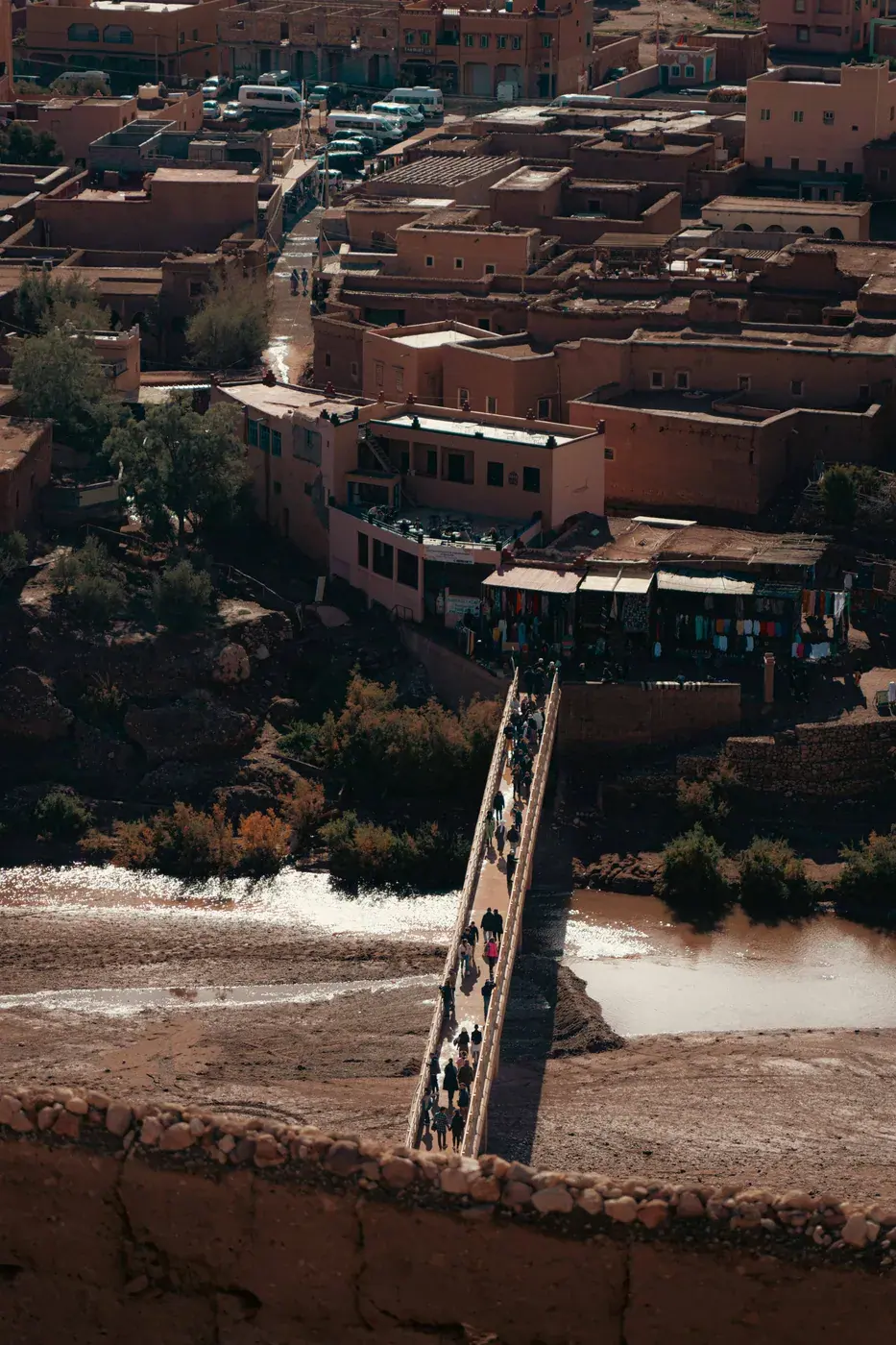
On the far side of the pass, the landscape changes again at Aït Ben Haddou — a UNESCO World Heritage earthen ksar and, by most accounts, the best-preserved fortified village in southern Morocco. Climb to the hilltop granary above the ksar; the walk takes about twenty minutes and the view over the Ounila valley is the real reason to stop here rather than just photograph the walls from the road. From there the road continues through Ouarzazate — known internationally as a film-industry hub, with its studios and kasbahs usually seen as a brief stop rather than a destination on this particular format — before the first night in the Dades Valley.
The Middle Stretch: Dades and Todra
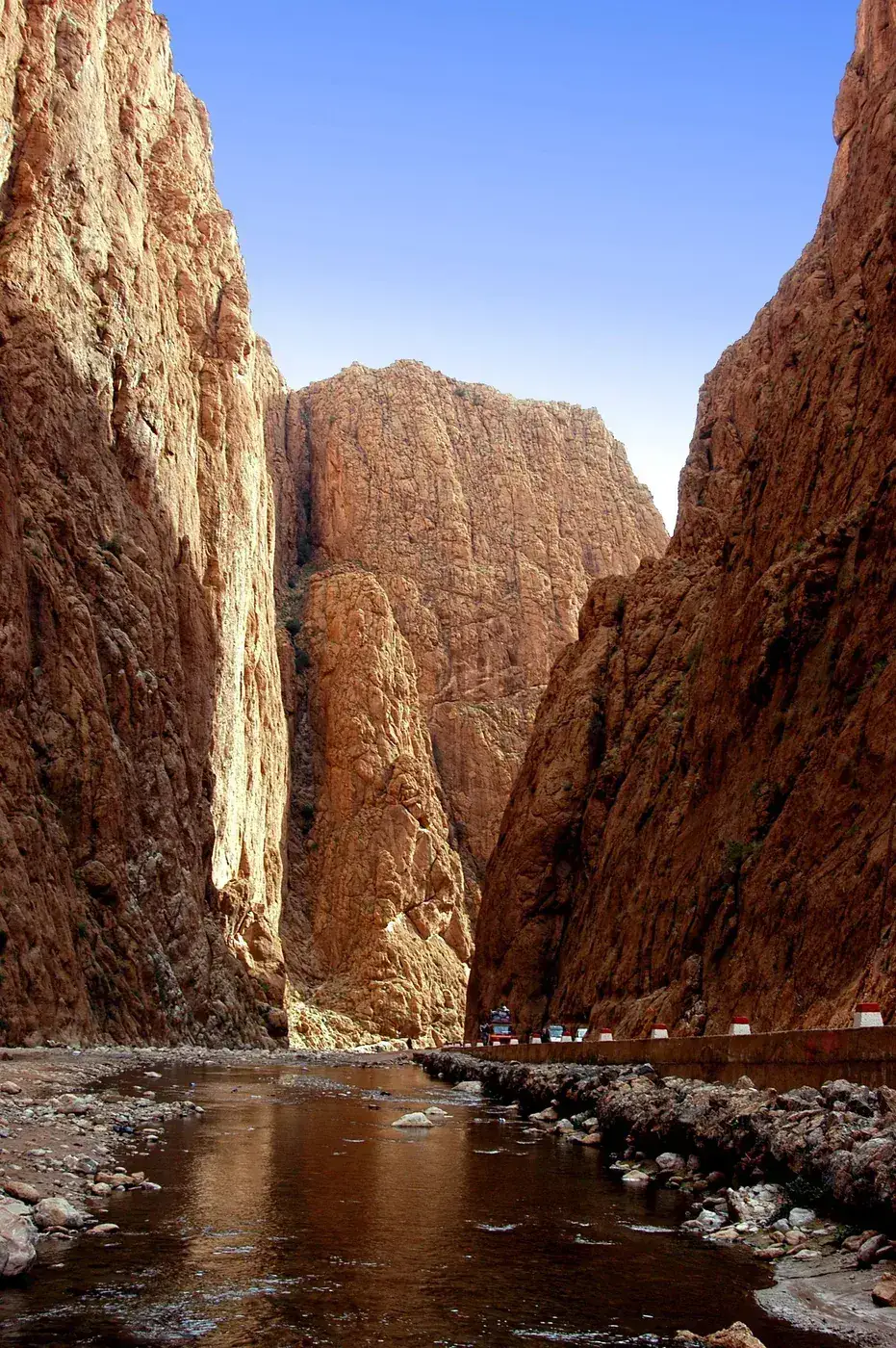
The second day runs through two very different landscapes back to back. The Dades Valley is kasbah country — mudbrick villages, terraced fields and a valley road known for its switchbacks — while the Todra Gorge, a little further east, narrows into a canyon with rock walls that rise for hundreds of metres on either side. Both are brief stops on a 3-day itinerary rather than full days in themselves, but they mark the point where southern Morocco stops looking like the Atlas foothills and starts looking like the edge of the Sahara.
Todra in particular rewards getting out of the vehicle rather than photographing it from the road — the canyon floor stays in shade for much of the day even when the clifftops are blazing, and the short walk along the riverbed gives a sense of scale no photo quite captures.
Arriving in the Dunes: What the Second Night Feels Like
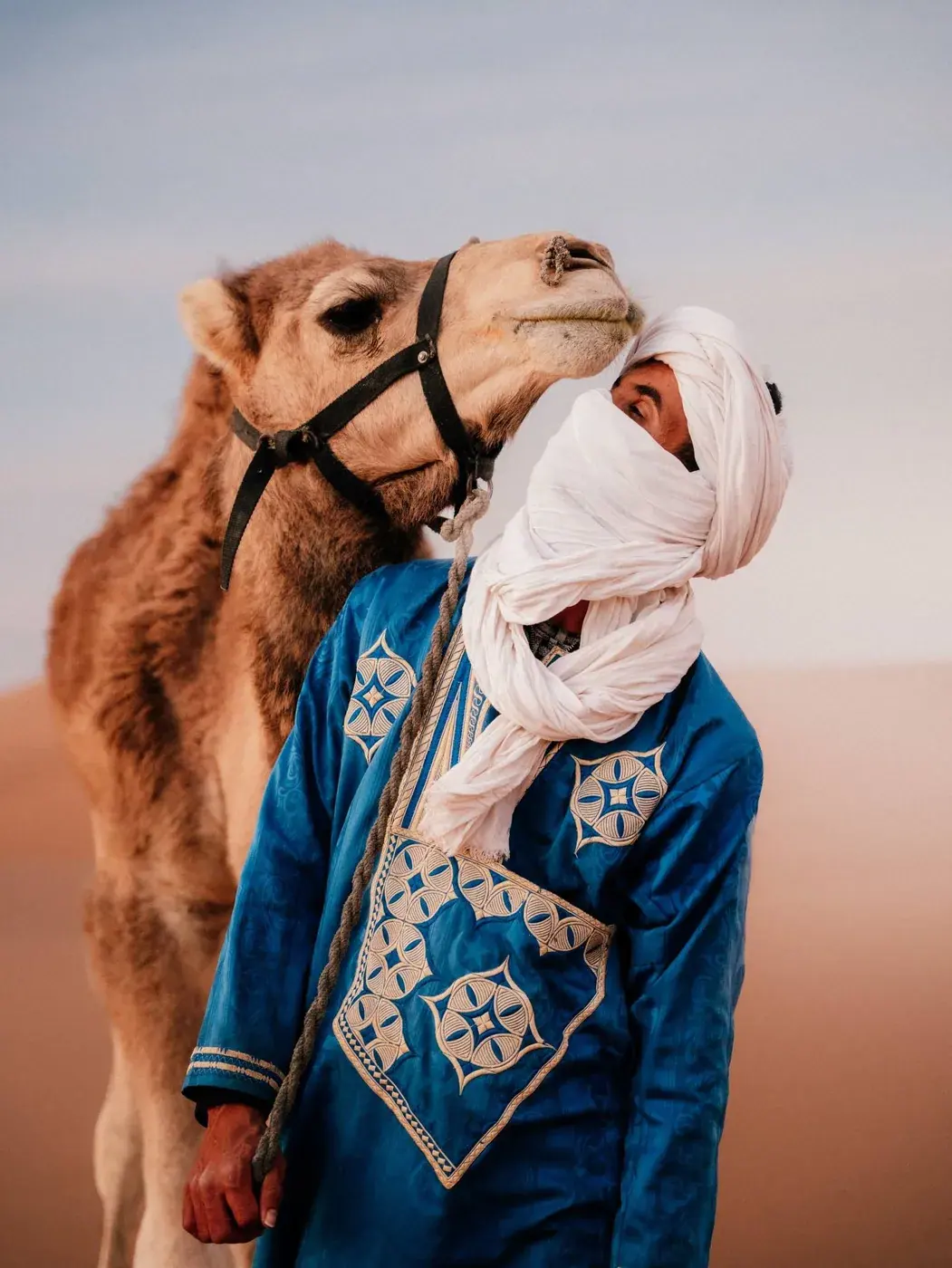
By late afternoon on day two, the tour reaches Merzouga and the Erg Chebbi dunes — Morocco's tallest, and the reason most people book this route in the first place. From here the day follows the pattern every Sahara tour from Marrakech shares: a camel trek into the dunes timed for sunset, dinner at a desert camp, and a night under a sky with none of the light pollution a city gives you. If you haven't ridden a camel before, or want to know what to wear and how a trek actually works, our camel trekking guide covers that in more depth than fits here.
What stands out on this particular route isn't the camp itself — it's the contrast. You spend two full days watching the landscape change through a vehicle window, then step onto sand for the first time right as the light turns gold. Guests consistently say that shift, more than any single stop along the way, is what they remember.
The third day starts with sunrise over the dunes before the long return drive to Marrakech — the longest single day of driving on the route, which is worth knowing in advance rather than discovering at hour six.
What the Pace Actually Feels Like
The three days aren't evenly weighted, and knowing the shape in advance changes how you experience it. Day one is mostly transit with one real stop — the Atlas crossing and Aït Ben Haddou — so the energy of the day goes into that single stretch rather than several equal ones. Day two is the fullest day: Todra Gorge, the run to Merzouga and the sunset camel trek all land within a few hours of each other, which is where the trip actually feels busy. Day three is the opposite — a quiet sunrise, then a long, mostly uninterrupted drive back with nothing scheduled beyond the return itself.
If something has to give within this pace, protect the desert night rather than any one roadside stop. Aït Ben Haddou and Todra already have their moment earlier in this guide; the rest of the driving is genuinely scenery rather than a series of attractions each asking for separate time, so there's little lost by treating it that way.
This shape tends to suit travelers fitting Morocco into a longer trip with fixed dates on either side — a stop on a wider itinerary rather than the only thing on the calendar. If Morocco is the whole trip and your dates are flexible, the extra time on the 4-day version or the 5-day Great South route buys you exactly what this pace doesn't have: room to slow down at the stops that already stood out on day one and two, instead of moving past them on schedule.
A private driver-guide also changes what the pace can realistically include, compared with a rental car or shared minibus — stops are timed around light and crowds rather than a fixed schedule, so the rhythm above adjusts a little around your own group rather than being fixed in advance.
Planning this route? Explore the private 3-day Marrakech to Merzouga tour and request a personalized quote, or compare it with the 4-day version if you would rather take it slower:
جولات ذات صلة
- جولة صحراوية فاخرة لمدة 3 أيام من مراكش — 3 أيام / ليلتان
- 4 أيام: جولة صحراوية من مراكش إلى مرزوكة — 4 أيام / 3 ليالٍ
الوجهات في هذا الدليل
- آيت بن حدّو — قريةٌ محصّنة مُدرجة على قائمة اليونسكو — أكثر قصبات المغرب تصويرًا.
- وادي دادس — مضائق مهيبة، وقصور قصبة عتيقة، وواحات تعبق برائحة الورد.
- مضيق تودغا — جدران وادٍ شاهقة بارتفاع 300 م — جنة لتسلّق الصخور والرحلات الاستكشافية.
- مرزوكة — البوابة إلى عرق الشبي — أكثر الكثبان دراميةً في المغرب.